DOI:https://doi.org/10.65613/739857
Haiting Cui¹²
¹ Faculty of Education, Shandong Normal University, Jinan 250102, China
² School of Sport Communication and Information Technology, Shandong Sport University, Jinan, China
Email: haitingsd@126.com
Abstract
In the context of the continuous digital transformation of education, teachers are increasingly expected to play leading roles in technology integration, pedagogical innovation, and relational coordination. However, existing studies on teachers’ digital leadership have largely been dominated by competency-based frameworks, policy-oriented analyses, and quantitative measurement models, with relatively limited attention paid to the cultural meanings embedded in everyday educational practice. From an anthropological perspective, teachers’ digital leadership is not merely a manifestation of technological competence or organizational function, but also a culturally situated process enacted through ritualized practice and symbolic interaction.Drawing on symbolic interactionism and ritual theory, this paper interprets teachers’ digital leadership in the educational field through typical scenes such as teaching-research activities, digital classroom teaching, and home-school collaboration. It argues that teachers’ digital leadership is constructed, performed, and recognized through repeated interaction, symbolic expression, and situational negotiation. Digital tools, professional discourse, and routine educational practices all function as symbolic resources through which teachers establish legitimacy, coordinate relationships, and shape professional identity. The study further reveals that digital leadership is deeply embedded in the cultural order of schooling, where authority is not simply granted by institutional position but continuously reproduced through meaningful social practice.By shifting the analytical focus from measurable competence to interpretive understanding, this paper expands the conceptualization of teachers’ digital leadership and offers a culturally grounded perspective for understanding digital educational reform. It also highlights the value of anthropological interpretation in uncovering the hidden meanings of educational change in everyday school life.
Keywords: teachers’ digital leadership; ritual practice; symbolic interaction; educational anthropology; educational field; digital transformation
1. Introduction
1.1 Background
The rapid development of digital technology has profoundly reshaped the structure, process, and culture of contemporary education. Digital platforms, intelligent teaching tools, data-based evaluation systems, and online communication mechanisms have increasingly entered everyday school life, transforming not only how teaching is delivered but also how teachers organize professional practice, coordinate educational relationships, and respond to institutional expectations (Connolly et al., 2023; McCarthy et al., 2023; Purnomo et al., 2024). In this context, teachers are no longer viewed merely as users of educational technology. They are also expected to function as organizers of digital teaching, mediators of educational interaction, and promoters of school-level innovation. As a result, teachers’ digital leadership has gradually become an important topic in educational research and practice (Abu-Tineh et al., 2025; Antonopoulou et al., 2025; Rasdiana et al., 2024).
Current discussions of digital leadership in education mainly emphasize leadership competencies, technology integration skills, decision-making capacity, and school improvement functions. These studies have offered valuable insights into the structural dimensions of digital reform and have contributed to the construction of evaluation indicators and development frameworks (Antonopoulou et al., 2025; Connolly et al., 2023; McCarthy et al., 2023). Nevertheless, the dominant tendency remains strongly functional and instrumental. Teachers’ digital leadership is often reduced to a set of observable behaviors, measurable capacities, or managerial responsibilities, while its deeper cultural meanings in everyday educational settings are insufficiently examined (Nemorin, 2025; Trevisan, 2024; Ulla et al., 2024).
In fact, leadership in educational contexts is not only exercised through formal roles or explicit authority. It is also enacted through subtle, repetitive, and meaning-laden practices embedded in daily school life. In teaching-research meetings, digital classroom organization, online communication with parents, and professional collaboration among colleagues, teachers often perform leadership through ways of speaking, interacting, displaying competence, and coordinating relationships. These practices are not neutral or purely technical. Rather, they are shaped by specific symbolic systems, institutional norms, and cultural expectations (Allwood & Brodin, 2025; Cucchiara et al., 2025; DeMeulenaere, 2023). From this perspective, teachers’ digital leadership can be understood as a socially and culturally constructed process rather than a simple application of technical ability.
1.2 Problem Statement
Although the concept of teachers’ digital leadership has gained increasing attention, much of the existing literature remains confined within quantitative paradigms and policy-driven frameworks. Many studies focus on the dimensions, models, and effectiveness of leadership, seeking to identify factors that enhance teachers’ digital competence or improve school digital transformation (Abu-Tineh et al., 2025; Antonopoulou et al., 2025; Rasdiana et al., 2024). While such approaches are important, they tend to overlook the micro-level practices through which leadership is actually experienced, negotiated, and recognized in concrete educational situations.
More specifically, insufficient attention has been paid to three aspects. First, the ritualized nature of educational practice is often neglected. Repeated actions such as presenting digital lesson plans, leading online discussions, organizing platform-based assignments, or communicating through school digital systems may appear routine, but they also function as ritual forms that stabilize order, reinforce norms, and symbolize professional legitimacy (Bergdahl, 2025; DeMeulenaere, 2023; Hu & Wang, 2024). Second, the symbolic dimension of digital leadership remains underexplored. Teachers’ use of digital tools, educational discourse, visual presentation, and communicative style often conveys meanings far beyond technical operation, shaping how leadership is perceived by students, colleagues, and parents (Nemorin, 2025; Trevisan, 2024; Ulla et al., 2024). Third, existing research rarely explains how digital leadership emerges through interaction. Leadership is not only possessed by an individual; it is continuously produced through responses, recognition, and negotiation within the educational field (Avidov-Ungar & Forkosh-Baruch, 2018; Lai & Jin, 2021; Lan, 2024).
These limitations suggest the need for an alternative perspective capable of interpreting teachers’ digital leadership as lived practice. Rather than asking only how much digital leadership teachers possess, it is equally necessary to ask how such leadership is enacted, what meanings it carries, and how it is embedded in the cultural order of education (Cucchiara et al., 2025; Litina & Rubene, 2024; Plaku & Leka, 2025).
1.3 Research Purpose
This paper aims to interpret teachers’ digital leadership from an anthropological perspective by focusing on ritual practice and symbolic interaction in everyday educational settings. Instead of treating digital leadership as a fixed competency framework, the study approaches it as a culturally embedded process of meaning-making, authority construction, and identity performance (Avidov-Ungar & Forkosh-Baruch, 2018; Lai & Jin, 2021; Trevisan, 2024). Through this perspective, the paper seeks to uncover the hidden cultural logic behind teachers’ digital leadership and to explain how digital educational reform is lived and reproduced in concrete school practices.
Specifically, this study explores how teachers’ digital leadership is performed in teaching-research activities, digital classroom teaching, and home-school collaboration; how ritualized forms and symbolic resources shape these practices; and how leadership is recognized, negotiated, and stabilized through ongoing social interaction. By doing so, the paper attempts to broaden the conceptual boundaries of digital leadership research and to offer a more interpretive understanding of educational change (Allwood & Brodin, 2025; DeMeulenaere, 2023; Hu & Wang, 2024).
1.4 Research Questions
To achieve the above purpose, this paper addresses the following questions:
How is teachers’ digital leadership enacted in everyday educational settings?
What ritual practices and symbolic expressions are involved in the construction of teachers’ digital leadership?
How do these ritualized and symbolic interactions shape authority, identity, and educational relationships in the digital field?
1.5 Theoretical Significance and Practical Value
This study has both theoretical and practical significance. Theoretically, it contributes to the literature on teachers’ digital leadership by shifting the focus from competency measurement to cultural interpretation. It introduces anthropological insights into educational leadership research and highlights the relevance of ritual theory and symbolic interactionism in understanding digital transformation in schools (Bergdahl, 2025; DeMeulenaere, 2023; Hu & Wang, 2024). In doing so, it enriches the conceptualization of digital leadership as a relational, symbolic, and context-dependent phenomenon (Avidov-Ungar & Forkosh-Baruch, 2018; Lai & Jin, 2021; Lan, 2024).
Practically, the study offers an alternative way of understanding teachers’ roles in digital reform. Instead of viewing teachers solely as technical implementers or policy responders, it emphasizes their role as cultural actors who organize meaning, mediate relationships, and reproduce educational order through everyday practice. This perspective may help schools and policymakers recognize that effective digital transformation requires not only technical training and institutional design, but also attention to symbolic recognition, interactional dynamics, and the cultural texture of school life (Connolly et al., 2023; McCarthy et al., 2023; Purnomo et al., 2024).
1.6 Structure of the Paper
The remainder of this paper is organized as follows. The next section reviews existing research on teachers’ digital leadership, everyday educational practice, and the relevance of ritual and symbolic interaction in educational studies. The third section develops the theoretical framework by drawing on symbolic interactionism, ritual theory, and anthropological interpretations of the educational field. The fourth section explains the research design and analytical approach. The fifth and sixth sections analyze the ritualized scenes and symbolic expressions of teachers’ digital leadership in educational practice. The seventh section discusses the interactional logic and cultural meanings underlying these practices. The final section concludes the paper by summarizing the main arguments, outlining its contributions, and suggesting directions for future research.
2. Literature Review
2.1 Research on Teachers’ Digital Leadership
With the deepening of digital transformation in education, the concept of digital leadership has become increasingly prominent in discussions of school reform, teacher development, and educational innovation (Connolly et al., 2023; McCarthy et al., 2023; Rasdiana et al., 2024). In existing research, digital leadership is often associated with the ability to guide technology integration, coordinate digital resources, support data-informed decision-making, and promote changes in teaching and learning practices. Within this framework, teachers are not only expected to master digital tools but also to influence peers, students, and school communities through technologically informed practices (Abu-Tineh et al., 2025; Antonopoulou et al., 2025).
A substantial body of research has examined digital leadership from the perspective of competencies and capabilities. Such studies often emphasize dimensions such as digital literacy, pedagogical innovation, collaborative capacity, technological adaptability, and strategic awareness. In these discussions, teachers’ digital leadership is usually conceptualized as a set of measurable abilities that can facilitate instructional effectiveness and organizational improvement. This line of inquiry has contributed to the development of assessment models, professional development strategies, and policy frameworks for educational digitalization (Antonopoulou et al., 2025; Connolly et al., 2023; Rasdiana et al., 2024).
At the same time, some scholars have approached digital leadership from an institutional and organizational perspective. In these studies, leadership is understood as a force that shapes school culture, coordinates reform implementation, and supports the alignment between educational technology and institutional goals. Teachers are seen as important actors in translating policy requirements into classroom practice and in sustaining digital innovation at the school level (Abu-Tineh et al., 2025; McCarthy et al., 2023; Purnomo et al., 2024). This perspective broadens the focus from individual competence to the collective and structural dimensions of leadership.
However, despite these contributions, much of the existing literature remains strongly functional and outcome-oriented. Teachers’ digital leadership is frequently analyzed in relation to performance, innovation efficiency, implementation effects, or school competitiveness. Less attention has been paid to the lived experience of leadership in everyday educational situations. In particular, the micro-processes through which leadership is enacted, symbolized, recognized, and negotiated in daily practice are still insufficiently explored. As a result, teachers’ digital leadership is often described in abstract and normative terms, while its concrete cultural expressions in school life remain obscured (Nemorin, 2025; Trevisan, 2024; Ulla et al., 2024).
2.2 Leadership in Everyday Educational Practice
Educational leadership does not operate only through formal titles or institutional authority. In everyday school practice, leadership is often enacted through informal influence, relational coordination, and situated participation. Teachers may demonstrate leadership by organizing lesson discussions, introducing digital teaching routines, mentoring colleagues, coordinating parent communication, or shaping the communicative atmosphere of the classroom. These forms of leadership are frequently embedded in routine practice and may not always be formally recognized as “leadership” in organizational language (Allwood & Brodin, 2025; Cucchiara et al., 2025; Plaku & Leka, 2025).
Research on everyday educational practice has shown that schools are not merely administrative systems but also social worlds structured by interaction, shared understandings, tacit norms, and professional cultures. Within these worlds, authority is often relationally produced rather than mechanically assigned. Teachers gain influence not only because of their institutional role, but also because of how they are perceived by others in concrete situations. Their credibility, visibility, communicative style, and capacity to maintain order all contribute to the recognition of leadership (Cucchiara et al., 2025; Litina & Rubene, 2024; Plaku & Leka, 2025).
From this perspective, leadership is situational and processual. It is achieved through ongoing interaction rather than simply possessed as a stable attribute. Especially in digitally mediated educational contexts, everyday practices such as managing online platforms, facilitating digital learning tasks, or coordinating information exchange may serve as occasions for teachers to perform leadership. These practices are shaped by institutional expectations, but they also depend on local meaning, relational trust, and symbolic recognition (Avidov-Ungar & Forkosh-Baruch, 2018; Lai & Jin, 2021; Trevisan, 2024).
Nevertheless, studies of everyday educational leadership have not sufficiently connected these informal and interactional processes with digital transformation. Although digital environments have introduced new spaces of action, new forms of visibility, and new symbolic markers of professionalism, the cultural logic underlying teachers’ leadership in these contexts remains underexamined. This reveals the need to approach digital leadership not only as a technical or organizational phenomenon, but also as a social practice embedded in everyday educational life (Nemorin, 2025; Purnomo et al., 2024; Ulla et al., 2024).
2.3 Ritual, Symbol, and Interaction in Educational Contexts
Education is deeply structured by rituals, symbols, and interactional norms. Classroom routines, meeting procedures, school ceremonies, teacher-parent communication, and professional exchanges often follow repeated patterns that carry meanings beyond their immediate practical function. These patterns help create order, sustain institutional legitimacy, and shape participants’ sense of belonging and identity. In this sense, education is not only a site of knowledge transmission, but also a cultural field in which meanings are continuously performed and negotiated (Bergdahl, 2025; DeMeulenaere, 2023; Hu & Wang, 2024).
Ritual in educational settings should not be understood narrowly as formal ceremony alone. Many routine activities possess ritualized characteristics, including repetition, symbolic density, normative expectation, and collective recognition. For example, a teaching-research meeting may function not only as a professional discussion but also as a ritual space in which competence is displayed, authority is affirmed, and shared pedagogical values are reproduced. Similarly, digital classroom practices such as logging into teaching platforms, presenting multimedia content, assigning tasks online, or providing data-based feedback may form patterned sequences that shape the moral and communicative order of the classroom (Allwood & Brodin, 2025; Bergdahl, 2025; Hu & Wang, 2024).
Symbols are equally central to educational practice. Tools, language, gestures, documents, interfaces, and evaluation forms all carry cultural meanings. In digital contexts, the use of platforms, smart devices, online groups, and visualized data does not simply indicate technical operation; it may also symbolize efficiency, innovation, legitimacy, and professionalism. Through these symbols, teachers communicate authority, competence, and educational commitment. Symbolic meanings are not inherent in the tools themselves, but emerge through shared interpretation in particular contexts (Nemorin, 2025; Trevisan, 2024; Ulla et al., 2024).
Interaction provides the process through which rituals and symbols become socially effective. Educational actors continuously interpret one another’s actions, respond to expectations, and negotiate meanings in specific settings. Leadership, therefore, is not independent of interaction; it is constituted within interaction. Teachers’ digital leadership can be better understood when attention is paid to how others respond to their actions, how digital practices are collectively interpreted, and how repeated interactions gradually stabilize certain roles and identities (Avidov-Ungar & Forkosh-Baruch, 2018; Lai & Jin, 2021; Lan, 2024).
Although educational studies have long acknowledged the importance of school culture and classroom interaction, these themes are rarely integrated into research on teachers’ digital leadership. The absence of such integration limits our understanding of how digital leadership acquires meaning in lived educational practice (Cucchiara et al., 2025; Litina & Rubene, 2024; Plaku & Leka, 2025).
2.4 Research Gap and Analytical Direction
The existing literature provides an important foundation for understanding teachers’ digital leadership, but several limitations remain evident. First, dominant studies tend to focus on competence, effectiveness, and organizational function, while the cultural and symbolic dimensions of leadership are often underdeveloped (Abu-Tineh et al., 2025; Antonopoulou et al., 2025; Connolly et al., 2023). Second, although some research acknowledges the importance of context and informal practice, there is still insufficient attention to the ritualized structure of educational activities and the interactional processes through which leadership is recognized (Bergdahl, 2025; DeMeulenaere, 2023; Hu & Wang, 2024). Third, the relationship between digital transformation and cultural meaning in school life has not been adequately theorized (Nemorin, 2025; Purnomo et al., 2024; Trevisan, 2024).
These limitations suggest that teachers’ digital leadership should be interpreted through a different analytical lens. Rather than viewing it solely as a measurable capability or strategic role, this paper approaches it as a culturally embedded process enacted through ritual practice, symbolic expression, and social interaction. By introducing an anthropological perspective, the study seeks to reveal how leadership is performed in everyday educational settings, how digital practices become meaningful within school culture, and how teachers’ authority and identity are continuously constructed in the educational field (Avidov-Ungar & Forkosh-Baruch, 2018; Cucchiara et al., 2025; Lai & Jin, 2021).
In this sense, the present study does not reject existing research on digital leadership, but rather extends it by shifting the focus from instrumental explanation to interpretive understanding. This shift makes it possible to examine the hidden cultural logic of digital educational reform and to situate teachers’ digital leadership within the lived realities of school practice (Litina & Rubene, 2024; Nemorin, 2025; Plaku & Leka, 2025).
3. Theoretical Framework
3.1 Symbolic Interactionism as an Interpretive Perspective
Symbolic interactionism provides an important theoretical basis for understanding how teachers’ digital leadership is produced in everyday educational practice. At its core, symbolic interactionism emphasizes that social reality is not fixed in advance, but is continuously constructed through interaction among individuals who interpret one another’s actions and assign meanings to situations. Human action is therefore guided not only by external structure or formal role, but also by shared symbols, negotiated meanings, and situational interpretation.
Applied to the educational field, this perspective suggests that teachers’ digital leadership is not simply a predetermined attribute attached to professional identity. Rather, it emerges through ongoing interactions among teachers, students, parents, colleagues, and institutional actors. A teacher may be recognized as a digital leader not merely because of technical proficiency, but because others interpret the teacher’s actions as competent, authoritative, innovative, or supportive. Leadership thus depends on interactional recognition (Avidov-Ungar & Forkosh-Baruch, 2018; Lai & Jin, 2021; Lan, 2024).
This perspective is particularly useful in digital educational settings, where meaning is often mediated through technological interfaces, professional discourse, visual presentation, and communicative performance. A teacher’s use of digital tools, online feedback, platform organization, and data presentation may serve as symbolic actions that influence how others understand the teacher’s role and authority. Through repeated interaction, these symbolic actions become socially meaningful and contribute to the formation of leadership identity (Trevisan, 2024; Ulla et al., 2024).
Symbolic interactionism also highlights the situational nature of leadership. The same action may carry different meanings in different contexts. For example, leading a digital lesson demonstration in a teaching-research meeting may symbolize expertise among colleagues, while timely communication in a parent group may symbolize responsibility and care. In each case, leadership is not a stable possession but an interactional accomplishment shaped by context, interpretation, and response (Allwood & Brodin, 2025; Lai & Jin, 2021; Lan, 2024).
3.2 Ritual Theory and the Repetition of Meaningful Practice
Ritual theory offers another important framework for interpreting teachers’ digital leadership. In anthropological and sociological thought, ritual is not limited to sacred ceremony or formal celebration. It also includes patterned, repeated, and symbolically charged practices through which social order is maintained, collective values are reaffirmed, and identities are publicly enacted. Ritual is significant not because it is separate from everyday life, but because it reveals how everyday life becomes meaningful and socially binding (Bergdahl, 2025; DeMeulenaere, 2023; Hu & Wang, 2024).
In educational settings, many seemingly ordinary practices possess ritualized characteristics. Activities such as teaching-research meetings, digital lesson preparation, classroom interaction routines, online reporting, or parent communication often follow established sequences and normative expectations. These practices are repeated over time, recognized by participants, and invested with implicit meanings concerning competence, order, commitment, and professionalism. As such, they operate as everyday rituals of the educational field (Allwood & Brodin, 2025; Bergdahl, 2025; Hu & Wang, 2024).
From this perspective, teachers’ digital leadership can be understood as being enacted through ritualized practices. When a teacher demonstrates digital pedagogy in a public teaching session, leads a platform-based collaborative task, or regularly coordinates home-school interaction through online systems, these actions do more than fulfill technical or administrative functions. They also symbolize leadership, reinforce educational norms, and reproduce relational hierarchies. Ritual repetition contributes to the stabilization of authority because it allows leadership to appear natural, legitimate, and collectively recognized (DeMeulenaere, 2023; Hu & Wang, 2024).
Ritual theory also helps explain why digital educational reform often acquires cultural force beyond its practical utility. Digital routines are not meaningful only because they improve efficiency, but also because they embody broader institutional values such as modernization, accountability, innovation, and responsiveness. Teachers who successfully inhabit these ritual forms may come to represent the ideal of the “digitally competent” or “forward-looking” educator. Thus, ritual theory makes visible the symbolic and normative dimensions of teachers’ digital leadership (Bergdahl, 2025; Nemorin, 2025; Purnomo et al., 2024).
3.3 The Educational Field as a Cultural Arena
To further interpret teachers’ digital leadership, this paper treats the educational field as a cultural arena rather than merely an administrative environment. The educational field is composed of rules, values, roles, expectations, symbols, and power relations that structure everyday school life. It is within this field that teachers act, interact, and become recognizable to others. Digital transformation does not occur in a cultural vacuum; it enters an already meaningful space in which practices are interpreted according to institutional norms and local traditions (Cucchiara et al., 2025; Litina & Rubene, 2024; Plaku & Leka, 2025).
Viewing education as a cultural field allows us to see that teachers’ digital leadership is shaped by more than personal skill or policy demand. It is influenced by how schools define professionalism, how colleagues value innovation, how students respond to authority, and how parents interpret communication and responsibility. Leadership is therefore always relational and contextual. A teacher’s digital behavior becomes meaningful only when it resonates with the symbolic order of the field (Cucchiara et al., 2025; Nemorin, 2025; Purnomo et al., 2024).
This cultural perspective also emphasizes that the educational field is a site of negotiation. Different actors may attach different meanings to the same digital practice. A digital reporting system may be understood by administrators as accountability, by teachers as workload, by parents as transparency, and by students as surveillance or support. Teachers’ digital leadership emerges precisely within such negotiations, as teachers mediate expectations, translate institutional demands, and seek legitimacy across multiple relationships (McCarthy et al., 2023; Nemorin, 2025; Ulla et al., 2024).
Therefore, an anthropological interpretation of the educational field makes it possible to analyze teachers’ digital leadership as a culturally situated process in which meaning, authority, and identity are constantly produced and contested (Litina & Rubene, 2024; Plaku & Leka, 2025; Trevisan, 2024).
3.4 An Analytical Framework for This Study
Based on symbolic interactionism, ritual theory, and the anthropological understanding of the educational field, this study proposes an interpretive analytical framework for examining teachers’ digital leadership. In this framework, digital leadership is understood not as a fixed set of competencies, but as a process formed through four interrelated dimensions: ritual setting, symbolic resources, interaction process, and identity construction.
First, ritual setting refers to the specific educational scenes in which leadership is enacted, such as teaching-research activities, digital classroom teaching, and home-school collaboration. These settings provide structured occasions in which leadership can be performed and recognized (Allwood & Brodin, 2025; Bergdahl, 2025; DeMeulenaere, 2023).
Second, symbolic resources include digital tools, professional discourse, visual presentation, communication styles, and institutional texts. These resources enable teachers to express competence, authority, care, and innovation in ways that are socially meaningful (Nemorin, 2025; Trevisan, 2024; Ulla et al., 2024).
Third, interaction process refers to the ongoing exchanges through which leadership is interpreted, negotiated, and affirmed by others. Teachers’ digital leadership becomes effective only when their actions are recognized and responded to within the educational field (Avidov-Ungar & Forkosh-Baruch, 2018; Lai & Jin, 2021; Lan, 2024).
Fourth, identity construction concerns the ways in which repeated ritual practice and symbolic interaction contribute to the formation of teachers’ professional identity. Through these processes, teachers may come to be seen, and to see themselves, as coordinators, innovators, mediators, or leaders in digital education (Avidov-Ungar & Forkosh-Baruch, 2018; Lan, 2024; Trevisan, 2024).
This analytical framework guides the following discussion by linking everyday practice with deeper cultural meaning. It allows the study to move beyond the question of whether teachers possess digital leadership and instead explore how such leadership is enacted, symbolized, and socially sustained in the educational field.
Figure 1. Interpretive Analytical Framework of Teachers’ Digital Leadership in the Educational Field
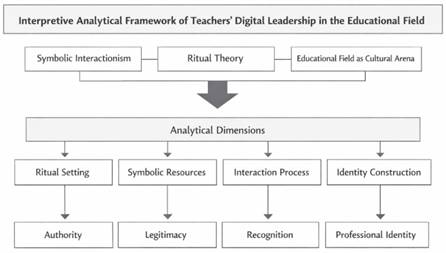
Figure 1. The figure illustrates how symbolic interactionism, ritual theory, and the concept of the educational field jointly inform the four analytical dimensions of this study: ritual setting, symbolic resources, interaction process, and identity construction.
4. Research Design
4.1 Research Approach
This study adopts a qualitative and interpretive research approach informed by educational anthropology. Rather than treating teachers’ digital leadership as a measurable variable or a fixed competency category, the study seeks to understand how it is enacted, experienced, and interpreted in everyday educational contexts. The focus is therefore placed on meaning, practice, interaction, and cultural context. Such an approach is especially appropriate for exploring leadership as a lived and symbolically mediated process, since it allows close attention to be paid to the subtle ways in which authority, legitimacy, and professional identity are constructed in routine school life (Jensen et al., 2022; Nemorin, 2025).
From this perspective, the paper does not aim to generalize causal relationships in a statistical sense. Instead, it aims to produce a thick and context-sensitive interpretation of teachers’ digital leadership by examining how digital practices become culturally meaningful within the educational field. The interpretive orientation of the study also reflects its theoretical commitment to symbolic interactionism and ritual theory, both of which emphasize the situated production of meaning in social life (Bergdahl, 2025; DeMeulenaere, 2023; Jensen et al., 2022).
4.2 Research Contexts
To capture the everyday enactment of teachers’ digital leadership, this study focuses on three typical educational contexts in which digital practice is highly visible and relationally significant: teaching-research activities, digital classroom teaching, and home-school collaboration. These contexts were selected because they represent three key dimensions of teachers’ professional life: collegial interaction, instructional performance, and external communication. Together, they provide a multidimensional view of how digital leadership is practiced across the educational field (Allwood & Brodin, 2025; Nemorin, 2025; Ulla et al., 2024).
Teaching-research activities constitute an important professional setting in which teachers discuss lesson design, exchange digital resources, demonstrate pedagogical approaches, and negotiate standards of instructional innovation. Digital classroom teaching represents the instructional core of teachers’ work, where technology use, classroom organization, and interaction with students become publicly observable and pedagogically meaningful. Home-school collaboration, increasingly mediated by digital platforms and communication tools, extends teachers’ leadership beyond the classroom and into the broader relational sphere of education, where trust, accountability, and responsiveness are continuously negotiated (Connolly et al., 2023; McCarthy et al., 2023; Purnomo et al., 2024).
These three contexts are not isolated domains. Rather, they are interconnected arenas through which teachers’ digital leadership circulates, accumulates recognition, and gains legitimacy. By examining them together, the study is able to reveal both the diversity and coherence of leadership practice in digital education.
4.3 Data Sources and Materials
This study is based on interpretive analysis of practice-oriented educational materials and scene-based observations. Depending on actual research conditions, the data sources may include field notes from school-based professional activities, observation records of digital teaching practices, interview materials with teachers, relevant institutional documents, and communication texts drawn from digital educational platforms. These materials are valuable not simply because they provide factual information, but because they preserve the symbolic and interactional dimensions of educational practice (Jensen et al., 2022; Nemorin, 2025).
Particular attention is given to materials that reflect repeated actions, meaningful expressions, role negotiation, and visible forms of digital engagement. For example, records of lesson-study meetings may reveal how teachers publicly display competence and coordinate pedagogical authority. Classroom observations may show how digital tools are embedded in instructional performance and classroom order. Parent-teacher communication records may reflect how teachers use digital discourse to convey care, responsibility, and legitimacy. In each case, the interest of the study lies not only in what teachers do, but in what their actions mean within a specific educational setting (Allwood & Brodin, 2025; Nemorin, 2025; Ulla et al., 2024).
Because this paper is interpretive in orientation, the materials are approached as cultural texts. They are read not merely for descriptive content, but for the symbolic meanings, ritual patterns, and interactional logics they embody.
4.4 Analytical Strategy
The analysis proceeds through an interpretive and thematic strategy. First, the selected materials are organized according to the three research contexts: teaching-research activities, digital classroom teaching, and home-school collaboration. Second, recurring patterns of action, discourse, and interaction are identified in order to detect ritualized forms of practice. Third, special attention is paid to symbolic resources such as digital tools, communicative language, visual presentation, and institutional references that contribute to the construction of leadership meaning. Finally, the analysis interprets how these ritual and symbolic elements shape recognition, authority, identity, and relational coordination within the educational field (Jensen et al., 2022; Nemorin, 2025).
This analytical process is guided by the framework proposed in the previous section, namely the interrelation of ritual setting, symbolic resources, interaction process, and identity construction. Instead of treating digital leadership as an independent object that exists prior to practice, the study traces how leadership emerges through repeated and socially recognized forms of action. In this sense, analysis is not separated from interpretation; rather, it is through interpretation that leadership becomes visible as a cultural phenomenon (Avidov-Ungar & Forkosh-Baruch, 2018; Jensen et al., 2022; Lai & Jin, 2021).
4.5 Ethical Considerations and Research Limitations
As the study concerns educational practice and potentially involves school-based interactions, ethical sensitivity is essential. Any empirical materials used in the research should ensure anonymity and confidentiality. The names of schools, teachers, students, and parents should be replaced or concealed where necessary, and digital communication materials should be handled with particular care because of their relational and semi-private nature. The purpose of the research is interpretive rather than evaluative, and the analysis should avoid reducing participants’ actions to simplistic judgments of effectiveness or deficiency (Jensen et al., 2022).
At the same time, the interpretive nature of the study brings certain limitations. Because the analysis emphasizes cultural meaning and contextual understanding, its findings are not intended to provide universal or standardized conclusions. The interpretation may also be influenced by the researcher’s theoretical perspective and reading of symbolic materials. Nevertheless, these limitations do not diminish the value of the study. On the contrary, they reflect the methodological premise that educational leadership is a context-dependent and meaning-laden process that cannot be fully captured through abstract measurement alone (Nemorin, 2025; Trevisan, 2024).
5. Ritualized Scenes of Teachers’ Digital Leadership
5.1 Teaching-Research Activities as Ritual Space
Teaching-research activities are one of the most important professional settings in which teachers’ digital leadership becomes visible. On the surface, these activities are designed for lesson planning, pedagogical discussion, experience sharing, and collective reflection. Yet from an anthropological perspective, they also function as ritual spaces where competence is displayed, authority is symbolically affirmed, and professional identity is collectively negotiated. In such settings, digital leadership is not merely talked about; it is performed (Allwood & Brodin, 2025; Bergdahl, 2025; DeMeulenaere, 2023).
When teachers present digital lesson plans, demonstrate the use of educational platforms, explain how data can be used to track student learning, or recommend technological tools for classroom improvement, they are doing more than exchanging professional information. These acts carry symbolic meanings. They mark certain teachers as knowledgeable, innovative, and capable of guiding others through the uncertainties of digital reform. The meeting space thereby becomes a site in which informal hierarchies are produced and recognized through repeated patterns of performance (Antonopoulou et al., 2025; Connolly et al., 2023; Rasdiana et al., 2024).
The ritualized nature of these activities lies in their regularity, structure, and symbolic density. Teaching-research meetings often follow established procedures: preparation, presentation, commentary, reflection, and summary. Within this sequence, teachers’ digital contributions gain ceremonial value. To speak fluently about a digital platform, to demonstrate a well-designed multimedia lesson, or to articulate the educational meaning of technological integration becomes a form of symbolic action. Such action not only communicates professional competence but also contributes to the public enactment of leadership (Bergdahl, 2025; Hu & Wang, 2024).
Moreover, recognition in these ritual spaces is interactionally produced. A teacher’s digital leadership is strengthened when colleagues respond with attention, imitation, endorsement, or reliance. Leadership therefore does not emerge solely from technical expertise; it is constituted through a collective process of acknowledgment within the professional community. In this sense, teaching-research activities serve as a ritual mechanism through which digital leadership is made visible, legitimate, and repeatable (Avidov-Ungar & Forkosh-Baruch, 2018; Lai & Jin, 2021; Lan, 2024).
5.2 Digital Classroom Teaching as a Performative Arena
If teaching-research activities provide a collegial ritual space, then digital classroom teaching constitutes a performative arena in which teachers’ digital leadership is enacted before students in real time. The classroom is not simply a place where technology is used to deliver content. It is also a socially organized setting in which authority, order, participation, and legitimacy are continuously produced through practice. In the digital classroom, teachers’ leadership is embodied in how they orchestrate tools, structure interaction, manage visibility, and sustain pedagogical rhythm (Allwood & Brodin, 2025; Bergdahl, 2025; Nemorin, 2025).
The use of smart boards, online platforms, multimedia presentations, instant feedback systems, and digital assignments creates a new symbolic environment for teaching. Within this environment, the teacher’s ability to control transitions, coordinate participation, and translate technological functions into meaningful learning experiences becomes central to the perception of leadership. Students do not encounter digital leadership as an abstract concept; they encounter it through the teacher’s presence, fluency, confidence, and capacity to organize the classroom through technology (Antonopoulou et al., 2025; Nemorin, 2025; Trevisan, 2024).
This process has a clear ritual dimension. Digital classroom routines often involve repeated sequences: logging into a platform, displaying tasks, guiding participation, collecting responses, visualizing results, and summarizing performance. These patterned actions create expectations and stabilize the communicative order of the classroom. Over time, they become normalized rituals through which teachers demonstrate not only pedagogical competence but also authority in the digital environment. The teacher’s leadership is thus enacted through repetition, coordination, and symbolic control of the teaching scene (Allwood & Brodin, 2025; Bergdahl, 2025; Hu & Wang, 2024).
At the same time, digital classroom leadership is highly interactional. Students’ responses—whether attentive, cooperative, hesitant, or resistant—shape the effectiveness and meaning of the teacher’s actions. A teacher’s digital leadership becomes persuasive when students accept the digital order of the classroom, follow the symbolic cues embedded in technological routines, and interpret the teacher as a credible organizer of learning. The classroom therefore reveals that leadership is not a one-sided projection of authority, but a negotiated achievement emerging from situated interaction (Lai & Jin, 2021; Lan, 2024; Trevisan, 2024).
5.3 Home-School Collaboration as Relational Ritual
Teachers’ digital leadership also extends into the sphere of home-school collaboration, where digital communication tools have become central to the maintenance of educational relationships. Messaging groups, school applications, digital notice systems, and online feedback platforms have reshaped how teachers communicate with parents and how educational responsibility is represented beyond the physical boundaries of the school. In this context, teachers’ digital leadership appears less as instructional performance and more as relational coordination (Connolly et al., 2023; McCarthy et al., 2023; Ulla et al., 2024).
Home-school digital communication is often treated as a practical mechanism for information delivery, but it also has ritualized features. Daily notices, attendance reminders, learning updates, behavioral feedback, holiday messages, and task notifications frequently follow repeated formats and predictable rhythms. Through these repeated communicative acts, teachers sustain educational order, affirm institutional expectations, and symbolize their continuing presence in students’ learning lives. These practices function as relational rituals because they create continuity, predictability, and moral reassurance in the teacher-parent relationship (Bergdahl, 2025; DeMeulenaere, 2023; Hu & Wang, 2024).
The symbolic dimension of this process is equally significant. The tone of digital communication, the timing of responses, the format of announcements, and the presentation of information all influence how parents perceive the teacher’s authority, responsibility, and care. A concise and well-structured message may symbolize professionalism; a timely response may symbolize commitment; a carefully worded explanation may symbolize empathy and pedagogical responsibility. In this way, teachers’ digital leadership is enacted not only through decision-making but also through symbolic communication that shapes trust and recognition (Trevisan, 2024; Ulla et al., 2024).
Home-school collaboration also reveals the complexity of leadership in the digital field. Teachers are required to balance institutional expectations, parental concerns, emotional labor, and technological efficiency. Their leadership depends on how effectively they mediate these overlapping demands while preserving legitimacy and relational stability. Thus, in the context of home-school interaction, digital leadership becomes a relational ritual of coordination, reassurance, and symbolic presence (Allwood & Brodin, 2025; McCarthy et al., 2023; Ulla et al., 2024).
5.4 From Scene to Structure: The Ritual Logic of Digital Leadership
Although teaching-research activities, digital classroom teaching, and home-school collaboration differ in function and participants, they share an underlying ritual logic. In all three scenes, teachers’ digital leadership is enacted through repeated, structured, and symbolically meaningful practices. Leadership becomes visible not as a static trait, but as an effect of patterned participation in socially recognized situations. These scenes do not merely provide contexts for leadership; they actively produce it (Bergdahl, 2025; DeMeulenaere, 2023; Hu & Wang, 2024).
Across these settings, the teacher’s digital actions are interpreted by others within a shared cultural framework. Competence, authority, care, innovation, and legitimacy are not automatically contained in digital practice itself; they are generated through ritual repetition and social recognition. The teacher who repeatedly demonstrates technological fluency in professional meetings, manages digital learning order in the classroom, and maintains stable communication with parents gradually comes to embody digital leadership in the eyes of others. Ritual practice thus transforms individual action into collectively meaningful identity (Avidov-Ungar & Forkosh-Baruch, 2018; Lai & Jin, 2021; Lan, 2024).
This scene-based analysis suggests that teachers’ digital leadership should be understood as a culturally patterned accomplishment rooted in everyday educational life. It is not external to routine practice, but emerges from it. The ritualized scenes examined here therefore provide the empirical and interpretive foundation for understanding how digital leadership is symbolically constructed in the educational field.
Figure 2. Ritualized Scenes of Teachers’ Digital Leadership in Everyday Educational Practice
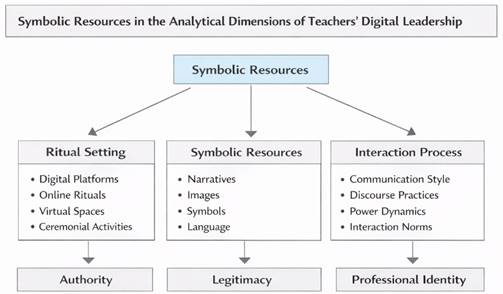
Figure 2. The figure summarizes the three major contexts analyzed in this study—teaching-research activities, digital classroom teaching, and home-school collaboration—and highlights their shared ritual logic of repetition, symbolic meaning, and social recognition.
6. Symbolic Expressions of Teachers’ Digital Leadership
6.1 Digital Tools as Symbolic Resources
In discussions of educational digitalization, digital tools are often understood as neutral instruments that improve instructional efficiency, facilitate communication, or support data management. However, from an anthropological perspective, tools are never merely technical objects. Once embedded in the educational field, they become symbolic resources through which actors express values, identities, and relations of authority. In this sense, the digital tools used by teachers are not only functional devices but also cultural signs that participate in the construction of leadership (Nemorin, 2025; Trevisan, 2024).
When teachers skillfully employ online platforms, interactive whiteboards, data dashboards, instructional software, or communication applications, these tools may symbolize much more than technical competence. They can signify innovation, modernity, professionalism, adaptability, and institutional alignment. A teacher who confidently organizes classroom interaction through digital platforms may be interpreted as forward-looking and pedagogically capable. Similarly, a teacher who effectively manages home-school communication through digital systems may be regarded as responsible, responsive, and trustworthy. The symbolic meaning of these tools emerges not from the tools themselves, but from the interpretive framework within which they are used (Antonopoulou et al., 2025; Nemorin, 2025; Ulla et al., 2024).
At the same time, digital tools serve as visible markers of leadership because they reshape the public presentation of teaching. Through screens, interfaces, graphs, online records, and platform-mediated communication, teachers’ professional actions become more visible, archivable, and shareable. This visibility enables leadership to be symbolically displayed across different audiences, including students, colleagues, parents, and administrators. The teacher’s digital proficiency thereby becomes part of a recognizable leadership image within the school culture (McCarthy et al., 2023; Trevisan, 2024; Ulla et al., 2024).
Nevertheless, the symbolic power of digital tools is not fixed or universally positive. In some contexts, extensive use of digital systems may also be associated with pressure, performativity, or bureaucratic compliance. This ambivalence suggests that digital tools operate as contested symbols whose meanings are shaped by local institutional culture and everyday interpretation. Teachers’ digital leadership must therefore be understood not simply as tool use, but as a symbolic practice in which technologies are invested with social meaning (Nemorin, 2025; Purnomo et al., 2024).
6.2 Professional Discourse and Symbolic Authority
Teachers’ digital leadership is also expressed through language. In educational settings, discourse does not merely transmit information; it organizes perception, frames action, and distributes authority. The ways teachers talk about technology, explain digital practices, instruct others, and interpret educational change all contribute to the symbolic construction of leadership. Professional discourse thus becomes an important medium through which leadership is enacted and recognized (Avidov-Ungar & Forkosh-Baruch, 2018; Lai & Jin, 2021).
In teaching-research activities, for example, teachers who can fluently explain digital lesson design, justify the pedagogical value of a technological tool, or connect digital practice to broader educational goals often occupy a position of symbolic authority. Their language signals competence and confidence, and it helps transform digital action into meaningful professional knowledge. In classroom settings, instructional discourse shapes how students interpret digital tasks and accept technological routines as part of the learning order. In home-school communication, carefully framed messages can communicate responsibility, empathy, and professionalism. Across these contexts, discourse does not simply accompany digital leadership; it actively produces it (Allwood & Brodin, 2025; Trevisan, 2024; Ulla et al., 2024).
This process is especially important because digital transformation often introduces uncertainty into educational practice. New platforms, new routines, and new expectations may create ambiguity for teachers, students, and parents alike. In such situations, symbolic authority depends not only on the ability to act, but also on the ability to define what action means. Teachers who can translate policy language into practical understanding, explain digital requirements in accessible terms, and give coherent meaning to technological change are more likely to be recognized as leaders in the educational field (Connolly et al., 2023; McCarthy et al., 2023; Purnomo et al., 2024).
Moreover, discourse functions symbolically because it carries moral as well as technical significance. Expressions emphasizing efficiency, innovation, participation, responsibility, and care are not value-neutral. They position teachers within a normative order and shape how their leadership is morally evaluated. Teachers’ digital leadership therefore involves discursive work through which educational values are articulated, legitimized, and embodied in everyday communication (Cucchiara et al., 2025; Litina & Rubene, 2024; Plaku & Leka, 2025).
6.3 Visibility, Presence, and the Public Performance of Competence
A central feature of digital educational environments is the expansion of visibility. Through platforms, interfaces, communication channels, and data records, educational action becomes more observable and more easily circulated. This transformation has important implications for teachers’ digital leadership, because visibility plays a crucial role in how leadership is perceived, validated, and stabilized (McCarthy et al., 2023; Trevisan, 2024; Ulla et al., 2024).
In traditional settings, much of teachers’ work remained localized and partially hidden within classrooms or routine interactions. In digital environments, however, teachers’ actions are more likely to be displayed before multiple audiences. Lesson materials can be shared, communication records can be reviewed, participation data can be tracked, and digital performances can be observed in real time. Under these conditions, leadership is increasingly connected to the capacity to maintain a meaningful presence across visible platforms and scenes (Nemorin, 2025; Trevisan, 2024).
This presence is not reducible to mere exposure. What matters is the symbolic quality of visibility. A teacher who appears consistently organized, responsive, and competent across digital settings may come to embody a stable image of leadership. Presence in this sense involves communicative style, timing, reliability, and the ability to manage the public dimensions of educational work. It is through these visible forms of practice that teachers make their leadership legible to others (Ulla et al., 2024).
At the same time, the public performance of competence is always relational. Visibility becomes leadership only when others interpret it as meaningful and legitimate. A digital lesson that appears technically sophisticated but pedagogically disconnected may not generate recognition. Likewise, frequent online communication may be interpreted as either responsible coordination or excessive control, depending on context. The symbolic value of visibility therefore depends on social interpretation. Teachers’ digital leadership emerges not from being seen alone, but from being seen in ways that align with shared cultural expectations (Avidov-Ungar & Forkosh-Baruch, 2018; Lai & Jin, 2021; Trevisan, 2024).
6.4 Symbolic Recognition and the Formation of Leadership Identity
The symbolic expressions discussed above—tools, discourse, and visibility—acquire leadership significance only when they are socially recognized. Recognition is a crucial mechanism in the formation of teachers’ digital leadership because it links external interpretation with internal identity. Through repeated acknowledgment by students, colleagues, parents, and institutional actors, teachers’ symbolic performances are transformed into relatively stable leadership identities (Avidov-Ungar & Forkosh-Baruch, 2018; Lai & Jin, 2021; Lan, 2024).
Recognition may take many forms. Colleagues may seek advice from a teacher who is viewed as digitally capable. Students may respond more readily to a teacher who is perceived as effective in managing digital learning environments. Parents may place greater trust in a teacher whose communication appears timely and professional. Administrators may assign new responsibilities to teachers who demonstrate visible competence in digital reform. These responses reinforce the teacher’s symbolic position and contribute to the gradual consolidation of leadership identity (Abu-Tineh et al., 2025; Antonopoulou et al., 2025; Rasdiana et al., 2024).
Identity formation in this context is not simply psychological; it is social and cultural. Teachers come to see themselves as leaders through participation in recognized practices and through the interpretive feedback of others. In other words, identity is formed through symbolic interaction. The teacher who is repeatedly positioned as a coordinator, innovator, or guide in digital settings may increasingly internalize these roles and reproduce them in future practice. Leadership thus becomes both a performed identity and a recognized social status within the educational field (Lan, 2024; Trevisan, 2024; Ulla et al., 2024).
This process also demonstrates that teachers’ digital leadership is inseparable from school culture. Symbolic recognition does not occur in a vacuum, but within institutional settings that define what counts as competence, innovation, and legitimacy. As a result, leadership identity is always shaped by broader cultural norms and value systems. Understanding teachers’ digital leadership therefore requires attention not only to individual action, but also to the symbolic environment in which recognition becomes possible (Cucchiara et al., 2025; Litina & Rubene, 2024; Plaku & Leka, 2025).
Figure 3. Symbolic Construction Mechanism of Teachers’ Digital Leadership

Figure 3. The figure shows how digital tools, professional discourse, and visibility function as symbolic expressions that become leadership only through interactional interpretation, social recognition, and repeated practice, eventually contributing to authority stabilization and identity construction.
7. Interaction Logic and Cultural Meaning
7.1 Digital Leadership as an Interactional Achievement
The preceding analysis has shown that teachers’ digital leadership is expressed through ritualized scenes and symbolic resources. Yet these elements alone do not fully explain how leadership comes into being. Leadership emerges only when ritual performance and symbolic expression are embedded in social interaction. From this perspective, teachers’ digital leadership should be understood as an interactional achievement rather than a fixed attribute (Avidov-Ungar & Forkosh-Baruch, 2018; Lai & Jin, 2021; Lan, 2024).
An interactional achievement is something that becomes real through response, interpretation, and recognition. In the educational field, teachers’ digital actions gain leadership significance only when others respond to them as meaningful, appropriate, or authoritative. A teacher may initiate a digital classroom routine, lead a technology-focused discussion, or coordinate communication through an online platform, but these actions do not automatically produce leadership. Leadership is constituted when students follow the routine, colleagues treat the teacher as a reference point, parents acknowledge the teacher’s communicative authority, or administrators recognize the teacher as a contributor to digital reform (Abu-Tineh et al., 2025; Lai & Jin, 2021; Rasdiana et al., 2024).
This interactional logic highlights the relational nature of leadership. Teachers do not simply “have” digital leadership in the abstract; they enact it in relation to others. Their leadership is shaped by feedback, resistance, imitation, and expectation. In this sense, digital leadership is dynamic and contingent. It may be strengthened in one context and weakened in another, depending on how participants interpret the teacher’s actions. Such a view challenges purely individualistic or competency-based approaches and redirects attention to the social processes through which leadership is produced (Avidov-Ungar & Forkosh-Baruch, 2018; Antonopoulou et al., 2025; Lan, 2024).
7.2 Ritual Repetition and the Stabilization of Authority
Although leadership is interactionally achieved, it does not remain entirely fluid. Over time, repeated practices may stabilize authority and make leadership appear natural. Ritual repetition plays a central role in this process. Through the regular performance of digital routines across professional meetings, classrooms, and home-school communication, teachers’ actions acquire predictability, legitimacy, and symbolic consistency. What begins as situated performance may gradually become established authority (Bergdahl, 2025; DeMeulenaere, 2023; Hu & Wang, 2024).
Repetition matters because it creates familiarity and expectation. When a teacher repeatedly demonstrates effective use of digital resources in teaching-research activities, consistently manages digital classroom interaction, or habitually maintains orderly and meaningful communication with parents, these actions become recognizable patterns. Others begin to anticipate the teacher’s role, rely on the teacher’s competence, and interpret the teacher as a stable source of guidance. Authority is thus stabilized not through formal declaration alone, but through the accumulation of repeated, meaningful practice (Allwood & Brodin, 2025; Bergdahl, 2025; Hu & Wang, 2024).
This process also reveals how leadership becomes embedded in the moral order of the school. Repetition turns practice into norm. Once digital leadership is publicly associated with professionalism, care, efficiency, or innovation, teachers who successfully perform these repeated actions come to embody valued institutional ideals. Their authority is strengthened because it resonates with what the educational field collectively affirms as legitimate. Ritual repetition therefore transforms leadership from episodic performance into a socially sustained position (Cucchiara et al., 2025; Litina & Rubene, 2024; Plaku & Leka, 2025).
7.3 Identity Construction in the Digital Educational Field
As authority stabilizes through interaction and repetition, teachers’ professional identity is also reshaped. In digital educational settings, teachers are not simply adapting to new tools; they are negotiating who they are in relation to changing pedagogical expectations, institutional demands, and cultural values. Teachers’ digital leadership thus becomes an important site of identity construction (Avidov-Ungar & Forkosh-Baruch, 2018; Lai & Jin, 2021; Lan, 2024).
This identity is multifaceted. In some contexts, the teacher appears as an innovator who introduces new methods and platforms. In other contexts, the teacher acts as a coordinator who manages communication and organizes relationships. Elsewhere, the teacher functions as an interpreter who gives meaning to policy, technology, and pedagogical change. These roles are not externally imposed in a purely mechanical way; they are constructed through participation in everyday practice and through symbolic recognition from others (Trevisan, 2024; Ulla et al., 2024).
The digital educational field therefore encourages teachers to perform identities that combine technical skill with cultural mediation. A teacher’s leadership identity is built not only on the ability to use digital tools, but also on the ability to align those tools with educational values, relational expectations, and institutional order. In this sense, digital leadership is deeply intertwined with professional self-understanding. Teachers who repeatedly succeed in meaningful digital practice may come to see themselves as capable agents of change, while those who experience misrecognition or tension may develop more ambivalent identities in relation to digital reform (Lan, 2024; Trevisan, 2024).
This identity process is important because it demonstrates that digital transformation is not only structural or technical, but also personal and cultural. It reshapes how teachers understand their role, their authority, and their place within the educational field (Avidov-Ungar & Forkosh-Baruch, 2018; Lai & Jin, 2021; Trevisan, 2024).
7.4 Cultural Tensions and Ambivalence in Digital Leadership Practice
Despite its visible symbolic power, teachers’ digital leadership is not free from tension. The educational field is marked by multiple and sometimes conflicting expectations, and digital leadership often emerges within these contradictions. An anthropological interpretation must therefore pay attention not only to order and legitimacy, but also to ambivalence, negotiation, and strain (Nemorin, 2025; Trevisan, 2024).
One important tension lies between technological efficiency and humanistic educational care. Digital systems may improve communication, data management, and instructional organization, but they may also compress emotional nuance, increase surveillance, or intensify the performative demands placed on teachers. A teacher’s digital leadership may therefore be appreciated as efficient and modern while also experienced as burdensome or emotionally demanding (Allwood & Brodin, 2025; Nemorin, 2025; Ulla et al., 2024).
A second tension exists between formal institutional expectations and informal relational realities. Schools may promote digital leadership as a policy goal, yet the actual enactment of leadership depends on local trust, interpersonal dynamics, and cultural interpretation. What is institutionally encouraged may not always be relationally accepted. Teachers must often mediate between official discourse and lived practice, translating digital reform into forms that are meaningful and sustainable within everyday school life (Connolly et al., 2023; McCarthy et al., 2023; Purnomo et al., 2024).
A third tension concerns visibility itself. While digital environments provide opportunities for recognition, they also expose teachers to constant observation and implicit evaluation. The same visibility that supports leadership performance may also generate pressure, self-monitoring, and symbolic competition. Teachers’ digital leadership is therefore shaped by both empowerment and vulnerability (Trevisan, 2024; Ulla et al., 2024).
These tensions do not weaken the significance of digital leadership; rather, they reveal its complexity as a cultural practice. Leadership in the digital educational field is not a seamless expression of competence, but an ongoing negotiation among values, expectations, and relationships. Recognizing this ambivalence allows for a deeper and more realistic understanding of how teachers live and interpret digital transformation (Lan, 2024; Nemorin, 2025; Trevisan, 2024).
7.5 Toward a Cultural Interpretation of Teachers’ Digital Leadership
Taken together, the interactional processes described above suggest that teachers’ digital leadership is best understood as a culturally embedded phenomenon. It is produced through ritual repetition, symbolic expression, interactional recognition, and identity negotiation. Rather than treating leadership as a purely technical or managerial capacity, this study shows that it is woven into the social and moral fabric of educational life (Bergdahl, 2025; Cucchiara et al., 2025; Lai & Jin, 2021).
Such a cultural interpretation expands the meaning of digital leadership in at least three ways. First, it reveals that leadership is enacted in everyday scenes rather than existing only in formal organizational discourse. Second, it demonstrates that symbols, rituals, and communicative forms are central to how leadership is recognized and sustained. Third, it highlights that digital transformation in education is not only a matter of innovation and efficiency, but also a matter of cultural adaptation, relational coordination, and identity reconstruction (Connolly et al., 2023; Litina & Rubene, 2024; McCarthy et al., 2023).
This understanding prepares the ground for the final discussion and conclusion of the paper. It suggests that any serious account of teachers’ digital leadership must move beyond measurable competence and engage with the deeper meanings embedded in school culture and everyday educational practice.
8. Discussion
8.1 Reinterpreting Teachers’ Digital Leadership Beyond Competency Frameworks
The analysis presented above suggests that teachers’ digital leadership cannot be fully understood within the dominant framework of competencies, skills, or performance indicators alone. Although technical proficiency, instructional innovation, and organizational coordination remain important dimensions of leadership, they do not sufficiently explain how leadership is actually lived and recognized in the educational field. The present study shows that teachers’ digital leadership is not merely a professional capacity that individuals possess, but a culturally situated process enacted through ritualized action, symbolic communication, and interactional recognition (Abu-Tineh et al., 2025; Antonopoulou et al., 2025; Lai & Jin, 2021).
This reinterpretation shifts the analytical focus from what teachers are able to do in digital environments to how their actions become meaningful within school culture. Such a shift is significant because it reveals that leadership is not reducible to tool mastery or institutional role. Instead, it emerges in the everyday production of educational order: in how teachers perform competence before colleagues, organize digital participation in classrooms, communicate legitimacy to parents, and continuously negotiate their position in relation to institutional expectations. In this sense, digital leadership is best understood as a form of cultural practice embedded in the moral and symbolic life of schooling (Bergdahl, 2025; Cucchiara et al., 2025; DeMeulenaere, 2023).
By foregrounding ritual and symbolism, this study also challenges the assumption that digital transformation is primarily a technical process. The findings suggest that technological change in education is always mediated by meaning, identity, and social interpretation. Teachers do not simply apply digital systems; they inhabit them, interpret them, and reproduce them through culturally patterned forms of practice. Thus, any adequate concept of teachers’ digital leadership must account for these deeper dimensions of educational life (Nemorin, 2025; Trevisan, 2024; Ulla et al., 2024).
8.2 Contributions to Educational Leadership Studies
This study contributes to educational leadership research by expanding the conceptual boundaries of digital leadership. Existing scholarship has made valuable progress in identifying the structural, behavioral, and strategic dimensions of leadership in digital education. However, these approaches often privilege formal frameworks over lived experience. By contrast, the present study emphasizes the micro-level enactment of leadership in everyday settings and highlights the importance of symbols, rituals, and interactions in shaping authority and legitimacy (Antonopoulou et al., 2025; Connolly et al., 2023; McCarthy et al., 2023).
This contribution is important for at least three reasons. First, it enriches leadership theory by demonstrating that leadership is not simply exercised through explicit decision-making or institutional control, but also through subtle forms of symbolic action and everyday coordination. Second, it brings interpretive depth to digital leadership studies by showing that technological practices carry meanings that exceed their practical function. Third, it provides a relational understanding of leadership by illustrating that authority is achieved through recognition rather than automatically guaranteed by role or skill (Avidov-Ungar & Forkosh-Baruch, 2018; Lai & Jin, 2021; Lan, 2024).
In this way, the study extends leadership research from a focus on measurable competencies to a broader understanding of how leadership is socially produced in educational contexts. Such an extension is especially relevant in digital environments, where visibility, communication, and interaction are increasingly mediated by platforms and symbolic forms. The study therefore offers a more culturally nuanced account of teachers’ leadership under conditions of digital transformation (Trevisan, 2024; Ulla et al., 2024).
8.3 Contributions to Educational Anthropology and the Study of School Culture
The paper also contributes to educational anthropology by demonstrating the value of anthropological concepts for interpreting contemporary educational change. While anthropology has long been concerned with ritual, symbol, identity, and meaning, these concepts have not been widely mobilized in research on teachers’ digital leadership. By applying symbolic interactionism and ritual theory to digital educational practice, this study shows that schools remain deeply cultural institutions even in technologically saturated environments (Bergdahl, 2025; DeMeulenaere, 2023; Hu & Wang, 2024).
This contribution is particularly significant because digitalization is often discussed in universal or policy-driven terms, as though technology transforms education in a linear and self-evident manner. An anthropological perspective complicates this assumption by revealing that digital reform is always filtered through local school cultures, institutional norms, and everyday relationships. What counts as innovation, authority, responsibility, or legitimacy is not determined by technology alone, but by how educational actors interpret technological practices within specific cultural settings (Cucchiara et al., 2025; Litina & Rubene, 2024; Nemorin, 2025).
Furthermore, the study underscores that school culture is not confined to formal values or organizational slogans. It is reproduced through repeated actions, communicative conventions, symbolic performances, and shared expectations. Teachers’ digital leadership becomes visible precisely in these processes. As such, the paper contributes to a broader anthropological understanding of how educational modernization is lived, negotiated, and symbolically organized in everyday practice (Cucchiara et al., 2025; Plaku & Leka, 2025).
8.4 Practical Implications for Digital Educational Reform
Beyond its theoretical value, this study also offers practical implications for schools, teacher development programs, and educational policymakers. If teachers’ digital leadership is indeed a culturally embedded and interactionally achieved practice, then efforts to promote digital transformation should not focus exclusively on technical training or performance assessment. While such measures are necessary, they are insufficient on their own. Schools must also attend to the symbolic, relational, and ritual dimensions of educational practice (Connolly et al., 2023; McCarthy et al., 2023; Rasdiana et al., 2024).
First, teacher development programs should move beyond narrow skill acquisition and include opportunities for reflective interpretation of digital practice. Teachers need support not only in learning how to use technology, but also in understanding how digital tools shape communication, authority, and identity in the educational field (Avidov-Ungar & Forkosh-Baruch, 2018; Lai & Jin, 2021; Lan, 2024). Second, schools should recognize the importance of collegial spaces such as teaching-research activities, since these spaces function as ritual arenas in which digital leadership is publicly enacted and socially recognized. Strengthening such professional spaces may help cultivate more sustainable and culturally meaningful forms of leadership (Allwood & Brodin, 2025; Bergdahl, 2025; DeMeulenaere, 2023).
Third, policymakers should be cautious about reducing digital leadership to standardized indicators. Excessive emphasis on visible performance, reporting systems, or technological compliance may undermine the relational and interpretive dimensions that make leadership effective in practice. Instead, policy frameworks should allow room for contextual adaptation and acknowledge that leadership emerges differently across school cultures and interactional settings (Abu-Tineh et al., 2025; McCarthy et al., 2023; Purnomo et al., 2024).
Finally, the study suggests that successful digital reform depends not only on infrastructure and policy design, but also on the cultivation of trust, legitimacy, and symbolic recognition. Teachers can only exercise digital leadership meaningfully when their practices resonate with the lived realities of school life and are recognized by the communities in which they work (Cucchiara et al., 2025; Litina & Rubene, 2024; Plaku & Leka, 2025).
8.5 Limits of the Present Interpretation
Although this study offers a new perspective on teachers’ digital leadership, its interpretive orientation also entails certain limitations. Because the paper emphasizes cultural meaning and scene-based analysis, it does not aim to produce universally generalizable conclusions. The patterns identified here should therefore be understood as interpretive insights rather than fixed models applicable to all contexts (Jensen et al., 2022; Nemorin, 2025).
In addition, the analytical framework relies on symbolic reading and theoretical interpretation, which means that the researcher’s perspective inevitably shapes the conclusions. Different educational settings may also generate different ritual forms, symbolic meanings, and interactional logics. The educational field is not culturally uniform, and the meanings attached to digital leadership may vary across school types, regions, and institutional traditions (Cucchiara et al., 2025; Litina & Rubene, 2024; Plaku & Leka, 2025).
Nevertheless, these limitations do not weaken the significance of the study. Rather, they clarify its purpose: to provide a deeper understanding of the cultural texture of teachers’ digital leadership and to open new directions for inquiry beyond instrumental explanation.
9. Conclusion
9.1 Main Findings
This paper has examined teachers’ digital leadership from an anthropological perspective, arguing that it should be understood not merely as a technical competence or managerial role, but as a culturally embedded process of ritual practice, symbolic expression, and interactional recognition in the educational field. By focusing on three typical contexts—teaching-research activities, digital classroom teaching, and home-school collaboration—the study has shown that teachers’ digital leadership is enacted in everyday educational life through patterned actions, communicative forms, and socially meaningful performances (Allwood & Brodin, 2025; Bergdahl, 2025; DeMeulenaere, 2023).
The analysis demonstrates that digital tools function as symbolic resources rather than neutral instruments, that professional discourse plays a key role in constructing symbolic authority, and that visibility in digital environments reshapes how leadership is publicly recognized. It further reveals that leadership is not automatically guaranteed by skill or position, but is achieved through interaction, stabilized through ritual repetition, and consolidated through symbolic recognition. In this sense, teachers’ digital leadership is both relational and cultural, rooted in the shared meanings and normative expectations of school life (Avidov-Ungar & Forkosh-Baruch, 2018; Nemorin, 2025; Trevisan, 2024).
9.2 Theoretical Implications
The study offers an alternative conceptualization of teachers’ digital leadership by moving beyond dominant competency-based and instrumental frameworks. It introduces a cultural and interpretive lens that highlights the importance of ritual, symbol, and interaction in understanding educational leadership under conditions of digital transformation. This perspective expands educational leadership research by showing that leadership is not only a matter of effectiveness or innovation, but also a matter of meaning, legitimacy, and identity (Antonopoulou et al., 2025; Lai & Jin, 2021; Lan, 2024).
At the same time, the paper contributes to educational anthropology by demonstrating that contemporary digital reform can be fruitfully analyzed through anthropological concepts traditionally associated with everyday practice and cultural life. The educational field remains a symbolic and relational world even as it becomes increasingly digitized. Understanding teachers’ leadership therefore requires attention to the cultural structures within which digital practices are enacted (Bergdahl, 2025; Cucchiara et al., 2025; Hu & Wang, 2024).
9.3 Practical Implications
From a practical perspective, the study suggests that the cultivation of teachers’ digital leadership should not be limited to technical training or policy enforcement. Schools and educational systems should also pay attention to the ritual spaces, symbolic resources, and relational conditions through which leadership is formed and sustained. Teacher development initiatives should encourage reflective understanding of digital practice, while institutional reform should create supportive environments for meaningful recognition, collegial interaction, and culturally grounded innovation (Connolly et al., 2023; McCarthy et al., 2023; Rasdiana et al., 2024).
In other words, digital educational reform will be more sustainable when it acknowledges that teachers are not only users of technology, but also cultural actors who mediate change through everyday educational practice (Avidov-Ungar & Forkosh-Baruch, 2018; Purnomo et al., 2024).
9.4 Limitations and Future Research
This study remains limited by its interpretive scope and its emphasis on cultural explanation. Future research may extend this perspective by conducting comparative studies across regions, school levels, or educational systems in order to explore how teachers’ digital leadership is differently shaped by local culture and institutional structure. More in-depth ethnographic fieldwork may also provide richer empirical material for examining how digital leadership is negotiated in specific educational communities (Jensen et al., 2022; Nemorin, 2025).
In addition, future studies may further explore the tensions identified in this paper, including the relationship between technological efficiency and educational care, between institutional visibility and professional pressure, and between digital reform discourse and lived pedagogical reality. Such work would deepen our understanding of the complexities of leadership in digitally transformed education (Lan, 2024; Trevisan, 2024; Ulla et al., 2024).
9.5 Final Statement
In conclusion, teachers’ digital leadership is not simply a set of measurable skills for managing technology in education. It is a culturally meaningful practice through which teachers organize relationships, perform authority, negotiate identity, and reproduce the symbolic order of the educational field. By restoring these dimensions to the analysis, this paper offers a more comprehensive and human-centered understanding of digital leadership in contemporary education.
References
- Abu-Tineh, A. M., Alazaizeh, M., Shal, T., Alshaboul, Y., & Ghamrawi, N. (2025). School leaders’ digital leadership and teachers’ digital competency in government schools in Qatar: Predicting teachers’ perceptions. Leadership and Policy in Schools. Advance online publication. https://doi.org/10.1080/15700763.2025.2531061
- Allwood, C.-A., & Brodin, E. (2025). Classroom management as community building: A primary schoolteacher’s integrated rituals, emotional labor, and professional improvisation. Cogent Education, 12(1), Article 2479208. https://doi.org/10.1080/2331186X.2025.2479208
- Antonopoulou, H., Matzavinou, P., Giannoukou, I., & Halkiopoulos, C. (2025). Teachers’ digital leadership and competencies in primary education: A cross-sectional behavioral study. Education Sciences, 15(2), 215. https://doi.org/10.3390/educsci15020215
- Avidov-Ungar, O., & Forkosh-Baruch, A. (2018). Professional identity of teacher educators in the digital era in light of demands of pedagogical innovation. Teaching and Teacher Education, 73, 183–191. https://doi.org/10.1016/j.tate.2018.03.017
- Bergdahl, L. (2025). The pedagogical potential of classroom ritualization: Or, teaching in the subjunctive. Research in Education. Advance online publication. https://doi.org/10.1177/00345237251334389
- Connolly, C., O’Brien, E., & O’Ceallaigh, T. J. (2023). Ensuring knowledge sustainability in a digital era: Empowering digital transformation through digital educational leadership. Technology, Knowledge and Learning. Advance online publication. https://doi.org/10.1007/s10758-023-09707-0
- Cucchiara, M. B., Golann, J. W., & Diehl, D. K. (2025). What is school culture? Proposing a new, integrative model. Theory and Research in Education, 23(2), 163–187. https://doi.org/10.1177/14778785251351272
- DeMeulenaere, E. (2023). Disrupting school rituals. Urban Education, 58(1), 59–86. https://doi.org/10.1177/0042085919838007
- Hu, X., & Wang, X. (2024). Symbolic violence or semiotic mediator? Examining the regulative order through school rituals in China. International Journal of Educational Research, 124, Article 102305. https://doi.org/10.1016/j.ijer.2023.102305
- Jensen, L. X., Bearman, M., Boud, D., & Konradsen, F. (2022). Digital ethnography in higher education teaching and learning—a methodological review. Higher Education, 84, 1143–1162. https://doi.org/10.1007/s10734-022-00838-4
- Lai, C., & Jin, T. (2021). Teacher professional identity and the nature of technology integration. Computers & Education, 175, Article 104314. https://doi.org/10.1016/j.compedu.2021.104314
- Lan, Y. (2024). Through tensions to identity-based motivations: Exploring teacher professional identity in artificial intelligence-enhanced teacher training. Teaching and Teacher Education, 151, Article 104736. https://doi.org/10.1016/j.tate.2024.104736
- Litina, S., & Rubene, Z. (2024). The effect of digital school culture on science education and scientific literacy: A scoping review. Journal of Education Culture and Society, 15(1), 41–55. https://doi.org/10.15503/jecs2024.1.41.55
- McCarthy, A. M., Maor, D., McConney, A., & Cavanaugh, C. (2023). Digital transformation in education: Critical components for leaders of system change. Social Sciences & Humanities Open, 8(1), Article 100479. https://doi.org/10.1016/j.ssaho.2023.100479
- Nemorin, S. (2025). Focal digital devices and meaning in digital education: An ethnographic study of Ghanaian schools. E-Learning and Digital Media, 22(4), 360–373. https://doi.org/10.1177/20427530241239390
- Plaku, A. K., & Leka, K. (2025). The role of leaders in shaping school culture. Frontiers in Education, 10, Article 1541525. https://doi.org/10.3389/feduc.2025.1541525
- Purnomo, E. N., Imron, A., Wiyono, B. B., Sobri, A. Y., & Dami, Z. A. (2024). Transformation of digital-based school culture: Implications of change management on virtual learning environment integration. Cogent Education, 11(1), Article 2303562. https://doi.org/10.1080/2331186X.2024.2303562
- Rasdiana, Wiyono, B. B., Imron, A., Rahma, L., Arifah, N., Azhari, R., Elfira, Sibula, I., & Maharmawan, M. A. (2024). Elevating teachers’ professional digital competence: Synergies of principals’ instructional e-supervision, technology leadership and digital culture for educational excellence in digital-savvy era. Education Sciences, 14(3), 266. https://doi.org/10.3390/educsci14030266
- Trevisan, O. (2024). Teacher digital identity divergences: From teacher education to classroom. British Educational Research Journal, 50(5), 2519–2541. https://doi.org/10.1002/berj.4041
- Ulla, M. B., Lemana II, H. E., & Kohnke, L. (2024). Unveiling the TikTok teacher: The construction of teacher identity in the digital spotlight. Journal of Interactive Media in Education, 2024(1), Article 12. https://doi.org/10.5334/jime.845