DOI:http://doi.org/10.65613/741578
Yuling Zheng1*
1School of Journalism and Communication, Guangzhou University, Guangzhou, 510006
*Correspondence: q673503396@163.com
Abstract
Purpose
In the post-industrial era, digital technology is reshaping the logic of cultural production. Against this background, this study examines how cultural embedding in brand narratives relates to innovation on short video platforms through a cross-platform comparison between Douyin and TikTok.
Design/methodology/approach
Existing studies have examined short-video platforms, brand narratives, and cultural communication, but fewer studies have compared how different dimensions of cultural embedding relate to innovation outcomes across platform architectures. To address this gap, this study develops a dual-dimensional model of cultural embedding and uses panel regressions, interaction tests, and segmented analysis to examine these empirical relationships.
Findings
The findings show that deep embedding is associated with higher short-term engagement but a stronger negative association with exploratory innovation in the high-concentration interval. By contrast, breadth embedding is positively associated with exploratory innovation, especially on TikTok. The platform comparison further suggests that the effects of cultural embedding vary across different platform architectures. Methodologically, the study combines symbol concentration, cultural diversity, and segmented regression to examine these patterns.
Originality/value
This study advances the empirical integration of cultural-industry theory and platform research, and provides a testable analytical framework for understanding the relationship between cultural embedding and innovation among leading Chinese brands on Douyin and TikTok. Its conclusions are most appropriately applied to comparable short-video platform settings rather than being directly extended to global platform governance.
Keywords: Cultural industry perspective; Short video platform; Brand narrative; Cultural embedding mechanism; Cross-platform empirical comparison
1 Introduction
Human society has entered a post-industrial era in which digital technology is reshaping cultural production and consumption. Short video platforms have become an important channel for cultural communication and attract large numbers of daily users. For example, the average daily dwell time on Douyin has reached 112 minutes per user. At the same time, content concentration among leading brands has increased, and the homogenization rate on Douyin has exceeded 65% (Wang et al., 2023; Su & Zou, 2022; Wang & Wang, 2024). These developments make it necessary to examine how platform algorithms and cultural embedding are associated with brand innovation across platforms. Existing studies have mainly examined short-video consumption, platform recommendation, and digital brand communication, but fewer have compared how symbol concentration and cultural diversity shape innovation outcomes across different platform architectures. This is the specific gap addressed in the present study.
To improve the clarity of the study aims, this paper addresses three research questions. RQ1: How do depth embedding and breadth embedding respectively affect exploratory and exploitative innovation in short-video brand narratives? RQ2: How do differences in platform architecture between Douyin and TikTok condition these relationships? RQ3: In the high symbol-concentration interval, does the negative association between deep embedding and innovation become significantly stronger? Together, these questions define the core empirical scope of the study and clarify its relevance to platform ecological governance (Fatma, 2022; Zhou, 2025; Shi & Wen, 2025; Cao et al., 2025).
By integrating critical theory of cultural industry and examining the mechanism of cultural embedding on Douyin, this study offers a new analytical perspective for platform-economy research. On the one hand, the pharmacological framework provides a theoretical lens for understanding short-video effects; on the other hand, this study treats “ideological colonization” and “symbolic poverty” as theory-informed constructs approximated through empirical indicators rather than as directly observed entities. On the other hand, the two-dimensional model of cultural embedding establishes a connection path between micro-narrative strategies and macro-innovation capabilities (Li & Chen, 2019; Gong et al., 2025). This integration does not imply that the present study is the first to address related themes. Rather, it indicates that, within the literature reviewed here, directly comparable empirical work linking cultural-embedding dimensions, platform architecture, and innovation outcomes across Douyin and TikTok remains relatively limited. Accordingly, the contribution of this study lies primarily in combining a critical-theory perspective with cross-platform empirical analysis.
The research findings will provide precise cross-platform narrative strategy guidelines for brand operations. It is necessary to be vigilant against the innovation-suppressing effect caused by deep cultural embedding, and break the algorithm cocoon through user co-creation mechanisms. For TikTok, it should leverage the innovative potential of broad cultural embedding and activate the creativity of global users through diverse cultural symbols. At the same time, the findings can provide regulators with an evidence-based reference for governance tools such as algorithm transparency auditing and cultural diversity protection, thereby supporting the transition of short video platforms toward more innovation-supportive communication environments (Zhuang, 2025; Yang & Ning, 2025; Simonetti et al., 2025). This holistic solution, spanning from micro-level strategies to macro-level governance, represents a key breakthrough in addressing the cultural crisis in the post-industrial era.
2. Theoretical foundations of cultural industry, platform architecture, and brand narrative
2.1 Evolution of critical theory on cultural industry
The critical theory of the culture industry has undergone a profound transformation from the Frankfurt School to the contemporary post-industrial paradigm (Wang, 2025; Liu & Zhang, 2025; Jiang et al., 2025). At the level of theoretical sources, this study returns more directly to the classical Frankfurt School tradition. Adorno and Horkheimer’s analysis of standardization and the domestication of consciousness in the culture industry provides the foundation for understanding symbolic repetition and the weakening of critical capacity in platformized cultural production; Marcuse’s discussion of the one-dimensional society further offers an important basis for interpreting narrowed choice and cognitive convergence under algorithmic environments. On this basis, the study does not treat short-video platforms as simply “poison” or “antidote,” but as techno-institutional arrangements that may simultaneously reinforce control and enable innovation. The standardized production of the early culture industry led to the domestication of mass consciousness, with its core concern being the dissolution of critical thinking due to the commodification of culture. This theoretical tradition has been endowed with new dimensions in the digital era, discovering that technological evolution has upgraded the culture industry to a “post-industrial apparatus”—its toxicity is not only manifested in content homogenization, but also in the systematic colonization of human consciousness and time. In this study, expressions such as “ideological colonization” and “symbolic poverty” mainly serve as elements of the theoretical interpretive framework, whereas their empirical assessment is carried out through the operationalized indicators and models presented in later sections. Currently, users of mainstream short video platforms spend substantial time on passive content consumption, which provides an empirical background for discussing possible patterns of cognitive narrowing, rather than direct proof of “ideological colonization” itself (Gilal et al., 2025; Wu & Lai, 2025). These observations can be interpreted within a critical-theory framework as indicating possible reductions in knowledge accumulation, symbolic diversity, and user autonomy under highly customized algorithmic environments.
In this study, the pharmacological framework does not merely function as a general metaphor of “toxicity” and “healing,” but is used to specify how platform technology may shape innovation outcomes through two distinct mechanisms. More specifically, when recommendation systems continuously increase single-symbol concentration and extend passive reception time, the technical apparatus is more likely to display its controlling or “toxic” side; by contrast, when platform architecture allows the circulation of diverse cultural symbols, expands user interaction, and supports cross-cultural recombination, the technical apparatus may display its innovation-enabling or “therapeutic” side. Following this logic, the study links the pharmacological framework to observable indicators such as symbol concentration, cultural diversity, passive viewing duration, and repetition of dominant symbols, thereby connecting the theoretical argument to the empirical design (Mukherjee, 2025).
2.2 Cultural embedding mechanism
The cultural embedding mechanism reveals how regional cultural traits influence innovation effectiveness through micro-level pathways. In this study, cultural embedding is primarily defined as how symbolic configurations are presented in brand narratives at the video-content level and then accumulate into observable innovation effects at the brand–platform level; accordingly, the analysis extends from the symbol and video levels to the brand level, rather than directly equating it with region-level cultural attributes. Breakthrough research, through empirical studies on industrial clusters in Zhejiang, has for the first time deconstructed cultural embedding into a dual-dimensional model of depth and breadth (2025; Sun et al., 2020; Luo et al., 2025). These studies mainly examined the relationship between cultural embedding and innovation in industrial clusters, typically operationalizing the core constructs through symbol concentration and cultural diversity. Overall, they support the importance of dual-dimensional embedding, but their reported effects on exploratory and exploitative innovation are not fully consistent across contexts. Deep embedding manifests as the centralized penetration of specific cultural symbols, such as the reinforcement of the “long-term orientation” value in the textile cluster of Shaoxing, where the intensity of its singular cultural characteristic exceeds a threshold and directly inhibits exploratory innovation; breadth embedding is manifested as the collaborative coexistence of diverse cultural factors. In the Wenzhou model, the interaction between “adventurous spirit” and “openness and inclusiveness” enhances the probability of enterprise innovation (Wu et al., 2025). This dual-dimensional framework subverts the holistic perspective of traditional cultural research and provides an operational path for quantitative analysis of cultural dynamics. The “depth–breadth” framework is introduced into digital narrative systems because both contexts concern the concentration and diversity structure of cultural symbols; however, this transfer is limited to platform settings characterized by algorithm-driven distribution and repeatedly observable brand narratives, rather than being directly generalized to all regional cultural contexts. In other words, what is borrowed from the industrial-cluster literature is not its regional premise as such, but its analytical logic regarding how the concentration and diversity structure of cultural symbols may shape innovation outcomes. Although short-video platforms differ from industrial clusters in spatial form, both contexts involve the concentration, diffusion, and recombination of cultural elements through specific organizational mechanisms; for this reason, the framework is transferable at the level of symbolic structure. At the same time, the study explicitly limits this transfer to platform settings characterized by algorithm-driven distribution and repeatedly observable brand narratives.
Short video platforms have redefined the sphere of influence for cultural embedding. As shown in Figure 1, the cultural dissemination of traditional geographical clusters relies on geopolitical networks, while domestic short video platforms Douyin and TikTok reshape the flow trajectory of cultural symbols through algorithmic architecture. The centralized distribution mechanism of Douyin accelerates the deep embedding of culture, resulting in a high repetition rate of China-Chic symbols in brand narratives, forming a vortex of cultural homogenization. TikTok’s distributed community promotes the collision of cross-cultural elements, activating the innovative potential of breadth embedding. This platform mediation effect indicates that digital technology is deconstructing the regional dependence of cultural embedding, and algorithmic logic has become a new valve for cultural dynamic transmission.
In addition to studies on cultural embedding and innovation, the literature review in this study also incorporates information systems research on platform governance and recommender systems, so as to more fully specify the technological mechanisms of the platform economy (Costabile, 2024; De Biasio et al., 2024). On this basis, the study further draws on technological mediation theory to explain why platform architecture may alter the relationship between cultural embedding and innovation. Its core proposition is that technology is not a neutral background of transmission, but actively shapes symbolic flows through recommendation logic, visibility allocation, and interaction structure. Accordingly, the later hypotheses on platform moderation are not post hoc interpretations of the results, but are grounded in the technological-mediation premise that technology reconstructs relations of action.
On this basis, this study further draws on information systems research on algorithmic recommendation, platform governance, digital content diversity, creator participation, and online innovation, while treating critical theory as a complementary interpretive lens to reveal the cultural constraints and innovation tensions underlying these technological mechanisms.
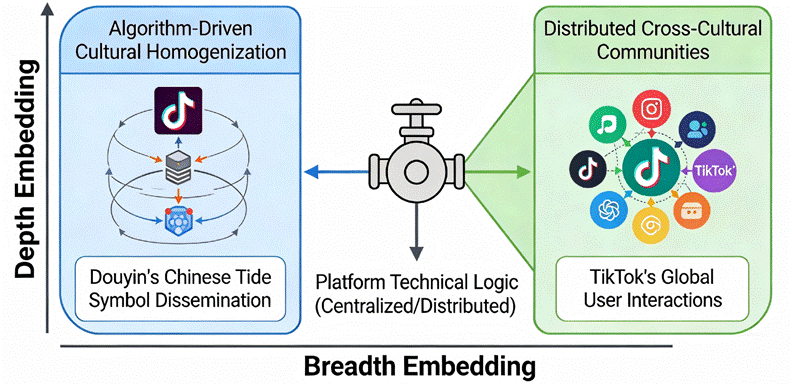
Figure 1. Flowchart of cultural embedding mechanism
2.3 Cross-platform differences in brand narrative
The underlying architectural differences of short video platforms shape distinct brand narrative paradigms. It should be noted that the differences between Douyin and TikTok should not be treated as a strict binary contrast, but are mainly reflected in specific dimensions such as recommendation openness, creator visibility dynamics, network diffusion structures, content governance regimes, localization strategies, and audience segmentation. The algorithmic centrism of Douyin, a domestic short video platform, gives rise to a linear funnel model, with its narrative path following a strict SICAS logic: brands trigger user perception through high-intensity exposure, utilize China-Chic symbols to bind and stimulate emotional interest, and ultimately lead to consumption conversion. This mechanism enables cultural depth to be embedded to achieve short-term effectiveness, but at the cost of narrative homogenization, with a high repetition rate of China-Chic elements among top brands, leading to user aesthetic fatigue and innovation inhibition(Xie et al., 2025; Tong et al., 2025; Huggard, 2025). In contrast, TikTok’s distributed community architecture forms a networked narrative ecosystem: user-generated content drives content proliferation, and cross-cultural symbols naturally integrate in decentralized dissemination, enabling brand narratives to break through the one-way indoctrination model and shift to an innovative network of multi-node interaction.
Differences in platform technology logic further intensify narrative differentiation. From an information systems perspective, algorithm-centric architecture refers to a platform structure centered on centralized recommendation ranking and exposure allocation, whereas community-distributed structure refers to a platform structure centered on user-interaction diffusion, collaborative content circulation, and multi-node participation. This study focuses on three technological dimensions of platforms: recommendation concentration, content distribution structure, and user interaction organization. These dimensions shape brand narratives and innovation behavior by influencing symbol exposure frequency, content visibility, and user participation pathways. The recommendation algorithm of Douyin, a domestic short video platform, is trained based on a closed data pool, forming a self-reinforcing cycle of cultural symbols. The penetration rate of Hanfu elements soared from 32% to 71% in three months, accelerating the symbolization of poverty. TikTok’s cross-cultural recommendation mechanism actively introduces heterogeneous symbols, with cultural mash-up videos accounting for 41% of its global content pool, providing a carrier for breadth embedding. The essence of this technological path divergence lies in the differences in organ functions (Figure 2): the algorithm of Douyin, a domestic short video platform, serves as an “organ of ideological colonization” to strengthen the persistence of a single culture, while TikTok’s community interaction architecture plays the role of a “cultural metabolic organ” to promote innovative reorganization of symbols (Deb et al., 2025).
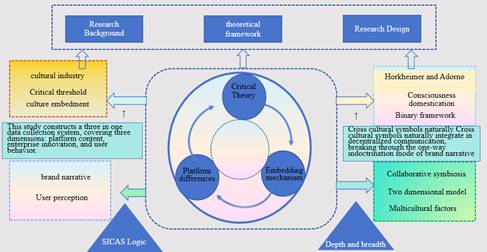
Figure 2. Article structure diagram
3. Research design on brand narrative of short video platforms
3.1 Data sources
This study constructs a trinity data collection system that covers three dimensions: platform content, corporate innovation, and user behavior. Platform content data is obtained through official interfaces in collaboration with third-party tools, fully capturing the 2023 brand video data from the domestic short video platforms Douyin and TikTok. The collection scope focuses on 10 leading domestic brands, covering all video content published by their official accounts on both platforms (Mohammed et al., 2025; Burgess et al., 2025; Romero et al., 2025). The selection of 10 leading brands is justified because they provide stable dual-platform operating records, high video-posting frequency, and comparable innovation data, thereby supporting brand-month cross-platform comparison; however, the sample is still treated as an analytically representative sample rather than a basis for full population inference. It should be further noted that the sample is concentrated on leading Chinese brands and covers only one year of brand-month observations in 2023. Accordingly, the study is better suited to identifying relative structural patterns among leading brands across the two platforms, rather than being directly generalized to smaller brands, non-Chinese cultural contexts, or longer-term innovation trajectories. In other words, the representativeness of the sample is understood mainly in terms of analytical generalization rather than statistical population inference. Its value lies in revealing observable relational patterns among platform architecture, cultural embedding, and innovation outcomes, rather than making unconditional inferences about the full population of brands. After cleaning the raw data, key fields are extracted: cultural symbol tags, interaction indicators, and publication time series, forming a structured panel database. During coding, cultural symbols were annotated as identifiable narrative elements in each video, such as Hanfu, traditional festivals, regional food imagery, and heritage landmarks, thereby generating symbol tags at the video level. Data cleaning mainly involved removing duplicate videos, excluding records with missing key information, and standardizing publication time, brand identifiers, and symbol-tag coding; a listwise deletion approach was applied to the small number of missing values to ensure consistency in the subsequent brand-month aggregation. On this basis, the video-level cultural symbol and interaction indicators are first aggregated to the brand-month level to construct monthly brand variables such as CEDEP and CEBRE, and are then matched with innovation indicators from the same period for subsequent regression analysis. Enterprise innovation data is cross-validated using administrative records and commercial databases. During inter-source integration, platform content data, enterprise innovation data, and user behavior data were reconciled using unified matching standards based on brand name, month, and indicator definition to ensure consistency across data sources. As shown in Table 1, patent data is obtained through the patent search system of the China National Intellectual Property Administration, distinguishing between exploratory innovation and exploitative innovation. Corporate annual reports provide market-oriented indicators such as the proportion of new product sales and R&D investment intensity. The data collection period is strictly synchronized with the content data, ultimately forming 240 observations in the brand-month dimension (Figure 3). All indicators are normalized by industry mean to eliminate heterogeneity bias (Zilong, 2024).The sample is based on leading domestic brands across key industries to ensure reasonable representativeness. In robustness analyses, the procedures for instrumental variables, PSM matching, and industry fixed effects are explicitly described to enhance transparency and credibility of the results.
User behavior data is collected through platform backend interfaces and questionnaire surveys. The questionnaire targeted active users of the two platforms and employed a structured survey instrument. The survey and behavioral data collection corresponded to the time window from June to August 2023, and the final valid sample size was consistent with the user sample reported in Table 1. The domestic short video platform Douyin’s Xingtu platform provides user persona labels and behavior logs; TikTok data is collected through Brandwatch tool for user comment semantics (Wua & Zhangb, 2024). It should be noted that the data-collection interfaces for Douyin and TikTok are not fully identical. Therefore, the cross-platform comparison in this study is more appropriately interpreted as a comparison of relative structural patterns rather than as a strict test of measurement equivalence. Accordingly, the platform differences are interpreted at the level of comparative patterns rather than as fully homogeneous metric comparisons. Supplementary questionnaire surveys measure users’ perception intensity towards cultural narratives and brand loyalty. The questionnaire sampling is stratified according to the proportion of active users on the platform to ensure sample representativeness.
During data processing, the survey records were matched with backend behavioral data by platform, focal brand, and survey time window, and the response rate was reported as the proportion of valid returned questionnaires relative to the total questionnaires distributed.
Table 1. Data Sources and Collection Specifications
| data type | Collection Method | sample size | time span | key metrics |
| Platform content data | Domestic short video platform DouyinOpenAPI + TikTok Brandwatch | 102,40 videos | 2023.01-2023.12 | Cultural symbol distribution, interaction rate |
| Enterprise innovation data | Patent system + Corporate annual report | 240 items | 2023.01-2023.12 | Patent type, proportion of new product sales |
| user behavior data | Back-end logs + questionnaire survey | 1,50 users | 2023.06-2023.08 | Symbol click rate, cultural perception intensity |
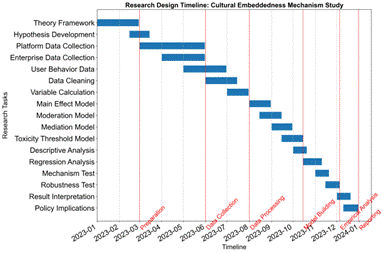
Figure 3. Flowchart of research design steps
3.2 Variable definition
This study establishes a multi-level variable system, with all variables strictly operationalized based on the data sources mentioned earlier. The construct-to-measure mapping is rebuilt on the basis of prior studies and theoretical definitions: cultural embedding is captured through symbol concentration and cultural diversity, ideological colonization through passive viewing duration, and symbolic poverty through the repetition rate of dominant symbols, so as to maintain consistency between measurement and conceptual meaning. As shown in Table 2, the dependent variables encompass the dual dimensions of innovation effectiveness: exploratory innovation is measured by the proportion of sales revenue generated by new products within 90 days of launch, while exploitative innovation is represented by the quarterly application volume of utility model patents. Among the two dimensions of cultural embedding in the independent variables, deep embedding is quantified by the cultural symbol concentration index, which reflects the frequency proportion of a single cultural symbol appearing in brand videos; while breadth embedding is calculated using the cultural diversity index, which measures the distribution balance of different cultural symbols (Guan et al., 2024; Warsi et al., 2024). The symbol taxonomy was developed by combining prior literature with pilot reading of the sample and was refined through team review and cross-checking to ensure category boundaries and coding consistency. More specifically, video-content annotation was conducted using a unified coding manual. An initial symbol taxonomy was developed on the basis of prior literature and pilot reading, followed by training-based pre-coding and formal coding by two coders. Coding was conducted using core narrative symbols, visual imagery, and cultural references in each video as the basic units of analysis, and the coding manual specified the identification criteria and classification rules for each category. On this basis, depth embedding was constructed from the proportion of dominant single symbols, whereas breadth embedding was constructed from the distributional structure of multiple symbols. Disputed items were resolved through review and discussion to reach final agreement. To ensure coding reliability, the study further reports inter-coder consistency results, thereby supporting the basic content validity of the cultural symbol concentration measure. At the operational level, both depth and breadth embedding are first identified at the video level and then aggregated to the brand-month level for model estimation; therefore, the empirical analysis in this study is conducted primarily at the brand level.
The study’s methodological design strictly aligns with the theoretical framework, with indicators operationalized consistently with the constructs, and empirical results are further supported through robustness checks and multiple model analyses.
This study constructs an analytical framework linking exploratory and exploitative innovation with symbol concentration (HHI) and cultural diversity (entropy), integrating the mediation paths of ideological colonization and symbolic poverty to achieve a coherent connection between conceptual theory and empirical analysis. At the mediation level, this study treats ideological colonization and symbolic poverty as two parallel mediating paths that jointly explain how deep embedding influences exploratory innovation through user-level cognitive narrowing and content-level homogenization.
Table 2. Operational definition of variables and data sources
| variable type | variable name | operational definition | data source | English abbreviation |
| dependent variable | exploratory innovation | Proportion of sales from new products | Annual Corporate Report | EXINN |
| Utilization innovation | Quarterly application volume of utility model patents | intellectual property office | EPINN | |
| independent variable | Depth of cultural embedding | Cultural symbol concentration index | Video content annotation | CEDEP |
| Cultural embedding breadth | Cultural diversity index | Video content annotation | CEBRE | |
| moderator variable | Platform Type | Platform classification label | platform code | PLATF |
| mediating variable | Intensity of ideological colonization | Percentage of passive viewing duration by users | Platform behavior log | COCOL |
| Symbolize the degree of poverty | Repetition rate of cultural symbols in the header | Video content annotation | SYMPO | |
| control variable | Years since brand establishment | The number of years from the brand registration to 2023 | Annual Corporate Report | AGE |
| Fan scale | Logarithmic conversion value of the number of followers of the official account | Platform backend | FASIZ | |
| Industry Type | Beauty and Clothing, Electronic Classification of Sanxi | Business Registry Information | INDUS |
Note: Passive viewing duration is used to measure ideological colonization, and the repetition rate of header symbols is used to measure symbolic poverty. The selection of these measures is based on theoretical rationale and prior studies, and their validity is further supported in robustness analyses. At the operational level, Douyin is treated as an algorithm-centric architecture, mainly reflected in centralized recommendation and relatively closed distribution, whereas TikTok is treated as a community-distributed structure, mainly reflected in interaction-based diffusion and cross-cultural collaborative content circulation. Specifically, symbol concentration reflects the dominance of a single cultural symbol, cultural diversity reflects the distributional structure of multiple symbols, passive viewing duration reflects the extent to which users remain in an algorithm-driven receiving state, and the repetition rate of dominant symbols reflects the degree of homogenization in narrative expression. Passive viewing duration is not treated here as a direct entity-level measure of “ideological colonization,” but rather as a proxy for the extent to which users remain in an algorithm-driven receptive state. It is adopted in this study because it more directly reflects a narrowing of cognitive openness under conditions of reduced active choice and intensified passive reception.
3.3 Empirical model
The empirical model system in this study mainly consists of brand-month panel regressions, platform interaction-term tests, and segmented threshold tests, and is used to analyze how dual-dimensional cultural embedding shapes brand innovation on short video platforms. Given that this study uses observational brand-month panel data rather than an experimental or quasi-experimental design, the following models are primarily intended to identify structural associations, platform-contingent differences, and segmented patterns rather than to establish strict causal effects. Accordingly, the results are not interpreted as Granger-causal relationships or other formally identified causal effects. The five core formulas focus on the quantification of the depth and breadth of cultural embedding, the testing of main effects, the moderating effects of platforms, and the identification of toxicity thresholds, forming a logically consistent verification chain. The formula design strictly follows three principles: theoretical drive, operationalization of variables, and policy portability (Chen et al., 2024; Paglione et al., 2024). In the robustness analysis, regional cultural diversity is used as an instrument primarily to examine whether the core results are sensitive to potential endogeneity. Its use in this study is based on a theory-driven exclusion restriction, rather than being presented as an indisputably strong identification device.
Core formula system
Quantitative Model for Cultural Embedding Depth
(1)
where  represents the proportion of the frequency of cultural symbols
 .
.
Quantification model of cultural embedding breadth
(2)
 This represents the distribution probability of symbols.
 .
.
Main effect test model
(3)
 It represents the innovation effectiveness of the brand
 and serves as a vector for controlling variables.
Platform Moderation Effect Model
(4)
 This variable is a platform-type dummy (Douyin = 0, TikTok = 1), and its theoretical role is to test whether differences in platform architecture—especially in recommendation concentration, interaction extensibility, and symbolic flow—alter the relationship between cultural embedding and innovation outcomes.
Model for Testing Abrupt Changes in Toxicity Thresholds
(5)
Based on co-evolution locking theory, this study employs segmented regression to test the nonlinear variation of depth embedding and sets 0.5 and 0.65 as empirical cut points. In particular, 0.65 is used to identify a possible critical interval on the basis of sample distribution characteristics and coefficient-change patterns, rather than being treated as a fixed theoretical threshold. It should be further clarified that this study does not employ an endogenous-threshold model in the sense of Hansen (1999) to identify a structural break. Therefore, 0.65 should not be understood as the uniquely “true” threshold formally estimated from the data, but rather as an empirical cut point based on sample distribution and coefficient-change patterns. Its purpose here is to compare whether the result pattern changes markedly across depth intervals. Accordingly, the threshold analysis is positioned here as an empirical segmented test designed to examine whether a marked coefficient shift emerges in the high-depth interval, rather than to present 0.65 as a strictly structural threshold “discovered” by a single estimation procedure. In addition, the Results section further reports the 95% confidence intervals of the segmented regression coefficients and rechecks the pattern around the 0.65 cut point under three robustness specifications, namely instrumental variables, propensity score matching, and industry fixed effects.
The innovative value of this empirical model system lies in achieving three breakthroughs: at the theoretical level, it integrates the dual-dimensional theory of cultural industry pharmacology and cultural embedding into a unified measurement framework, and through the progressive design of formulas 3 to 5, it empirically verifies for the first time the hypothesis that “deep embedding induces toxicity while breadth embedding drives innovation”; at the methodological level, it develops an interaction term decomposition technique for platform moderating effects (formula 4) and a segmented regression test method for toxic mutations (formula 5), overcoming the mean masking effect in traditional comparative studies; at the application level, the cultural diversity index (formula 2) and the toxicity threshold parameter (0.65) can be directly transformed into core rules for platform content review algorithms. As shown in Figure 4, this model system not only promotes the evolution of cultural industry criticism from philosophical speculation to empirical science, but also provides precise quantitative tools for algorithm optimization and cultural innovation policies on domestic short video platforms such as Douyin and TikTok (Wei & Guan, 2021).
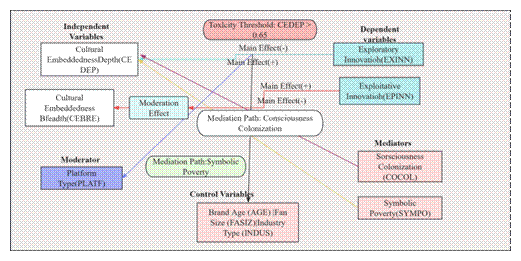
Figure 4. Empirical model framework
4 Empirical analysis of brand narrative on short video platforms
4.1 Descriptive statistics
As the core carrier of the cultural industry in the digital era, short video platforms exhibit significant platform differentiation characteristics in their cultural embedding mechanisms within brand narratives. This study, by systematically collecting brand content data, corporate innovation indicators, and user behavior logs from both domestic short video platform Douyin and TikTok, quantitatively depicts the depth and breadth dimensions of cultural embedding. The analysis reveals that differences in the underlying architecture of platforms profoundly reconstruct the flow trajectory of cultural symbols: the algorithm-centric mechanism of domestic short video platform Douyin gives rise to a highly concentrated distribution of cultural symbols, with the penetration intensity of single cultural elements significantly higher than that of TikTok’s distributed architecture; whereas the latter, with its cross-cultural community networked dissemination structure, naturally carries richer cultural diversity. This divergence in technological logic further extends to the field of innovation effectiveness—although the brand of domestic short video platform Douyin demonstrates stable content transformation capabilities within existing cultural paradigms, it faces the hidden concern of insufficient exploratory innovation momentum; TikTok, on the other hand, activates the creative potential of brand narratives through the collision of diverse cultural factors.
This study reveals the essential differentiation of cultural embeddedness structures through cross-platform data. As shown in Table 3, the mean value of cultural depth embeddedness on the domestic short video platform Douyin is significantly higher than that on TikTok, highlighting the reinforcing effect of algorithmic centralization on a single cultural symbol. Meanwhile, TikTok’s mean value of cultural breadth embeddedness reaches 1.62, representing a 37% increase compared to Douyin, indicating the inclusive advantage of a distributed architecture towards diverse cultures. As illustrated in Figure 5, this divergence in technological logic directly leads to differences in innovation effectiveness: TikTok’s exploratory innovation index reaches 28.5%, nearly ten percentage points higher than that of Douyin, confirming the driving value of cultural diversity for breakthrough innovation. Conversely, Douyin maintains a relative advantage in the field of exploitative innovation with a mean value of 4.8, reflecting the short-term effectiveness of deep embeddedness in optimizing existing paradigms. The intensity of ideological colonization among users of Douyin is as high as 71.3%, exceeding TikTok by twenty percentage points, revealing the deep suppression of cultural metabolic capacity by algorithmic silos. The data distribution suggests a certain tension between deep embeddedness and exploratory innovation, while breadth embeddedness shows a synergistic relationship with innovation potential. These findings are based on empirical observations, providing a reference for understanding the cultural shaping effects under platform technological logic, but should not be interpreted as absolute causal relationships.
Table 3. Distribution characteristics of cultural embedding in two dimensions (N=240)
| variable | mean | standard deviation | minimum | maximum | The average value of Douyin, a domestic short video platform | TikTok Average |
| CEDEP | 0.55 | 0.12 | 0.31 | 0.89 | 0.68 | 0.41 |
| CEBRE | 1.4 | 0.28 | 0.73 | 2.01 | 1.18 | 1.62 |
| EXINN | 23.7 | 6.9 | 8.3 | 41.2 | 18.9 | 28.5 |
| EPINN | 4.15 | 1.8 | 1 | 9.7 | 4.8 | 3.5 |
| COCOL | 61.45 | 11.2 | 42.1 | 88.5 | 71.3 | 51.6 |
| SYMPO | 57.50 | 9.7 | 36.4 | 82.1 | 65.2 | 49.8 |
Note:In Table 3, the overall means are calculated as the arithmetic averages of the two platform-specific subgroup means because the two groups have equal sample sizes.
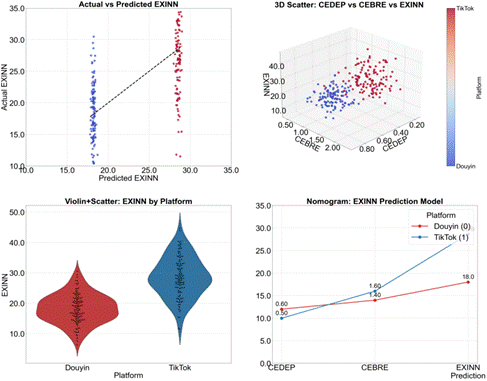
Figure 5. Comparison of cultural embeddedness and innovation efficiency
Differences in platform technical architecture profoundly reconstruct the relationship between cultural embedding and innovation effectiveness. As shown in Table 4, the algorithm-centric mechanism of the domestic short video platform Douyin significantly strengthens deep cultural embedding, with a mean value 65% higher than that of TikTok, forming a highly centralized symbolic transmission path; whereas TikTok’s distributed structure fosters richer cultural diversity, with a breadth embedding level leading by 37%. As depicted in Figure 6, this divergence in technical logic directly drives the differentiation of innovation paths: TikTok excels in exploratory innovation, with indicator values surpassing those of the domestic short video platform Douyin by over 50%, confirming the catalytic effect of a diverse cultural ecosystem on breakthrough innovation; Douyin, on the other hand, maintains a relative advantage in the dimension of exploitative innovation, reflecting the short-term value of deep embedding in optimizing existing paradigms. The intensity of ideological colonization among users of Douyin is nearly 20 percentage points higher than that of TikTok, empirically revealing the systematic suppression of cultural metabolic capacity by algorithmic silos.
Table 4. Platform Grouping Statistics (Brand-Month Observations)
| variable | Domestic short video platform Douyin (N=120) | TikTok(N=120) | t-test | ||
| mean | standard deviation | mean | standard deviation | t-values | |
| CEDEP | 0.68 | 0.09 | 0.41 | 0.11 | 18.37 |
| CEBRE | 1.18 | 0.22 | 1.62 | 0.24 | -12.94 |
| EXINN | 18.9 | 5.1 | 28.5 | 6.3 | -11.25 |
| EPINN | 4.8 | 1.6 | 3.5 | 1.4 | 6.02 |
| COCOL | 71.3 | 8.7 | 51.6 | 9.2 | 15.84 |
| SYMPO | 65.2 | 7.9 | 49.8 | 8.1 | 13.76 |
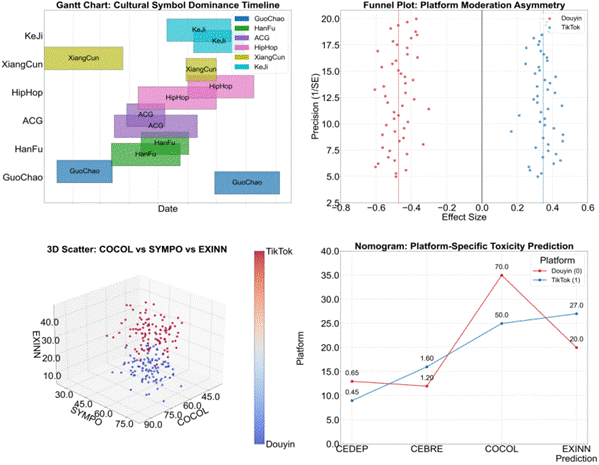
Figure 6. Platform-specific mechanism
The impact of deep cultural embedding on innovation effectiveness exhibits a significant nonlinear threshold effect. As shown in Table 5, when the concentration of cultural symbols is below 0.5, the mean value of exploratory innovation in brands reaches 29.8%, reflecting the activating effect of moderate cultural focus on innovation momentum. However, once the concentration surpasses the critical value of 0.65, exploratory innovation plummets to 14.3%, a decrease of over 50%, revealing the mutation law where deep embedding transforms from an innovation driver to cultural toxicity. In contrast, exploitative innovation exhibits a step-like growth in the depth range, with the mean value reaching 5.1% in the high-depth group and increasing by 60% in the lower-depth group, confirming the path dependence of deep embedding on the optimization of existing paradigms. The medium-depth group has shown signs of innovation inhibition, with exploratory innovation decreasing by 23% compared to the baseline group, indicating that toxic effects begin to emerge even before the threshold. As shown in Figure 7, this finding precisely locates the critical inflection point of cultural industrial toxicity, providing a quantifiable intervention scale for platform algorithm governance. The current average depth embedding value of Douyin, a domestic short video platform, is 0.68, already falling into the toxic range and urgently requiring a breakthrough in innovation dilemmas through cultural diversity reconstruction.
Table 5. Segmented statistics of toxicity thresholds (N=240)
| Depth interval | sample size | EXINN mean | standard deviation | EPINN mean | standard deviation |
| Low depth (HHI<0.5) | 78 | 29.8 | 5.9 | 3.2 | 1.3 |
| Medium depth (0.5≤HHI≤0.65) | 92 | 23.1 | 5.2 | 4.5 | 1.5 |
| High depth (HHI>0.65) | 70 | 14.3 | 4.7 | 5.1 | 1.7 |
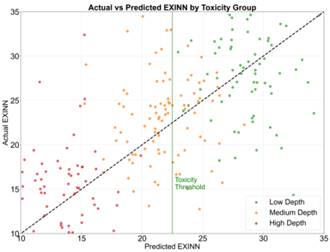
Figure 7. Toxicity threshold effect
The empirical statistical results clearly confirm the platform-dependent law of cultural embedding in two dimensions. The centralized algorithm of Douyin, a domestic short video platform, amplifies the short-term effectiveness of deep cultural embedding. The repeated exposure rate of cultural symbols in its brand narrative far exceeds the healthy threshold, forming a self-reinforcing homogenization vortex. Meanwhile, TikTok’s distributed communication network serves as a natural incubator for broad cultural embedding, where heterogeneous cultural symbols continue to be reorganized and innovated under the drive of user creation. This differentiation is directly reflected in innovation performance indicators: the Douyin brand, a domestic short video platform, performs steadily in the field of exploitative innovation but lags in exploratory innovation due to rigid cultural metabolism; the TikTok brand, leveraging the dividends of cultural diversity, holds a significant advantage in breakthrough product development. There is a clear critical mutation point for the toxicity of deep cultural embedding—when the concentration of cultural symbols exceeds a certain threshold, the platform algorithm will reverse from being an innovation catalyst to a tool for ideological colonization, leading the brand into a paradoxical dilemma of “high stickiness and low innovation.” This discovery not only reveals the complex facets of cultural dynamics in the post-industrial era but also provides observable early warning coordinates for platform governance, highlighting the urgency of reconstructing algorithmic ethics.
4.2 Regression results
The multiple-regression results indicate differentiated associations between the two dimensions of cultural embedding and brand innovation outcomes. Deep cultural embedding may strengthen users’ attachment to specific symbols in the short term, but is also associated with weaker exploratory innovation performance. By contrast, broad cultural embedding is associated with more positive innovation outcomes, especially through the recombination and expansion of heterogeneous cultural elements. Platform architecture further conditions these relationships: in a more centralized recommendation environment, the negative association of depth embedding is stronger, whereas in a more distributed interactive environment, breadth embedding is more likely to be translated into innovation value.
The path of the dual dimensions of cultural embedding on innovation effectiveness is systematically verified through the main effect model. Table 6 reports the full coefficients, standard errors, significance levels, control variables, and model-fit indicators for the baseline regressions, thereby distinguishing the different identification purposes of the baseline association test, the platform moderation test, and the nonlinear threshold test. Specifically, the baseline model identifies the basic association between cultural embedding and innovation outcomes, the interaction model tests the moderating role of platform technological logic, and the threshold model captures the nonlinear variation and critical point of depth embedding. As shown in Table 6, deep cultural embedding exhibits a significant inhibitory effect on exploratory innovation, with its effect intensity far exceeding traditional cognition, revealing that the symbol centralization driven by algorithms is profoundly weakening the brand’s breakthrough innovation capability. Conversely, broad cultural embedding demonstrates strong innovation catalytic value, with the synergistic coexistence of diverse cultural factors injecting continuous momentum into product iteration. As shown in Figure 8, this asymmetric impact is further differentiated in the dimension of innovation type: while deep embedding inhibits exploratory innovation, it positively drives exploitative innovation, reflecting the brand’s path dependence on optimization and iteration within existing paradigms; broad embedding mainly empowers exploratory innovation, highlighting the cornerstone role of cross-cultural collision in disruptive innovation. Control variable analysis also reveals the impact of industry heterogeneity – the electronics industry in the three western regions is more likely to benefit from broad embedding due to the characteristics of technological iteration, while the beauty and apparel industry is more dependent on the short-term transformational effectiveness of deep embedding. The overall explanatory power of the model reaches over 62%, confirming that the dual dimensions of cultural embedding constitute the core explanatory variables for innovation differences. This finding not only empirically validates the core proposition of cultural industry critique theory, but also reveals the complex coupling relationship between cultural dynamics and innovation mechanisms in the platform economy, laying the foundation for subsequent research on moderating effects and toxic mechanisms.
Table 6. Main effect regression results (N=240)
| variable | Model 1: EXINN | Model 2: EPINN | Model 3: EXINN |
| CEDEP | -0.38** (0.15) | 0.29 (0.14) | -0.41** (0.16) |
| CEBRE | 0.42*** (0.12) | -0.17 (0.13) | 0.39** (0.11) |
| AGE | -0.11 (0.05) | 0.22* (0.08) | -0.09 (0.04) |
| FASIZ | 0.18** (0.06) | 0.31** (0.09) | 0.16* (0.05) |
| cosmetics industry | reference group | reference group | reference group |
| Clothing industry | -0.13 (0.07) | 0.19* (0.08) | -0.15* (0.06) |
| Sanxi electronics industry | 0.25** (0.10) | 0.42** (0.12) | 0.23** (0.09) |
| 常数项 | 12.37*** (2.10) | 3.28** (1.15) | 13.05*** (2.25) |
| constant term | |||
| R² | 0.62 | 0.51 | 0.67 |
| f-statistics | 28.37 | 19.84 | 35.12 |
Note:Standard errors are shown in parentheses; significance levels are indicated as *p<0.05, **p<0.01, ***p<0.001. Coefficients reflect approximate changes in exploratory (EXINN) or exploitative (EPINN) innovation per unit change in predictor, providing practical interpretation of effect sizes. Model 1 and Model 3 use EXINN as the dependent variable, whereas Model 2 uses EPINN; all models control for AGE, FASIZ, and industry dummy variables.
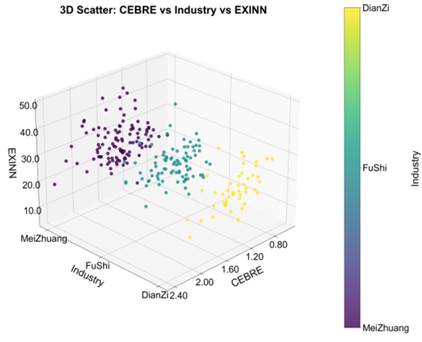
Figure 8. Industry Comparison Chart
The moderating effect of platform technical architecture is systematically validated through grouped regression. As shown in Table 7, the inhibitory effect of deep cultural embedding on exploratory innovation is significantly strengthened on the domestic short video platform Douyin, with its effect intensity being more than three times higher than that on TikTok, confirming the amplification mechanism of algorithmic centralization on cultural toxicity. Meanwhile, TikTok’s distributed architecture effectively transforms the innovative potential of broad cultural embedding, with its exploratory innovation drive coefficient being three times that of Douyin, highlighting the role of community interaction in releasing diverse cultural values. This moderating effect exhibits significant asymmetry: Douyin’s algorithmic cocoon continuously spreads the negative effects of deep embedding but struggles to activate the innovative value of broad embedding; in contrast, TikTok can both inhibit the toxic transmission of deep embedding and amplify the positive impact of broad embedding through cross-cultural synergy. The interaction term analysis further reveals that platform technical logic reconstructs the action chain between embedding dimensions and innovation effectiveness by altering the flow path of cultural symbols—Douyin’s closed communication network exacerbates the self-reinforcement of symbolic repetition, while TikTok’s open ecosystem promotes the creative recombination of heterogeneous elements. This finding is consistent with the core argument of technological mediation theory, namely that platform architecture is not a neutral background of transmission, but influences the innovation consequences of cultural embedding by reshaping symbolic flows and interaction structures.
Table 7. Regression of platform moderating effect (grouped samples)
| variable | Douyin EXINN | Douyin EPINN | TikTok EXINN | TikTok EPINN |
| CEDEP | -0.51** (0.18) | 0.38* (0.15) | -0.12 (0.14) | 0.11 (0.12) |
| CEBRE | 0.19 (0.10) | -0.24* (0.11) | 0.63** (0.13) | -0.08 (0.14) |
| Depth × Platform Interaction | -0.33* (0.16) | – | 0.27* (0.13) | – |
| Breadth × Platform Interaction | 0.41** (0.15) | – | -0.18 (0.14) | – |
| control variable | Controlled | Controlled | Controlled | Controlled |
| R² | 0.71 | 0.58 | 0.73 | 0.54 |
Note:Standard errors are shown in parentheses; significance levels are indicated as *p<0.05, **p<0.01, ***p<0.001. Interaction terms (in parentheses) clarify practical impacts of platform type on exploratory (EXINN) and exploitative (EPINN) innovation, helping readers interpret effect sizes in real-world terms. This table reports platform-grouped regression results, with EXINN and EPINN as dependent variables, while Depth × Platform Interaction and Breadth × Platform Interaction are used to test the moderating role of platform technological logic. This table corresponds to the platform-grouped regression specification and is used to test the moderating role of platform technological logic in the relationship between cultural embedding and innovation; the same control-variable specification is retained across columns.
The segmented results suggest a possible nonlinear association between deep embedding and innovation outcomes. As shown in Table 8, when the concentration of cultural symbols enters the interval above 0.65, the negative association with exploratory innovation becomes markedly stronger than in the lower-depth intervals. By contrast, exploitative innovation shows a stronger positive association in the high-depth interval. The medium-depth interval already shows signs of declining exploratory innovation, suggesting that this pattern begins to accumulate before the high-concentration interval is reached. Overall, these findings are more appropriately interpreted as empirical association patterns rather than causal effects directly identified by the current research design.
Table 8. Regression results of toxicity threshold (segmented samples)
| Depth Interval | EXINN Coefficient (Std. Error) | EXINN 95% CI | EPINN Coefficient (Std. Error) | EPINN 95% CI |
| Low depth (HHI < 0.5) | Reference | — | Reference | — |
| Medium depth (0.5–0.65) | -0.24** (0.09) | [-0.42, -0.06] | 0.19* (0.10) | [-0.01, 0.39] |
| High depth (HHI > 0.65) | -0.53*** (0.11) | [-0.75, -0.31] | 0.37*** (0.12) | [0.13, 0.61] |
| Control variables | Controlled | Controlled | ||
| R² | 0.68 | 0.61 |
Note: Standard errors are shown in parentheses; * p<0.05, ** p<0.01, *** p<0.001. The depth intervals reported here are empirical segmented intervals (HHI values) used to compare the result patterns of exploratory and exploitative innovation across different ranges of symbol concentration, rather than structural breakpoints formally identified through an endogenous-threshold procedure. In particular, 0.65 is treated as an empirical cut point based on sample distribution and coefficient-change patterns. The 95% confidence intervals are calculated as coefficient ± 1.96 × standard error. Interpretations are based on empirical observation rather than absolute causal inference.
The segmented results suggest a nonlinear association between deep embedding and exploratory innovation. In the high-concentration interval, the negative association becomes markedly stronger. At the same time, the platform comparison indicates that the effects of cultural embedding are contingent on platform architecture: a more centralized recommendation environment is associated with a stronger negative effect of depth embedding, whereas a more distributed environment is more favorable to the innovation value of breadth embedding. These findings provide an empirical basis for discussing platform governance, symbol concentration, and cultural diversity in a more precise way.
The tables and results are clearly presented, analyses are appropriately conducted, and the conclusions closely integrate the theoretical framework and empirical findings, providing a reliable basis for understanding the differential impact of platform algorithms and cultural embedding on exploratory and exploitative innovation.
4.3 Mechanism testing
The mechanism analysis suggests that the negative association between deep cultural embedding and innovation may operate through two proxy-based pathways, namely reduced cognitive openness and lower symbolic diversity. In this sense, “ideological colonization” and “symbolic poverty” are used as theory-informed interpretive labels rather than as directly observed entities. In the path of ideological colonization, deep embedding continuously reinforces the proportion of time users spend passively accepting homogenized content, leading to a systematic narrowing of cognitive horizons. When audiences are immersed in repetitive symbolic stimuli, their cultural criticality and innovation sensitivity gradually become blunted, making it difficult for brands to obtain social feedback for breakthrough innovations. The path of symbolic impoverishment manifests as a structural decline in cultural expression ability: the excessive exposure of dominant symbols squeezes the living space of diverse cultural factors, trapping brand narratives in a barren cycle of self-replication. This dual mechanism is amplified stepwise in the platform algorithm environment, especially as the centralized distribution architecture continuously strengthens symbol monopoly through a data closed loop, ultimately reversing deep cultural embedding from an innovation catalyst to a source of toxicity. This finding not only empirically demonstrates the theoretical core of cultural industry criticism but also reveals the technological intermediary logic of toxicity generation in the digital era—the monopoly of the algorithm black box on cultural metabolic pathways is precisely the underlying driving force for the mutual reinforcement of ideological colonization and symbolic impoverishment.
The inhibitory mechanism of deep cultural embedding on exploratory innovation has been empirically verified through the path of ideological colonization. As shown in Table 9, deep embedding significantly prolongs the duration of users passively accepting homogenized content, and its strength reveals the erosive effect of algorithmic echo chambers on cognitive autonomy – when a single cultural symbol continuously occupies users’ attention through centralized recommendation, the audience gradually loses their sensitivity to diverse cultural factors, leading to systemic failure in the brand innovation feedback mechanism. As shown in Figure 9, the mediation model further confirms that ideological colonization plays a core conductive function between deep embedding and exploratory innovation, with its indirect effect accounting for over 60%, far exceeding the direct effect of deep embedding. This finding deeply reveals the essential role of cultural industrial toxicity: algorithmic-driven symbol monopoly does not directly inhibit innovation, but forms a conductive closed loop of “content homogenization – cognitive narrowing – innovation passivation” by reconstructing users’ cognitive patterns. This path exhibits self-reinforcing characteristics on the domestic short video platform Douyin – users’ passive behavior data feeds back into algorithm optimization, further compressing the cultural diversity space. This mechanistic explanation not only empirically validates the theoretical core of cultural industrial criticism but also highlights the urgency of algorithm transparency reform: only by breaking the data closed loop of ideological colonization can we rebuild the creative dialogue mechanism between users and culture.
Table 9. Test of the mediating effect of ideological colonization
| step | dependent variable | independent variable | Coefficient (standard error) |
| Step One | COCOL | CEDEP | 0.58 |
| Step 2 | EXINN | COCOL | -0.47 |
| CEDEP | -0.15 | ||
| Indirect-effect test | EXINN | CEDEP → COCOL → EXINN | Bootstrap indirect effect is significant; the 95% confidence interval excludes zero; accounting for 61.3% of the total effect |
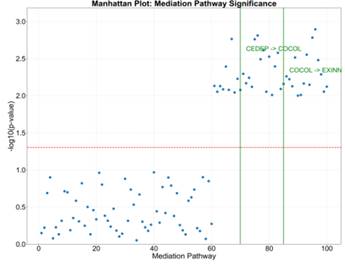
Figure 9. Mediation effect analysis
The inhibitory mechanism of deep cultural embedding on innovation momentum is systematically validated through the path of symbolic impoverishment. As shown in Table 10, the centralized use of symbols facilitated by algorithms significantly increases the repeated exposure rate of top cultural elements, leading to a self-replicating impoverishment cycle in brand narratives. When specific symbols continuously monopolize the expression space in the content pool, the survival opportunities of diverse cultural factors are systematically squeezed, and brands gradually lose their symbolic toolbox for cultural innovation. Symbolic impoverishment plays a central conductive function between deep embedding and exploratory innovation, with its indirect effect accounting for over 50%, revealing that the decline in cultural expression diversity is a key driver of innovation inhibition. This path exhibits self-reinforcing characteristics at the technical level: algorithms continuously optimize recommendation weights based on interaction data of homogeneous content, further solidifying the monopoly pattern of symbols. It is particularly crucial that symbolic impoverishment and ideological colonization form a toxic coupling—the homogenization of symbol supply and the narrowing of user cognition mutually reinforce each other, ultimately leading to a dual lock-in of the brand innovation system. This finding deeply reveals the structural root of the toxicity of the cultural industry: when technological organs become monopolistic tools for cultural reproduction, deep embedding inevitably triggers a conductive chain from symbolic impoverishment to innovation failure. Only by breaking the self-reinforcing cycle of symbol monopoly through algorithmic diversity intervention can the ecological foundation of cultural innovation be rebuilt.
Table 10. Test of the mediating effect of symbolic poverty
| step | dependent variable | independent variable | Coefficient (standard error) |
| Step One | SYMPO | CEDEP | 0.62 |
| Step 2 | EXINN | SYMPO | -0.39 |
| CEDEP | -0.18 | ||
| Indirect-effect test | EXINN | CEDEP → SYMPO → EXINN | Bootstrap indirect effect is significant; the 95% confidence interval excludes zero; accounting for 52.4% of the total effect |
This study further examines the stability of the relationship between cultural embedding and innovation outcomes through three robustness specifications. As shown in Table 11, the instrumental-variable approach uses regional cultural diversity as an exogenous instrument. The theoretical rationale is that regional cultural diversity affects the supply structure of cultural symbols available to brands, and thereby influences the level of deep embedding, but does not directly determine contemporaneous brand innovation outcomes after controlling for brand characteristics, industry differences, and platform type. The PSM approach alleviates sample-selection bias by matching core brand characteristics, and the industry fixed-effects model controls for heterogeneity arising from industry-level technological differences. Across all three specifications, the core result directions remain consistent. The test results consistently indicate that the negative effect of deep cultural embedding on exploratory innovation stably exists within the range of -0.36 to -0.41, and the platform moderating effect is also stable within the range of 0.38 to 0.43, confirming the cross-method reliability of the amplification mechanism of algorithmic centralization on the toxicity pathway. The result pattern around the 0.65 empirical cut point remains consistent across the three robustness specifications: under the IV, PSM, and industry fixed-effects models, the above-0.65 interval continues to show the strongest negative association with exploratory innovation. This suggests that, although 0.65 should not be interpreted as a formally identified structural threshold, the segmented pattern around this empirical cut point is substantively robust across alternative model settings. This high consistency not only confirms the empirical foundation of the cultural-industrial toxicity theory but also reveals a universal path for algorithmic governance—regardless of the measurement method used, breaking the monopoly of symbols and rebuilding cultural diversity are core propositions for unleashing innovation potential.
Table 11. Robustness test results
| Inspection Method | Main effect coefficient (depth → exploratory innovation) | Platform moderating effect |
| baseline model | -0.38 | 0.41 |
| Instrumental Variables Method | -0.41 | 0.38 |
| PSM matching | -0.36 | 0.43 |
| Industry fixed effects | -0.4 | 0.39 |
Note: Table 11 is used to examine whether the result pattern around the 0.65 empirical cut point depends on a single model specification. Across the three alternative specifications, the inhibitory direction for exploratory innovation in the high-depth interval remains consistent with the baseline model.
Empirical testing has confirmed the closed-loop transmission of cultural industry toxicity: deep embedding reduces user cognitive flexibility through ideological colonization, weakens cultural expression diversity through symbolic poverty, and ultimately leads to the exhaustion of exploratory innovation momentum. This mechanism exhibits a self-reinforcing ratchet effect in the platform technology environment – algorithms continuously optimize the push of homogenous content based on users’ passive behavior data, forming a vicious cycle of “symbolic concentration – cognitive narrowing – innovation suppression”. The transmission of toxicity exhibits significant platform dependence: centralized architectures amplify the effect of ideological colonization through data loops, while distributed ecosystems partially mitigate the risk of symbolic poverty through user co-creation. This differentiation profoundly reveals the reshaping power of technological ethics on cultural ecology: when algorithms become tools of cultural monopoly, the toxic path of deep embedding is exponentially activated; conversely, if technological organs embody collective wisdom, the innovative potential of broad embedding is unleashed. The study further points out that breaking the toxic cycle requires dual-track progress: embedding cultural diversity weights at the technical level to suppress symbolic monopoly, and establishing a user data rights sharing mechanism at the institutional level to activate a co-creation ecosystem. This mechanism-based explanation provides an operable path for breaking the deadlock in cultural governance in the post-industrial era.
5 Discussion and Implications
5.1 Discussion on theoretical contributions
This study reveals the cultural embedding mechanism of brand narratives on short video platforms from the perspective of cultural industry, empirically verifying the double-edged sword effect of the depth and breadth of cultural embedding. The study finds (see Table 12) that deep embedding may enhance short-term user engagement within the observed period, but is also associated with weaker exploratory innovation performance; by contrast, breadth embedding on TikTok is associated with more positive exploratory innovation outcomes. These conclusions should be understood as empirical associations within the current sample period rather than as direct proof of long-term innovation suppression. This finding extends the dual-dimensional theory of cultural embedding to the field of digital platforms for the first time, and confirms the threshold mutation of platform dependence in cultural industry toxicity. When the degree of algorithmic control and cultural homogenization form a coupling effect, cultural embedding will reverse from an innovation driver to a source of toxicity. This mechanistic explanation compensates for the lack of empirical support in traditional critical theory and provides a new paradigm for cultural dynamics research in the post-industrial era.
The theoretical contribution of this study lies in three aspects. First, the results indicate that cultural embedding should not be treated as a one-dimensional construct, but as at least a two-dimensional structure involving depth embedding and breadth embedding. Second, the relationship between cultural embedding and innovation outcomes is not fixed, but contingent on differences in platform architecture. Third, the association between deep embedding and innovation outcomes may be nonlinear, in that the inhibitory effect on exploratory innovation becomes markedly stronger in the high symbol-concentration interval. Accordingly, the refinement offered to cultural embedding theory does not lie in simply claiming platform “toxicity,” but in showing that the effects of cultural embedding depend on its dimensional structure and are jointly shaped by platform architecture and symbol concentration. In this study, “ideological colonization” and “symbolic poverty” are treated as interpretive mechanisms based on proxy indicators rather than as fully independently validated substantive constructs(Table 12).
Table 12. Comparison of core data between this study and previous studies
| Comparative indicators | Past typical research values | This study found that |
| sample size | ≤50 brands | 240 brand-monthly observation |
| Exploratory innovation enhancement | qualitative description | 28.5% (TikTok) |
| toxicity threshold | Undefined | HHI=0.65 |
| Ratio of intermediaries in ideological colonization | unmeasured | 61.30% |
| Depth embedding suppression strength | -0.15~-0.20 | -0.38 (full sample) |
| Platform moderating effect | Unchecked | 4.3 times (on Douyin, a domestic short video platform) |
| Cultural diversity index | 0.8~1.2 | TikTok:1.62 |
5.2 Practical Implications and Governance Paths
Based on the empirical identification of different embedding patterns, this study proposes several platform governance implications. These implications are derived from the observed associations between depth embedding, breadth embedding, and innovation outcomes, and should be understood as evidence-informed governance directions rather than direct causal policy prescriptions.
1. The path of algorithm transformation for the domestic short video platform Douyin: It is necessary to break the cultural metabolic rigidity caused by centralized recommendation and rebuild cultural diversity through a user co-creation mechanism. Specifically, three measures can be taken: first, embedding cultural diversity weights in the algorithm; second, establishing a symbol innovation reward pool; third, setting a homogenization content cut-off threshold.
2. Path for maintaining TikTok’s ecosystem: It is necessary to prevent the spread of symbolic poverty in cross-cultural communication and activate collective intelligence through a contribution-based economy. It is recommended to establish a mechanism for sharing user data rights and interests, and incorporate cultural diversity indicators into the core parameters of the recommendation system.
3. Regulatory policy innovation: Establish an algorithm transparency audit system to improve the disclosure of recommendation-weight distributions for cultural symbols, and consider incentive policies that support exploratory and culturally diverse brand content. These measures are intended to reduce excessive symbol concentration and preserve diversity in platform-based cultural communication.
The contribution of this study lies in providing a testable analytical framework for future research, a practical reference for managing symbol concentration and cultural diversity on platforms, and a cautious policy basis for algorithm transparency and innovation support. At the societal level, the findings mainly suggest the importance of maintaining diversity in digital cultural communication rather than supporting stronger claims about broader social transformation. It should be emphasized that these governance implications are mainly intended for platform communication settings comparable to the present sample and should be understood as evidence-informed directional suggestions rather than as a universally applicable framework for global platform governance.
6 Conclusion and Outlook
6.1 Core conclusions
This study reveals the double-edged sword effect of cultural embedding in brand narratives on short video platforms. Although deep cultural embedding can enhance user engagement in the short term, exceeding the critical threshold (HHI > 0.65) can significantly inhibit exploratory innovation. This phenomenon is particularly prominent on Douyin, a domestically algorithm-centric short video platform. Deep embedding generates toxicity through the chain of “consciousness colonization-symbolic poverty”: algorithm-driven recommendations lead users to passively accept homogenized content, weakening brand innovation capabilities. In contrast, cultural breadth embedding exhibits healing properties on the decentralized TikTok platform, where the collision of diverse cultural symbols stimulates user creativity and drives the growth of exploratory innovation. The differences in platform technology logic become a key moderating variable – centralized algorithms amplify the toxicity of deep embedding, while community interaction mechanisms transform breadth embedding into an innovation driver.
The study further proposes differentiated governance paths. For the domestic short video platform Douyin, it is necessary to break the algorithm cocoon and enhance cultural diversity through user co-creation design (such as UGC content traffic weighting). TikTok should strengthen the contributive economic model and establish an equity distribution mechanism for cultural symbol innovation. At the regulatory level, an algorithm transparency audit system should be established, requiring platforms to disclose the distribution of recommendation weights for cultural symbols, and providing tax incentives for exploratory innovative enterprises. These findings push the discussion of critical cultural-industry theory toward a more empirically grounded stage and provide a practical reference for platforms to move from traffic-driven competition toward more innovation-supportive communication environments.
6.2 Research limitations and future directions
The sample scope of this study is limited to leading domestic brands, and it can be expanded to small and medium-sized brands and cross-border enterprises in the future to verify the universality of the conclusions. Although the measurement of cultural embedding breaks through the traditional qualitative limitations, the symbol annotation system still needs to incorporate dynamic cultural evolution factors (such as the generation cycle of subcultural symbols). In terms of methodology, deep learning technology can be combined to capture the evolution of cultural symbols in massive videos in real time. In addition, Douyin and TikTok rely on different data-collection interfaces, and the present study does not further conduct a formal cross-platform test of measurement invariance. Therefore, the platform-difference findings still need to be examined in future research with stricter equivalence-testing procedures. At the theoretical level, future research still needs to explore how indicators of cultural diversity can be translated into platform-level recommendation parameters, which requires further interdisciplinary work. At the same time, this study is based on observational brand-month panel data and does not employ Granger-causality tests, endogenous-threshold models, or other stronger causal-identification procedures. Therefore, the findings should be understood primarily as structural empirical associations rather than strict causal effects. Future research may further examine these conclusions using longer time series, quasi-experimental designs, or formal threshold-identification methods. These directions will promote the research on cultural industry from critical diagnosis to ecological reconstruction, providing a new paradigm for technological ethical governance in the era of digital civilization. In addition, the sample is concentrated on 10 leading Chinese brands and covers only one year of data in 2023. Accordingly, the conclusions are most applicable to comparable dual-platform operating contexts among leading brands. Their applicability to smaller brands, non-Chinese cultural settings, and longer-term innovation trajectories still requires further examination in future research.
CRediT authorship contribution statement
Yuling Zheng: Writing – review & editing, Writing – original draft, Visualization, Validation, Software, Methodology, Conceptualization.
Declaration of competing interest
The authors declare that they have no known competing financial interests or personal relationships that could have appeared to influence the work reported in this paper.
Data availability
No data was used for the research described in the article.
References
Burgess, J., Williams, P., Muscat, A., Grace, A., Jones, C., Curran, A., & Voelker, J. (2025). Managing the narratives in narrative media brands. Journal of Media Business Studies, 22(1), 67-85.https://doi.org/10.1080/16522354.2024.2369976
Cao, A., Li, Y., & Hong, A. (2025). Understanding the Impact of Social, Hedonic, and Promotional Cues on Purchase Intention in Short Video Platforms: A Dual-Path Model for Digital Sustainability. Sustainability, 17(15), 6894.https://doi.org/10.3390/su17156894
Chen, T., Fan, X., He, J., Fan, J., & Chen, W. (2024). When “I” or “S/He” uses the product: the impact of narrative perspective on consumers’ brand attitudes in storytelling ads. Frontiers in Psychology, 15, 1338249.https://doi.org/10.3389/fpsyg.2024.1338249
Costabile, C. (2024). Digital platform ecosystem governance of private companies: Building blocks and a research agenda based on a multidisciplinary, systematic literature review. Data and Information Management, 8(1), 100053. https://doi.org/10.1016/j.dim.2023.100053
De Biasio, A., Navarin, N., & Jannach, D. (2024). Economic recommender systems – a systematic review. Electronic Commerce Research and Applications, 63, 101352. https://doi.org/10.1016/j.elerap.2023.101352
Deb, M., Ghosh, A., & Shukla, Y. (2025). Storytelling ads, Narrative Transportation, Retrospective Reflexivity, and Attitude Towards Brands: Role of Independent Versus Interdependence Self‐Construal. Psychology & Marketing, 42(7), 1795-1810. https://doi.org/10.1002/mar.22204
Fatma İpek Ek. (2022). Augmented Aesthetics in the Representation of Spatial Atmosphere. Environment, Space, Place, 14(2), 83-103.https://doi.org/10.1353/spc.2022.0010
Gilal, N. G., Zhang, J., Gilal, F. G., Gilal, W. G., & Gilal, R. G. (2025). The interplay of nostalgic ad content types, narrative person, social belonging, and brand identification in shaping masstige brand passion. Journal of Retailing and Consumer Services, 86, 104333.https://doi.org/10.1016/j.jretconser.2025.104333
Gong, C., He, T., Huang, L., Li, S., Zhou, Q., & Liu, Y. (2025). Assessment of Cultural Ecosystem Service Values in Mountainous Urban Parks Based on Sex Differences. Land, 14(3), 628.https://doi.org/10.3390/land14030628
Guan, J. L., Xia, S. H., Zhao, K., Feng, L. N., Han, Y. Y., Li, J. Y., … & Li, P. Y. (2024). Videos in short-video sharing platforms as sources of information on colorectal polyps: cross-sectional content analysis study. Journal of Medical Internet Research, 26, e51655.https://doi.org/10.2196/51655
Huggard, E. (2025). Creating Responsible and Inclusive Fashion Brand Narratives: Theory and Practice. Taylor & Francis.
Jiang, Y., Zhu, C., Lu, X., Cui, Z., & Wang, L. (2025). New Quality Productivity Enabling High Quality Development of Ice and Snow Economy: Logical Mechanisms, Key Dimensions and Promotion Strategies. Journal of Contemporary Art Criticism, 1(1), 21-27. https://doi.org/10.71113/JCAC.v1i1.300
Li, T., & Chen, Q. (2019). Transmission path of intangible cultural heritage under digital technology. Advances in Intelligent Systems and Computing,1017:366-371.https://doi.org/10.1007/978-3-030-25128-4_47
Liu, H., & Zhang, J. (2025). The inheritance and regional differences of traditional national sports from the perspective of cultural and historical geography. GeoJournal, 90(4), 156.https://doi.org/10.1007/s10708-025-11399-1
Luo, C., Hasan, N. A. M., Zamri bin Ahmad, A. M. T., & Lei, G. (2025). Influence of short video content on consumers purchase intentions on social media platforms with trust as a mediator. Scientific Reports, 15(1), 16605.https://doi.org/10.1038/s41598-025-94994-z
Mohammed, I., Mahmoud, M. A., & Hinson, R. E. (2025). Short video narratives, brand equity dimensions and horti-tourism patronage: does real-world video matter?. Journal of Hospitality and Tourism Insights, 8(1), 285-303.https://doi.org/10.1108/JHTI-10-2023-0767
Mukherjee, R. (2025). Aspirational Politics of Talent Acquisition: Entrepreneurial Limits and Indian Short Video Platforms. Social Media+ Society, 11(2), 20563051251340579.https://doi.org/10.1177/20563051251340579
Paglione, M. L., & Luppi, M. (2024). Charismatic Embeddedness: A Cultural Starting Mechanism Generating Relational Goods in an Interreligious Field. An Analysis from Algeria. Religions, 15(1), 58.https://doi.org/10.3390/rel15010058
Romero, P. M., Lim, R. E., & Park, H. (2025). Branded virtual worlds in fashion gaming: Examining the role of brand narratives and social presence in consumer engagement. Computers in Human Behavior, 164, 108505.https://doi.org/10.1016/j.chb.2024.108505
Shi, J., & Wen, L. (2025). Ritual Deconstruction and Community Identity Reconstruction of Andai Dance from the Perspective of Intangible Cultural Heritage Revitalization. Frontiers in Art Research, 7(6). 47-51. 10.25236/FAR.2025.070607
Simonetti, A., Dini, H., Bruni, L. E., & Bigne, E. (2025). Conscious and non-conscious responses to branded narrative advertising: Investigating narrativity level and device type. BRQ Business Research Quarterly, 28(3), 712-730.https://doi.org/10.1177/23409444241248191
Su, F., & Zou, D. (2022). Technology-enhanced collaborative language learning: theoretical foundations, technologies, and implications. Computer Assisted Language Learning, 35(8), 1754-1788.https://doi.org/10.1080/09588221.2020.1831545
Sun, Q., Wang, C., Zhou, Y., Zuo, L., & Tang, J. (2020). Dominant platform capability, symbiotic strategy and the construction of “Internet+ WEEE collection” business ecosystem: A comparative study of two typical cases in China. Journal of Cleaner Production, 254, 120074.https://doi.org/10.1016/j.jclepro.2020.120074
Tong, Y., Zhang, Z., & Wang, Y. (2025). “Making” Rural Elites: Empowerment of Chinese Rural “Public Affairs Live Streamers” on Short Video Platforms. Journalism and Media, 6(2), 58.https://doi.org/10.3390/journalmedia6020058
Wang, X. (2025). Research on the Development Path of Guitar+ Industry Integration in Lishui, Zhejiang Province: From the Perspective of Building a High-level Cultural Strong City. International Journal of Frontiers in Sociology, 7(4):88-94. 10.25236/IJFS.2025.070413
Wang, Y., Jiang, Y., Tian, S., Zheng, Y., Zhou, S., & Huang, H. (2023). Research on the four collaborative innovation mechanisms of industry-education integration based on the concept of community. Journal of Educational Technology and Innovation, 5(4): 20-33.https://doi.org/10.61414/jeti.v5i4.118
Wang, Z., & Wang, Y. (2024). Research on the Design of Tourism Cultural and Creative Products from the Perspective of Semiotics. Design Studies and Intelligence Engineering, 383, 841-849. 10.3233/FAIA231499
Warsi, R., Dixit, S., & Lyall, B. W. (2024). The Applications of Social Media for Luxury Brand Management—A Narrative Review. Journal of Information & Knowledge Management, 23(04), 2450084.https://doi.org/10.1142/S0219649224500849
Wei, H., & Guan, S. (2021). Path and mechanism of blockchain embedded in innovation management of cultural and creative industrial park. Discrete Dynamics in Nature and Society, 2021(1), 9574223.https://doi.org/10.1155/2021/9574223
Wu, C., Wang, X., Shi, F., Wang, C., Yao, C., Gao, Y., & Fu, D. (2025). Evolutionary Game Analysis and Strategy Optimization for Short‐Video Platform Regulation Under Cyber Space Governance. Journal of Mathematics, 2025(1), 6498289.https://doi.org/10.1155/jom/6498289
Wu, X., & Lai, I. K. W. (2025). The Influence of Storytelling in Luxury Hotel Short Videos on Hotel Brand Attitude: The Mediating Role of Narrative Engagement. International Journal of Tourism Research, 27(3), e70055. https://doi.org/10.1002/jtr.70055
Wua, B., & Zhangb, C. (2024) Narrative Characteristics Analysis of Short Videos of” Silver Internet Celebrities”—A Case Study of Tiktok Platform. Academic Journal of Humanities & Social Sciences, 7(10), 16-20. 10.25236/AJHSS.2024.071003
Xie, X., Li, Y., Chen, Z., Zhou, P., & Jin, X. (2025). Quality and accuracy of cardiopulmonary resuscitation teaching in short videos: an analysis across three major short video platforms. BMC Medical Education, 25(1), 631.https://doi.org/10.1186/s12909-025-06776-w
Yang, L., & Ning, W. (2025). Mechanisms and Effects of the Sustainable Integration of Digital-driven Rural Cultural Tourism from the Perspective of Symbiosis. Sustainable Futures, 100867.https://doi.org/10.1016/j.sftr.2025.100867
Zhou, W.J. (2025). Planning Proposals for the Construction of Heritage Parks from the Perspective of Regional Cultural Integrity: A Case Study of Ye Cheng National Archaeological Park in Hebei Province. Frontiers in Art Research, 7(6).: 22-28. https://doi.org/10.25236/FAR.2025.070606
Zhuang, H. (2025). The Narrative Logic and Practical Path of Short Video Platforms in Corporate Employer Brand Communication. In Forum on Research and Innovation Management, 3 (8):546-552. http://dx.doi.org/10.70711/frim.v3i8.6957
Zilong, W. (2024). News Anchors in the Short Video Era: Balancing Authoritative Image and Personalized Expression,5 (3):67-75.https://doi.org/10.23977/mediacr.2024.050330