DOI:https://doi.org/10.65281/738317
Jiahui Yu1*
Shandong Normal University, Jinan, Shandong, China
Abstract: This work examines how limits in obtaining funds affect the degree to which firms use resources well in investment activities. The analysis follows a pattern that connects limits in funds to problems in information and costs from separation of control, and these factors relate to investment that occurs at levels that differ from what is appropriate. The argument suggests that limits in obtaining funds affect investment in ways that operate through limits in the amount of funds, the time that funds are available, and the cost of funds, and these limits reduce investment that would produce value. The work also shows that changes involving digital methods, release of information on data that firms control, approaches to funds that support environmental aims, and protections from institutions can make the degree to which investment is appropriate higher through making information better in quality, making oversight from outside the firm stronger, and making the distribution of funds work better. The analysis presents approaches to make conditions better and suggests actions for policy, and these recommendations differ based on characteristics that vary across firms.
Keywords: Financing Constraints; Investment Efficiency; Inefficient Investment; Information Asymmetry; Agency Cost
Introduction
The efficiency of investment by corporations depends on relationships between availability of capital, the cost of capital, and the forms of control that organizations face. Constraints in financing affect investment scale but also affect the selection of projects, the timing of investment, and the decisions that relate to risk. These effects occur through differences in the duration of financing and through increases in the cost of financing. The constraints may produce investment at levels that are lower than optimal levels or investment at levels that exceed optimal levels. Research that examines these issues provides opportunities for work that integrates different measurement approaches, different strategies for identification, and different features of corporations. The interactions between institutional factors and particular instruments represent areas that require additional examination. These instruments include technology using digital forms, finance relating to environmental goals, administration of taxation systems, and protections that legal systems provide. The interactions occur within the process through which constraints in financing produce effects. A framework that provides clear explanation of the relationships and the conditions remains necessary. This study develops a framework for analysis that describes the main processes, the conditions that establish boundaries for these processes, and the paths that allow optimization of outcomes. The framework provides support in theory for efforts to improve the efficiency of allocation of capital.
Research Methodology
This work uses an approach that combines studies to examine methods, strategies, and processes in research on how limits to obtaining funds affect the use of resources. The approach compares findings across studies and brings together different measures that relate to this issue. The analysis draws on ideas about differences in available data and about costs that occur when interests differ between groups. The work divides limits to obtaining funds into three forms: the total amount available, the time period for access, and the rate required for funds. The analysis also includes relationships between conditions outside the organization, systems that operate within the organization, and means that provide funds from external sources. Limits to obtaining funds increase the cost for funds from outside sources and reduce resources that remain available. This pattern suggests that organizations use less resources than would be appropriate. However, differences in time periods and changes in systems that provide oversight can produce patterns where organizations use more resources than appropriate or direct resources to uses that differ from those that would provide the most value. Changes using new forms of data processing, providing data about resources in new forms, approaches that relate to environmental concerns, and systems that provide protection through formal structures can reduce these effects. The work suggests that these factors produce different outcomes across different types of organizations. Figure 1 shows these relationships.
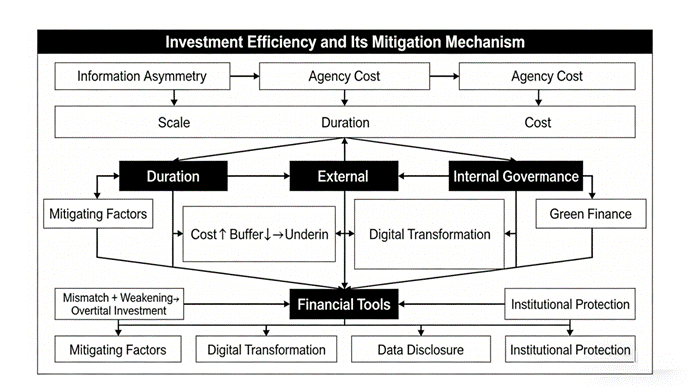
Figure 1 Theoretical Framework of the Impact of Financing Constraints on Investment Efficiency and Its Mitigation Mechanism
1. The Connotation and Mechanisms of Financing Constraints
1.1 Definition and Mechanism of Financing Constraints
Limitations in obtaining funds describe conditions that firms encounter when seeking capital, particularly in markets where access to financing remains difficult for supporting operations and decisions related to investment[1]. These limitations typically occur from factors including differences in information between parties, market conditions that show imperfection, and problems in structures that provide governance within and outside the organization. Differences in information result in higher costs for firms that seek financing, and the absence of sufficient assets or guarantees that firms can provide makes institutions that supply funds more cautious in decisions to provide loans, thereby increasing the difficulty that firms face in obtaining capital[2]. The effect of limitations in financing extends beyond issues of liquidity that occur in the short term, potentially restricting capabilities for investment and innovation that develop over longer periods, leading to allocation of capital that shows inefficiency and use of resources that results in waste[3]. The development of markets for finance has reduced the severity of limitations in financing to a certain degree, but these limitations remain a significant barrier that affects development of firms, particularly for firms that focus on innovation and enterprises that are small and medium in size[4].
1.2 Factors Influencing Financing Constraints
Multiple factors affect the development of constraints in financing. The context of the overall economy, the structure of markets, the size of firms, the type of ownership, and the condition of financial health in organizations all play a role[5]. Uncertainty in the economy and risks from policy make the environment for financing more difficult, and problems in capital markets and instability in policies that regulate also contribute to these constraints. Firms that are smaller or that show poor disclosure of information often face more significant difficulties in financing, particularly those in early stages of development or those that operate in industries with high risk. Other factors also make the problems with financing constraints worse, including the lack of channels for financing that differ from each other, limited ability to convert assets in capital markets, and restrictions in the system for credit. The health of finances and the rating of credit for a company are also important in determining access to financing. Firms that show high levels of use of leverage in finances often experience substantial pressure in financing. Table 1 provides a summary of the main aspects of constraints in financing—constraints related to scale, constraints related to duration, and constraints related to cost—and the ways these affect efficiency in investment. Figure 2 shows the patterns in values that indicate features of the MBK market from 2016 to 2020, and this reveals how the environment of the market affects constraints in financing for organizations. This figure helps in examining how features of the market influence the efficiency of financing for organizations.
Table 1: Dimensions and Mechanisms of Financing Constraints
| Research Focus | Research Content | Research Conclusion |
| Financing Constraints Dimension | Financing Scale Constraints | The increase in the cost of external funds leads to underinvestment[6] |
| Financing Constraints Dimension | Financing Term Constraints | Mismatches in terms exacerbate overinvestment and capital misallocation[7] |
| Financing Constraints Dimension | Financing Cost Constraints | High financing costs suppress corporate investment activities[8] |
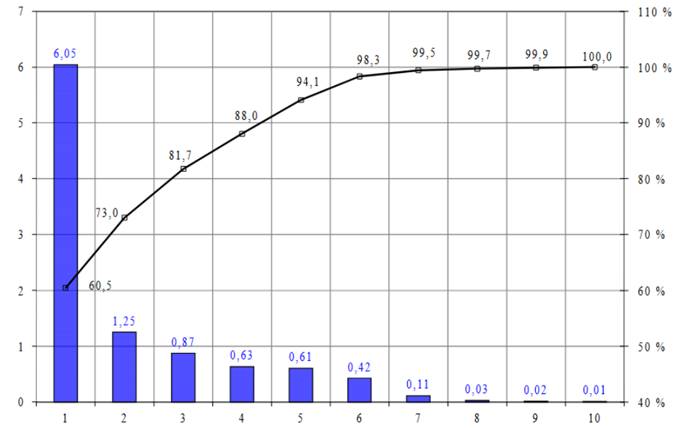
Figure 2: Characteristic Value Spectrum of the MBK Market from 2016-2020
1.3 The Impact of Financing Constraints on Investment Efficiency
Limits on access to funds show substantial effects on how firms use resources for investment. Firms that face these limits often demonstrate problems in investment patterns that differ from ideal levels[9]. This includes using too many resources or using too few resources for investment. These patterns indicate that allocation of resources occurs in ways that reduce effectiveness[10]. Firms with limited funds may not engage in investment opportunities that provide high returns. This affects development over time and affects the position of the firm in markets relative to other firms[11]. Firms with large amounts of available funds may direct substantial resources to projects that show low effectiveness in using these resources[12]. This produces waste in how the firm uses financial resources. Limits on access to funds also affect how firms approach risk in investment decisions[13]. These limits make firms more likely to avoid risk. This reduces engagement in investments that may provide high returns but involve substantial risk. Research examining these patterns indicates that limits on access to funds not only reduce how firms respond to opportunities from external sources but may also increase problems in how the firm functions internally in making decisions[14]. This further reduces the effectiveness of decisions about investment. The findings suggest that addressing limits on access to funds is important for improving how firms use resources for investment[15].
2. Measurement Methods of Corporate Investment Efficiency
2.1 The Basic Concept of Investment Efficiency
Investment efficiency in organizations relates to the process that allows effective use of resources to produce maximum returns[16]. This approach involves the reduction of capital waste and the establishment of growth that continues over time[17]. Investment that functions effectively provides support for improvements in productivity and competitiveness within the organization. This type of investment also allows for better allocation of resources, which increases value for individuals holding shares[18]. The main issue that surrounds efficiency in investment relates to the capacity to assess how organizations allocate resources in different economic conditions. This assessment requires the avoidance of investment that is excessive or investment that is insufficient[19]. The concept extends beyond returns that are measured in financial terms. It shows that rational use of resources is important, that understanding of market demand requires precision, and that management of risk requires effectiveness[20]. The improvement of investment efficiency is significant for development that continues over time in organizations, particularly in market environments that are complex and characterized by high levels of competition[21]. In such contexts, organizations require decision-making that uses scientific approaches and strategies for resource management that function efficiently[22]. These approaches allow organizations to establish that investments are rational and that returns reach maximum levels.
2.2 Common Measurement Methods
Multiple methods provide means for measuring investment efficiency in companies[23]. The DEA method provides analysis that examines relative efficiency across multiple units making decisions. This approach reveals practices that are most effective in allocation of resources[24]. This method provides an important tool for assessment of investment efficiency in companies[25]. Figure 3 shows the DEA efficiency model using representation in graphical form. This figure indicates operational mechanics that the model uses and shows application of the approach. This presentation allows readers to develop understanding of how the method provides means for evaluating investment efficiency in a company. TFP measures overall effectiveness of investment in a company through analysis that examines changes in factors of production. Regression analysis develops models that establish links between investment and returns. This method examines how various factors produce effects on investment efficiency. In recent years, algorithms using learning from machines and intelligence that is artificial have appeared as tools that are new for measurement of investment efficiency that is more precise. These approaches use analysis of data that is big and recognition of patterns and modeling for prediction. The approaches allow companies to measure returns from future investment with accuracy that is greater. This shows particular importance in environments of markets that are complex[26]. This provides improvement in accuracy that is scientific for making decisions. Figure 3 presents an approach with multiple dimensions for measuring investment efficiency. This presentation uses the Triple Bottom Line framework, which is also called TBL. The figure shows dimensions that are economic and social and environmental. This indicates the role that is critical of sustainability in investment efficiency.
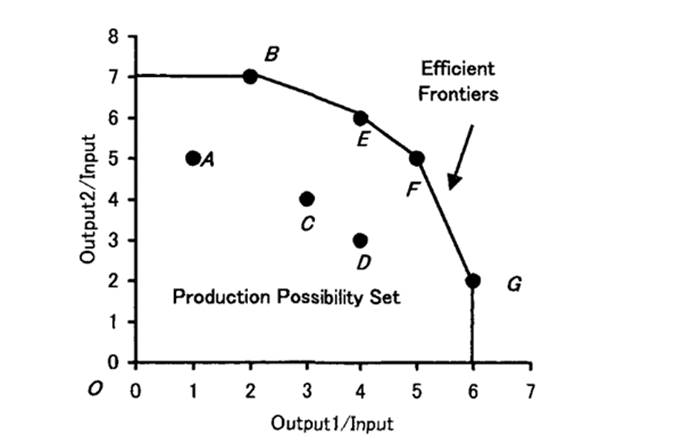
Figure 3 Illustration of the DEA Efficiency Model
2.3 Challenges and Innovations in Measurement
The process of measuring how well companies use investment resources faces important issues. Data collection presents difficulties, as many companies do not provide complete information on internal processes and decisions that affect investment choices[27]. This leads to results that may not show the full picture. The methods that researchers use to measure investment performance also vary in how well they work across different settings[28]. Factors such as industry type, company size, and stage of development affect the accuracy of these measurement approaches. External conditions that change over time, including market shifts, policy adjustments, and new developments in technology, also have significant effects on how investment efficiency can be measured.Researchers have worked to develop better approaches to address these measurement challenges[29]. Recent work incorporates large-scale data analysis and computer-based intelligence methods[30]. These newer approaches use strategies such as continuous monitoring of data as it becomes available and models that adjust to changing conditions[31]. The methods provide more accurate results and deliver findings more quickly than previous approaches[32]. This work improves the precision of measurement and also provides stronger support for companies making investment decisions based on data analysis[33].
3. The Relationship Between Financing Constraints and Investment Efficiency
3.1 The Impact of Financing Constraints on Investment Efficiency
Limits on financing directly reduce access to funds for companies and produce significant effects on the level of investment that occurs[34]. Studies show that these limits make capital shortages more severe and also increase the costs that companies face when obtaining funds, and these conditions allow both insufficient investment and excessive investment to occur at the same time[35]. In particular, limits on financing often prevent companies from making investments that are necessary for the long term, and this reduces the capacity for developing new approaches and the ability to maintain competitive positions in markets[36]. Also, shortages of capital often require companies to use short-term financing approaches that involve higher levels of risk, and this produces patterns where capital is not used in the most effective ways[37]. In these conditions, companies cannot reach decisions about investment that provide the best outcomes, and this is particularly clear when the limits on funds are substantial[38]. Opportunities for investment that would provide high value may not be used, and depending too much on financing through debt may produce a situation where debt levels become difficult to manage[39]. For this reason, reducing the limits on financing, increasing the different sources that companies can use to obtain funds, and lowering the costs of financing are important for improving how companies make investment decisions[40]. Figure five shows the ways that limits on financing affect investment through factors such as obtaining funds, the costs of financing, and how capital is distributed across different uses[41].
3.2 Heterogeneity Analysis Across Different Firms
Figures 4(a), 2(b), and 2(c) provide clear indication of differences in investment efficiency across companies that face limitations in obtaining funds. These figures show the relationship between constraints in funding and efficiency from different perspectives. The analysis examines differences by firm size, by ownership type, and by regional location[42]. Companies show notable differences in efficiency when constraints occur. State-owned enterprises (SOEs), non-state-owned enterprises (non-SOEs), companies of various sizes, and those in different regions all demonstrate particular features relating to constraints in funding. Research shows that non-SOEs often experience more significant constraints in obtaining funds. This occurs from limited government support. However, these companies show stronger competitiveness in the market. This allows them to reduce pressures from funding limitations through changes to capital structures. In contrast, SOEs face fewer constraints in obtaining funds. Their decisions about funding are typically affected by government policies. This may result in allocation of resources that differs from market-driven allocation. Small- and medium-sized enterprises (SMEs) experience more significant limitations in funding. This occurs from their limited capital accumulation and collateral. These constraints affect their investments over time and their innovation activities in substantial ways[48]. Table 2 presents several main mechanisms for reducing constraints. These include transformation using digital methods, disclosure of data assets, green finance, and institutional protection. The table shows how these mechanisms produce different effects in various corporate contexts.
Table 2: Mitigation Mechanisms and Their Differentiated Effects in Different Corporate Contexts
| Research Focus | Research Content | Research Conclusion |
| Mitigation Mechanism | Digital Transformation[43] | Enhances information transmission efficiency, alleviating financing constraints[44] |
| Mitigation Mechanism | Data Asset Disclosure[45] | Increases financial transparency, improving capital allocation efficiency[46] |
| Mitigation Mechanism | Green Finance | Reduces financing costs through instruments like green bonds[47] |
Figure 4(a): Investment Efficiency of Listed Companies by Size
Figure 4(b): Investment Efficiency of Listed Companies by Ownership Type
Figure 4(c): Investment Efficiency of Listed Companies by Region
3.3 Optimization Pathways and Policy Recommendations
Improving structures for providing funds and offering support from policy represent main approaches to increasing efficiency in investment by companies[49]. It is particularly important to provide more flexible options for obtaining funds for small and medium enterprises. At the same time, companies should work to improve internal structures for control and increase transparency in providing information to reduce negative effects from constraints in obtaining funds. Also, promoting change to digital approaches and policies for finance that support environmental goals will allow enterprises to address difficulties in obtaining funds in new ways and increase efficiency in distributing resources. In particular, new tools for obtaining funds such as bonds supporting environmental goals, platforms using digital approaches for finance, and measures for performance relating to environmental factors, social factors, and structures for control can significantly improve capabilities for obtaining funds by companies, addressing the double problems of investment below optimal levels and investment above optimal levels. To achieve this, policies should support participation by multiple groups with interests and promote new approaches by companies in methods for obtaining funds, ultimately achieving efficient investment and development that can continue over time[55]. Table 3 presents a summary of different methods for measurement and strategies for identification relating to the relationship between constraints in obtaining funds and efficiency in investment.
Table 3 Comparative Analysis of Related Research on Financing Constraints and Investment Efficiency
| Research Focus | Research Content | Research Conclusion |
| Measurement Method | Investment Efficiency Measurement[50] | Using Data Envelopment Analysis (DEA) and Stochastic Frontier Analysis (SFA)[51] |
| Identification Strategy | Financing Constraints Identification[52] | Based on panel data models and Structural Equation Models (SEM)[53] |
| Theoretical Perspective | Information Asymmetry Theory | Financing constraints suppress investment efficiency by raising funding costs[54] |
Conclusion
The effect of limits on obtaining financing on how well firms use investment shows a pattern with two parts that differ by type. Limits on the scale of financing, the duration of financing, and the cost of financing work to establish the range within which a firm can invest in a manner that is effective[56]. These limits can produce underinvestment, but they can also produce overinvestment by means of using short-term funds for long-term projects, problems relating to debt between parties, and preferences for risk that differ from the optimal level[57]. The main factor for improving how well investment is used involves the combination of information, governance, and finance working in a manner that is coordinated. For firms, the important approaches include making information disclosure stronger, making internal controls stronger, and changing the structure of financing duration to improve the match between funds and projects[58]. For the financial sector, the important approaches include improving how firms can obtain funds by using technology in finance, methods that make credit stronger, and financing that uses supply chain relationships[59]. For policy, the important approaches include improving the conditions outside the firm and the factors that provide motivation by using policies for taxes, systems for legal matters, finance that supports environmental goals, and structures that use digital elements to achieve both the efficient use of capital and investment that shows high quality[60].
References
[1] Bian, Y., & Gao, S. (2025). Can cross-border capital flows improve corporate investment efficiency? Journal of Financial Economics Research, 40(05), 53-68.
[2] Zhao, Y., & Fu, M. (2025). Short-term loans, agency costs, and investment efficiency in capital-intensive enterprises. Journal of Nanjing Audit University, 22(04), 67-79.
[3] Wang, S., & Cui, Y. (2025). Voluntary environmental regulation and corporate investment efficiency: An empirical test based on the “green factory” certification. Accounting Monthly, 46(14), 56-61.
[4] Yuan, Z., Yin, Q., & Yu, X. (2025). The impact of data assetization on corporate investment efficiency: An analysis based on information mechanisms. Accounting and Economic Research, 39(03), 69-96.
[5] Chu, E., Liu, K., & Li, Y. (2025). Can “proactive” empower “effective”: Counter-cyclical financial policies and corporate investment efficiency. Financial Science, (06), 17-34.
[6] Lai, Y., & Zhang, J. (2025). The empowering effect of data asset information disclosure on corporate investment efficiency. Finance and Economics, (05), 11-24.
[7] Wang, S., Wang, K., & Yue, X. (2025). Flexible tax administration and corporate investment efficiency: A study based on tax credit rating policies. Nankai Economic Research, (05), 231-249.
[8] Yang, J., & Su, Q. (2025). Can bank fintech play an investment governance role? Modern Economic Research, (05), 35-50.
[9] Chen, W., Shi, N., Liang, Q., et al. (2025). Can financial innovation improve the quality and efficiency of the real economy? Evidence based on credit protection tools. Finance Research, 51(05), 81-95.
[10] Lin, S., Zhu, C., & Zhu, Y. (2024). Does the impact of guaranteed networks affect corporate investment efficiency? A perspective based on financing constraints. Accounting and Economic Research, 38(03), 3-25.
[11] Xu, A. (2025). Regional digitalization, corporate governance, and corporate investment efficiency. Accounting Communications, (06), 44-49.
[12] Liu, Y., Gao, J., & Chen, X. (2025). The impact of intelligent integration development on corporate investment efficiency in the real economy. Journal of Hunan University (Social Sciences Edition), 39(01), 67-77.
[13] Wu, S. (2025). Financing methods and investment efficiency of strategic emerging enterprises. Journal of Technology Economics and Management Research, (01), 30-36.
[14] Zhu, Y. (2025). The impact of government procurement on corporate investment behavior. Industry Economics Review, 16(01), 130-146.
[15] Liu, S., Qi, H., & Liu, Y. (2025). Does green bond financing improve corporate investment efficiency? Empirical evidence from the bond market. Investment Research, 44(01), 56-78.
[16] Song, Q., Zheng, L., Zhong, Q., et al. (2024). Creditor protection and investment efficiency in manufacturing enterprises: A quasi-natural experiment based on bankruptcy court establishment. Financial Review, 16(06), 1-26+151.
[17] Ji, J., & Zhou, J. (2025). Commercial credit, innovation investment, and corporate investment efficiency: Empirical evidence based on ownership differences. Journal of Henan Normal University (Philosophy and Social Science Edition), 52(01), 84-90.
[18] Hui, N., Sun, Z., & Lu, B. (2024). Environmental uncertainty, accounting conservatism, and corporate investment efficiency. Accounting Communications, (23), 39-44.
[19] Tian, W., Zhou, Y., & Li, D. (2024). Digital integration: Digital transformation and investment efficiency in specialized and sophisticated enterprises. Journal of Jinan University (Philosophy and Social Science Edition), 46(11), 89-111.
[20] Sun, H., Cao, D., & Liu, Z. (2024). Climate policy uncertainty, digital transformation, and corporate investment efficiency. Journal of Shanghai University of Finance and Economics, 26(06), 62-77.
[21] Wu, X., Wei, H., & Zhou, Z., et al. (2025). ESG performance, financing constraints, and corporate value. Accounting Friends, (24), 116-122.
[22] Shi, X., & Huang, L. (2025). The financing gap and dynamic evolution of high-tech enterprises in China. Statistics and Decision, 41(22), 159-165.
[23] Luo, S., Ding, L., & Han, J. (2025). The social credit ecological index of Chinese cities, regional distribution, and its impact on corporate financing constraints: Based on big data from 2010 to 2024. Southwest Finance, (10), 43-56.
[24] Zhang, J., Shi, X., Li, S., et al. (2025). Measurement and improvement paths of the green development efficiency of platform enterprises: Analysis based on the Super-SBM model and fsQCA method. Price Theory and Practice, 1-7.
[25] Li, Y. (2025). Can banking competition promote corporate green innovation? Evidence from the perspective of financing constraints. Accounting Communications, (22), 80-84.
[26] Zhang, X. (2025). Financialization, debt financing costs, and corporate cost decisions. Accounting Communications, (22), 89-94. DOI:10.16144/j.cnki.issn1002-8072.2025.22.018.
[27] Jiang, R. (2025). The impact of ESG performance on innovation performance in the commercial circulation sector: The moderating effect of financing constraints. Business Economics Research, (21), 141-145.
[28] Shi, G., & Dong, A. (2025). Executive incentives, technological innovation, and ESG performance: The moderating effect of digital transformation and financing constraints. Journal of Technology Economics and Management Research, (10), 146-152.
[29] Zhang, M., Yang, X., & Zhang, Y. (2025). How artificial intelligence applications empower corporate investment efficiency: A perspective based on resource allocation efficiency and investment decision quality. Journal of Beijing Technology and Business University (Social Science Edition), 40(05), 87-100.
[30] Yang, L., Zhang, Y., & Xiong, L. (2025). The resource allocation effect of the VAT credit refund policy: A perspective based on corporate investment efficiency. Nankai Economic Research, (06), 140-160.
[31] Lai, Y., & Zhang, J. (2025). The empowering effect of data asset information disclosure on corporate investment efficiency. Finance and Economics, (05), 11-24. DOI:10.19622/j.cnki.cn36-1005/f.2025.05.002.
[32] Wang, S., Wang, K., & Yue, X. (2025). Flexible tax administration and corporate investment efficiency: A study based on tax credit rating policies. Nankai Economic Research, (05), 231-249.
[33] Hou, P., & Ma, Z. (2025). Measuring and improving innovation efficiency in China’s biopharmaceutical enterprises: An analysis based on improved super efficiency DEA and fsQCA methods. Soft Science, 39(09), 111-119.
[34] Lin, S., Zhu, C., & Zhu, Y. (2024). Does the impact of guaranteed networks affect corporate investment efficiency? A perspective based on financing constraints. Accounting and Economic Research, 38(03), 3-25.
[35] Sui, L. (2024). A study on the measurement method of market integration based on structural time series models: The example of the Qing Dynasty grain market. Journal of Chinese Economic History Research, (06), 2.
[36] Li, M., Sun, X., & Luo, J. (2024). Green responsibility of manufacturing enterprises from the perspective of the industrial chain: Identification framework, measurement methods, and comparative research. Statistical Research, 41(10), 87-97.
[37] Zou, W., Xie, X., & Ye, J. (2024). How to smooth the depiction of the corporate life cycle: An optimization of measurement methods based on growth rate classification. Contemporary Finance, (11), 98-110.
[38] Feng, X., & Gu, J. (2024). A comparative analysis of service industry innovation measurement using the LDA topic model: With a comparison to traditional innovation measurement methods. Journal of Scientific Management Research, 42(03), 76-88.
[39] Xiao, X., Wang, Z., & Li, S. (2024). Research progress on measurement methods for industrial chain resilience. Economic Dynamics, (04), 144-160.
[40] Zhang, Y., & Xia, J. (2024). The causes, measurement methods, and impact effects of data element price distortion. Guizhou Social Sciences, (03), 120-126.
[41]Irrgeher, J., Vogl, J., Santner, J., & Prohaska, T. (2014). Measurement strategies.
[42]Clauser, K. R., Baker, P., & Burlingame, A. L. (1999). Role of accurate mass measurement (±10 ppm) in protein identification strategies employing MS or MS/MS and database searching.Analytical chemistry,71(14), 2871-2882.
[43]Froberg, D. G., & Kane, R. L. (1989). Methodology for measuring health-state preferences—I: Measurement strategies.Journal of clinical epidemiology,42(4), 345-354.
[44]Ji, H., Zhu, H., Zhang, R., Zhang, S., Yuan, Z., & Meng, F. (2023). Semiconductor sensor virtual array: Gas detection strategy in Internet of Things to suppress humidity interference.IEEE Internet of Things Journal,11(3), 4934-4941.
[45]Klopotowska, J. E., Wierenga, P. C., Stuijt, C. C., Arisz, L., Dijkgraaf, M. G., Kuks, P. F., … & WINGS Study Group. (2013). Adverse drug events in older hospitalized patients: results and reliability of a comprehensive and structured identification strategy.PloS one,8(8), e71045.
[46]Cheng, L., Liao, R., Yang, L., & Zhang, F. (2018). An optimized infrared detection strategy for defective composite insulators according to the law of heat flux propagation considering the environmental factors.Ieee Access,6, 38137-38146.
[47]Choi, J. K., Hann, R. N., Subasi, M., & Zheng, Y. (2020). An empirical analysis of analysts’ capital expenditure forecasts: evidence from corporate investment efficiency.Contemporary Accounting Research,37(4), 2615-2648.
[48]Cook, K. A., Romi, A. M., Sánchez, D., & Sanchez, J. M. (2019). The influence of corporate social responsibility on investment efficiency and innovation.Journal of Business Finance & Accounting,46(3-4), 494-537.
[49]Alsayegh, M. F., Abdul Rahman, R., & Homayoun, S. (2022). Corporate sustainability performance and firm value through investment efficiency.Sustainability,15(1), 305.
[50]Cao, Y., Dong, Y., Lu, Y., & Ma, D. (2020). Does institutional ownership improve firm investment efficiency?.Emerging Markets Finance and Trade,56(12), 2772-2792.
[51]Li, L. L., Monroe, G. S., & Coulton, J. (2023). Managerial litigation risk and corporate investment efficiency: Evidence from universal demand laws.Journal of Empirical Legal Studies,20(1), 196-232.
[52]Kouaib, A. (2022). Corporate sustainability disclosure and investment efficiency: The Saudi Arabian context.Sustainability,14(21), 13984.
[53]Peng, L., Zhang, L., & Chen, W. (2021). Capital market liberalization and investment efficiency: evidence from China.Financial Analysts Journal,77(4), 23-44.
[54]Godsell, D., Jung, B., & Mescall, D. (2023). Investor relations and investment efficiency.Contemporary Accounting Research,40(3), 1966-1998.
[55]Lee, C. C., & Xiao, Z. (2024). Does supply chain finance improve the corporate investment efficiency of new energy firms? Evidence from China.Emerging Markets Finance and Trade,60(6), 1130-1147.
[56]Lei, Q., & Chen, H. (2019). Corporate governance boundary, debt constraint, and investment efficiency.Emerging Markets Finance and Trade,55(5), 1091-1108.
[57]Santos, A., & Cincera, M. (2022). Determinants of financing constraints.Small Business Economics,58(3), 1427-1439.
[58]Laeven, L. (2003). Does financial liberalization reduce financing constraints?.Financial management, 5-34.
[59]Winker, P. (1999). Causes and effects of financing constraints at the firm level.Small Business Economics,12(2), 169-181.
[60]Egeln, J., Licht, G., & Steil, F. (1997). Firm foundations and the role of financing constraints.Small Business Economics,9(2), 137-150.