DOI:https://doi.org/10.65281/738313
Longxuan Zhang1*
1.College of Management, Wuhan Textile University, Wuhan 430200, Hubei, China
Abstract:Blockchain is rapidly proliferating a profound transformation across accounting and auditing. This paper offers an integrative review of its principal streams of influence. From an accounting information systems perspective, blockchain alters the design of information recording, storage, and processing through a distributed-ledger enabled triple-entry bookkeeping and embedding automated control over business processes through the use of smart contracts. As regards auditing, the audit-relevant characteristics of blockchain such as immutability and transparency significantly improve the traceability and verifiability of audit evidence and thus enable real-time and continuous auditing and give rise to new models such as decentralized auditing. Despite the ongoing issues such as technological maturity, standardization, and regulatory governance, combining blockchain with frontier technologies, particularly machine learning, presents promising opportunities for future research. In total, this study attempts to contribute to the literature by providing an integrative analytical framework to explain how blockchain, from the logic of bookkeeping foundation to the control architecture, profoundly transforms accounting and auditing.
Keywords: Blockchain; Triple-entry bookkeeping; Smart contracts; Accounting information systems; Auditing
1. Introduction
Accounting information systems (AIS) are experiencing a transformative process of evolution and transformation, evolving from traditional computerized architecture towards fully digitalized architecture. Faccia and Mosteanu (2019) investigated theoretical foundations by which blockchain enables evolution of accounting from double-entry to triple-entry bookkeeping[4]. Centorrino et al. (2022) investigated evolutionary trajectory from traditional ledgers to blockchain-based infrastructure, and identified new research frontiers in AIS research[8]. On the other hand, ALSaqa et al. (2019) examined empirically practical impacts of blockchain on practical aspects of reliability and security of accounting information systems[15]. From historical perspective, Jayasuriya and Sims (2023) placed blockchain as next-generation accounting tool following ERP implementations[25], while Mingming (2020) examined specific application scenarios and future prospects of blockchain in accounting information systems[26]. In general, the above literatures provide macro context of technology-driven accounting revolution.
This study addresses the radical transformation of accounting information systems and auditing in its entirety, induced by blockchain technology, ranging from basic bookkeeping logic to higher-level business control logics. Specifically, the paper aims to provide systematic definitions and delineations of three key concepts. First, “blockchain-based triple-entry bookkeeping” denotes a mechanism where, in addition to bilateral ledger entries made by transacting parties, a cryptographically secured, immutable, and multi-party-shared third entry is embedded, and the transaction–entry–voucher are formed in a whole “transaction–entry–voucher” triadic loop. Its basic value lies in improving integrity, transparency and auditability of accounting information[1,9]. Second, “blockchain-enabled accounting information systems” denote accounting information systems that use distributed ledgers, smart contracts and encryption technologies to build a new generation of accounting information systems that are recorded in real-time in a distributed ledger, automatically executed via self-enforcing smart contracts, transparently traceable by all stakeholders, and securely maintained with enhanced robustness – in other words, it denotes a revolutionary transformation of storage, processing and dissemination of accounting information[14,30]. Third, “smart contract–based control” denotes a mechanism where business rules and auditing logic are embedded into programmable, self-executing smart contracts and automatedly executed, which operationalizes real-time, tamper-resistant control on different aspects of transaction verification, accounting processing[22] and compliance checks. It shifts traditional ex-post audit control oversight to in-process continuous monitoring. The explicit delineation and interrelations of above three concepts serve as logical starting point and analytical framework of this review.
Although an increasing amount of literature is available, it is worthwhile to note that an integrative framework is still lacking to gain an overall understanding of the black box of blockchain’s impacts on accounting and auditing. Liu et al. (2024) used CiteSpace to perform a decade-long bibliometric visualization and analysis on the evolutional knowledge structure of blockchain literature[31]. Oladejo et al. (2024) investigated blockchain’s disruptive effects on accounting and finance fields[38]. Zhang et al. (2025) even reviewed auditing research in blockchain environments[55], while Georgiou et al. (2024) offered a panoramic survey of blockchain use in accounting and auditing fields[63]. However, the prior reviews either concentrate on bookkeeping or audit applications in blockchain environments, while an integrated analysis on how blockchain shakes up the underlying innovation of triple-entry bookkeeping and the application logic of code-in-the-box, i.e., smart contract-based control, is missing. This review attempts to bridge the above gaps by offering a holistic analytical framework to follow blockchain’s impact path from underlying accounting to higher-order control.
2. Theoretical Foundations and Evolutionary Trajectory of Blockchain in Accounting Information Systems
2.1 From Double-Entry to Triple-Entry Bookkeeping: Theoretical Evolution and Conceptual Breakthroughs
The development of accounting methods has been relentlessly propelled by the pursuit of informational veracity, verifiability, and internal control efficacy. Faccia and Mosteanu (2019) systematically delineated the theoretical necessity behind the shift from double-entry to triple-entry bookkeeping. The authors note that even though double entry systems produce self-balancing accounts, they are, at their core, centralized, internally constrained record keeping systems whose integrity and authenticity rest on internal control and external audit, and as such, remain vulnerable to both tampering and informational silos[4]. Chowdhury (2021) further shows that in a digital economy, the traditional double entry system displays a design limitation in providing transparent and trustworthy cross-organizational transactional facts; blockchain technology, by providing a cryptographically secured, immutable, and multi-party-consensus third party entry in addition to the bilateral ledger of transacting parties, renders technically feasible genuine triple-entry bookkeeping; and the shift is not balance verification (double entry) but globally shared verifiable facts (triple entry)[9].
Handayanto et al. (2024) extended this line of thinking about the potential future of accounting from triple-entry bookkeeping enabled by blockchain. They note that by providing an indisputable layer of transactional facts, accounting information reliability can be fundamentally improved in the future [36]. In addition, Giang and Tam (2023) build on these theoretical contributions by providing empirical evidence on how blockchain technology has a tangible impact on accounting in commercial organizations (real world validation of triple entry conceptual breakthrough) [39]. The main implication of the line of thinking is that triple entry bookkeeping enabled by blockchain will move accounting records from closed, organization-centric ledgers to open, globally accessible protocols that can act as public infrastructure records of financial facts.
2.2 Blockchain as a Distributed Accounting Infrastructure: Technological Characteristics and Accounting Information Quality
Through its distributed, immutable, traceable, and decentralized consensus features, blockchain technology is gradually becoming a new type of accounting information storage and processing infrastructure, and greatly affects the aspects of accounting information quality.
Centorrino et al. (2022) pointed out that blockchain is not only a recording tool; its decentralized, traceable, and irreversible characteristics will change the structure and process of ledger and accounting information system, and provides a completely new trust basis for accounting information[8]. Wu et al. (2019) found that when combining blockchain with the Internet of Things, blockchain can guarantee the authenticity of transaction data from the source and traceable from the chain, greatly improve the reliability and relevance of accounting information, and reduce information asymmetry[16]. Inghirami (2020) comprehensively discussed how blockchain technology’s transparency, immutability, and cryptographic security extend the range of accounting information systems and fundamentally maintain faithful representation and completeness of accounting data[18]. Mingming (2020) studied specific applications in AIS. He believed that blockchain improves accounting information quality by optimizing data processing and providing encryption safeguards[26]. Mai (2021) studied how distributed ledger technology improves financial accounting information quality by enhancing the verifiability of financial information through multi-party sharing and verification[28]. Zhang et al. (2019) studied the influence of distributed ledger technology on accounting. They believed that distributed ledger technology has a great impact on the process of information generation and information validation. It can optimize information generation and improve information quality, thereby promoting overall improvement in information quality[29]. Supriadi et al. (2020) further studied that blockchain innovation improvements can enhance the security, transparency, and reliability of AIS through decentralized and cryptographic security characteristics, and then improve accounting information quality[32].
The above blockchain technological characteristics enhance accounting information quality by reshaping the data generation, processing, and verification mechanisms of accounting information systems, as illustrated in Figure 1.
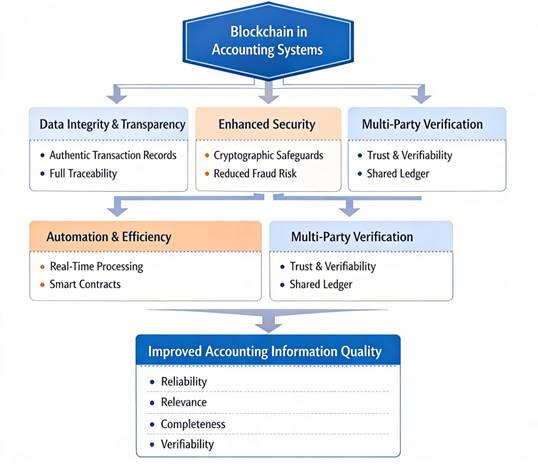
Figure 1 Technological Characteristics of Blockchain as a Distributed Accounting Infrastructure and Their Impact on Accounting Information Quality
2.3 Blockchain Implementation of Triple-Entry Bookkeeping: Frameworks, Models, and Advantages
The practical realization of triple-entry bookkeeping on blockchain has progressed from a purely theoretical construct to the development of concrete technological frameworks and operational models. Thies et al. (2023), through a systematic literature review, synthesized the current state of research on blockchain-based triple-entry bookkeeping, revealing its core architecture and outlining directions for future scholarly inquiry[1]. Maiti et al. (2021) proposed a forward-looking framework for triple-entry bookkeeping, explicating how the characteristics of distributed ledgers and smart contracts can be leveraged to construct an accounting system capable of automated execution and verification[2]. Chen et al. (2021) provided a concrete demonstration of implementing a triple-entry system using π accounts atop blockchain protocols, offering a viable technical pathway for practical deployment[3].
Sarwar et al. (2024) innovatively introduced a blockchain-based tripartite accounting framework for B2B transaction records, thereby enhancing inter-firm transparency and auditability[6]. Sasongko et al. (2023) examined the implementation trajectory of blockchain-enabled triple-entry bookkeeping in Indonesia, analyzing both its adaptability and potential challenges in local business environments[7]. Amelia et al. (2024) conducted a systematic review of blockchain triple-entry bookkeeping in the context of cryptocurrency assets, highlighting its utility for accounting in emerging digital asset domains[11]. Petratos (2024) focused on the critical issues surrounding the integration of triple-entry bookkeeping into enterprise information ecosystems, emphasizing its connective role across complex organizational data architectures[34].
In sum, the implementation approaches studied in this category demonstrated the clear benefits of blockchain triple-entry bookkeeping over traditional accounting approaches, such as increased transparency, verifiability, and system-wide reliability. A detailed summary of these comparative benefits is presented in Table 1.
Table1 Comparative Advantages of Blockchain-based Triple-Entry Accounting
| Advantage Dimension | Traditional Double-Entry | Blockchain-based Triple-Entry | Key Supporting Literature |
| Transparency & Auditability | Limited, relies on internal controls and periodic external audits. | High, provides an immutable, shared, and real-time audit trail for all parties. | [1], [6], [34] |
| Operational Efficiency | Manual reconciliation and delayed reporting are common. | Automated transaction recording, near real-time settlement, and reduced reconciliation needs. | [2], [3], [7] |
| Security & Reliability | Centralized data storage is vulnerable to fraud and single points of failure. | Decentralized, cryptographically secured ledger ensures data integrity and resilience. | [11], [34] |
3. Core Impacts of Blockchain on Accounting Information Systems and Architectural Transformations
3.1 Transformations in Accounting Information Recording and Storage: Distributed Ledgers, Data Vaults, and Immutability
Blockchain technology completely redefines the paradigms of recording and storing information of accounting data. Its innovative feature is not in the use of distributed ledger technology instead of traditional centralized database technology, but in the fact that the accounting records are no longer maintained and verified by a single trusted central node, but by multiple participants in the network who collectively maintain identical copies of synchronized and consensus-based ledger copies, which ensures the consistency at the architecture level and the global consistency of the system.
More importantly, blockchain technology ensures the immutability of the accounting data by using cryptographic hash chains and timestamping, i.e. modifying the accounting records of the past will break the continuity of the hash chain and is immediately detected by the network, which provides a completely new level of evidentiary strength and long-term integrity of accounting information.
In addition, to store the complex structured accounting data in blockchain platforms, data vaults have been proposed to organize and store complex structured accounting data in blockchain platforms in a flexible and secure way for enterprise-scale applications[8][12][17][20]. With the decentralized storage mechanism, the capture of data for reporting becomes more powerful through Internet of Things (IoT) and eXtensible Business Reporting Language (XBRL) standardization[24]. Empirical and conceptual studies have shown that the decentralized and cryptographically secured recording paradigm will significantly improve the quality, reliability and overall fraud resilience of AIS[32], and multi-party security protocols and network based analytical techniques provide new methodological foundations to support the faithful representation of financial information[33]. A comparative overview of centralized storage versus distributed ledger paradigms is presented in Table 2.
Table 2 Paradigm Shift from Centralized Storage to Distributed Ledger
| Feature | Centralized Database (Traditional) | Distributed Ledger (Blockchain) |
| Data Control | Central authority has full control and ownership. | Control is decentralized across network participants. |
| Data Reconciliation | Requires manual or automated processes to align disparate systems. | Maintains a single, shared source of truth across the network. |
| Trust Model | Trust is placed in the central authority and its internal controls. | Trust is established through cryptographic verification and consensus algorithms. |
| Failure Point | Single point of failure; vulnerability to targeted attacks or system outages. | Resilient to single points of failure due to network redundancy. |
| Update Mechanism | Centralized administration pushes updates or corrections. | Updates require network consensus, making unilateral changes virtually impossible. |
| Audit Trail | Logs are maintained internally and can be altered or deleted. | The audit trail is intrinsic, timestamped, and cryptographically linked to all prior records. |
3.2 Automation in Accounting Information Processing and Confirmation: The Role and Implementation of Smart Contracts
As one of the most typical applications of blockchain, smart contracts store business rules and contractual articles as executable codes on distributed ledgers and initiate a dramatically automated accounting information processing and transaction confirmation. Such a new paradigm greatly destroys the traditional accounting way to manually verify the business rules and trigger the business processes. Once the predefined conditions, such as goods receipt, attainment of certain date, and performance ratios, are met and verified on-chain, the corresponding logic operations, such as accounting voucher generation, payment request, and ownership transfer, will be automatically, irrevocably, and forcibly executed off-chain. Chen, Tsai, and Tahnk (2021) reveal a technical way to implement the π accounts triple-entry bookkeeping system on blockchain protocols by using smart contracts and emphasize their important roles in triggering decentralized accounting records generation [3]. Faccia and Petratos (2021) propose that smart contracts can be integrated with ERP to automate electronic procurement process and make transactional data consistent, real-time updated, and immutable from occurrence to ledger entry [19].
Cazazian (2022) discusses the central position of smart contracts in blockchain-based AIS and AI auditing technologies and positions them as carriers of automated and auditable business logic[21]. Chou et al. (2021) show, by using a concrete revenue recognition example, that smart contracts can facilitate decentralized accounting agreement and enable accurate and automated execution of complex accounting standards [22]. Guo, Zuo, and Li (2025) focus on smart contract application on auditing. They show that smart contracts can encode audit procedures, such as substantive testing, and then achieve automated and continuous monitoring of audit process [59].
In summary, compared with traditional accounting and auditing, smart contracts code accounting and auditing rules and automate their executions, which greatly improve processing efficiency and accuracy and reduce operational risks and human interference. Meanwhile, smart contracts provide a verifiable code-based execution mechanism between transacting parties and play a key factor that promotes AIS automation and intelligence development.The above smart contracts encode accounting and auditing rules to enable automated execution and real-time confirmation, as illustrated in Figure 2.
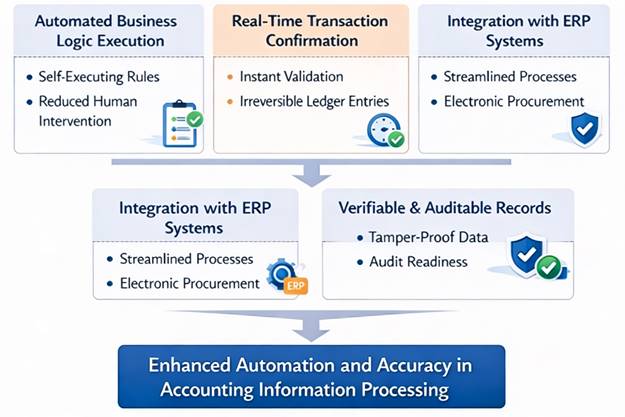
Figure 2 Automation in Accounting Information Processing and Confirmation: Role and Implementation Framework of Smart Contracts
3.3 System Integration and Synergy: Blockchain in Conjunction with ERP, XBRL, and IoT
Blockchain is not an “island” on its own: its benefits arise from a profound integration and synergy with both current and upcoming enterprise information systems, which jointly form a much more complete, automated and trustworthy accounting information system.
Integration with Internet of Things (IoT): ensures the authenticity and automated collection of source accounting data. Wu et al. (2019) found that the transaction source information recorded on blockchain originating from real-time data generated by IoT devices is immutable and end-to-end traceable, which significantly improves the reliability and relevance of accounting information[16]. Integration with enterprise resource planning (ERP) systems: Blockchain and smart contracts can be seamlessly integrated with ERP modules – in our case electronic procurement – and the whole process can be automated and consistent from triggering business events to recording in the financial statements thus overcoming inter-silo architectures (Faccia & Petratos, 2021)[19]. This integration is also applicable for reporting functions: Nofel et al. (2024) in their systematic review found that the integration of blockchain, IoT and eXtensible Business Reporting Language (XBRL) enables an end-to-end workflow from collecting data, trustworthy recording of transaction information to automated generation of standardized reports, which improves both disclosure efficiency and credibility[24]. Furthermore, Petratos (2024) found that triple-entry bookkeeping that can be run on blockchain can leverage one of its advantages: overcoming inter-silo architectures and, more specifically, it facilitates a seamless integration across different enterprise information systems both within a single corporation and across inter-organizational networks, thus establishing coherent and trustworthy data flows[34].
Hence, blockchain runs as a trusted “data layer” and “logic layer” and co-evolves with IoT (data capture), ERP (business processing) and XBRL (standardized reporting) to render the AIS a real-time, closed-loop and networked intelligent system.
4. The Impact of Blockchain on Auditing Paradigms and Innovative Applications
4.1 Enhanced Traceability of Audit Trails and Evidence: Real-Time and Continuous Auditing
By its very nature, immutability, and chronological sequencing, blockchain technology will completely transform the production of audit trails and collection of audit evidence. Under conventional auditing, audit trails typically rely on the internal logs supplied by the auditee, which may be modified, filtered, or partially disclosed. In contrast, each transaction recorded on a blockchain is timestamped and cryptographically linked to preceding and subsequent transactions, creating a coherent, uninterrupted, non-repudiable public record that provides auditors with a native source of high-reliability evidence that does not depend on representations from the auditee. Dixit et al. (2024) studied the use of immutable tripartite bookkeeping as an auditing tool and found that immutable tripartite records strengthen the audit evidence and increase the credibility of auditors[5]. Wang (2023) studied blockchain-based audit quality control systems. The basis of audit quality control systems developed with blockchain technology rests on the verifiable end-to-end transaction trails provided by distributed ledgers[23]. Appelbaum and Nehmer (2020) studied auditing of cloud blockchain accounting systems. The primary audit procedure is to verify the immutable audit trails generated by the distributed ledgers[27]. The enhanced traceability has directly facilitated the emergence of real-time and continuous auditing models. Yu (2025) studied food safety audits and found that the real-time data streams provided by blockchain technology can support continuous monitoring audits[45]. Elsaid et al. (2025) reported empirical evidence that when an audit client uses blockchain technology, the immediate verifiability of the data in the blockchain’s transaction streams allows the auditor to reverse the traditional substance testing procedures toward analytical procedures and system-level validations, which in turn changes the nature and focal point of audit work [57]. Tahani et al. (2024) also found a fundamental change in blockchain-era auditing. The fundamental change is the shift from periodic, periodic sampling inspections of data to analyzing and verifying continuous streams of trustworthy data [62].
4.2 Automation and Intelligence in Audit Processes: Smart Contract Auditing and AI Enablement
Blockchain technology, and smart contracts specifically, are causing a transformative shift in the audit process from the traditional manual sampling method to an automated and intelligent method. Smart contracts contain auditable internal control because their code represents business rules and executes them automatically; consequently, smart contract code audits (including logical correctness, security robustness, and compliance with regulations) is a new and emerging audit procedure. Cazazian (2022) studied the key position of smart contracts in the blockchain-based accounting information system and how the use of AI-driven audit technology based on smart contracts is more efficiently designed to inspect automatically [21]. Auditing Cloud-Based Blockchain Systems, Appelbaum and Nehmer (2020) studied the challenges of verifying the automated execution logic within the smart contracts [27].
In addition to rules-based automation, machine learning (ML), a type of artificial intelligence, has been designed to empower the blockchain-enabled auditing further. Weinberg and Faccia (2024, 2025) developed and sequentially elaborated the idea of using machine learning to enhance the design of triple-entry bookkeeping and auditing, including using pattern recognition to automatically audit a suspicious transaction or assess smart contract risks [35,37]. Mehammed et al. (2025) proposed a blockchain audit federated learning framework to enable AI models to be trained collaboratively on distributed multi-party data while protecting data privacy to increase the audit scope and audit quality [41]. Arham (2025) surveyed the converged transformation of auditing, caused jointly by artificial intelligence and blockchain, and explained how the automated audit evidence analysis, audit risk assessment, and continuous monitoring are enabled by the intelligent evolution of auditing [58].
Taken together, these technological convergences enable auditing to transition from ex-post verification toward in-process monitoring and even ex-ante risk warning mechanisms. An overview of the evolution of audit procedures in the blockchain era is presented in Table 3.
Table 3 Evolution of Audit Procedures in the Blockchain Era
| Audit Aspect | Traditional Audit Approach | Blockchain & AI-Enabled Audit Approach |
| Evidence Collection | Manual sampling from internal logs and documents. | Automated, continuous ingestion of immutable transactional data from the ledger. |
| Control Testing | Inquiry, observation, and reperformance of manual controls. | Code review and automated testing of smart contract logic (automated controls). |
| Risk Assessment | Periodic risk assessment based on historical data and judgment. | Real-time risk scoring and anomaly detection using AI models on live ledger data. |
| Reporting Focus | Historical financial statement opinion. | Increased emphasis on system reliability, data integrity, and continuous assurance reports. |
4.3 Emerging Audit Models and Challenges: Decentralized Auditing, Public Auditing, and Privacy Protection
Blockchain technology not only optimizes conventional auditing practices but also gives rise to novel paradigms, such as decentralized auditing (DeAudit) and public auditing, while simultaneously introducing formidable challenges related to privacy protection. The rapid expansion of decentralized finance (DeFi) has generated corresponding audit demands. Schuldt and Peskes (2023) argued that triple-entry bookkeeping and distributed ledger technologies are transforming the financial services landscape from a business perspective; their inherent transparency and composability necessitate a parallel evolution of auditing toward decentralized and automated models[13]. Wang (2023) similarly addressed the construction of blockchain-based public audit quality control systems, implicitly suggesting a shift of audit services from centralized institutional arrangements toward protocol-based public infrastructures[23].
Ensuring the integrity of public data—such as cloud-based or IoT-generated information—has thus become a critical concern. Wang et al. (2025) and Xie et al. (2026) respectively proposed blockchain-assisted public auditing frameworks and multi-user data integrity auditing schemes that leverage blockchain’s publicly verifiable properties to enable efficient and trustworthy third-party verification[52,53]. However, an inherent tension persists between the full transparency of transaction data and the confidentiality requirements intrinsic to auditing. To address this dilemma, Lan and Zhang (2025) developed a lightweight privacy-preserving auditing framework designed to protect sensitive commercial information while conducting blockchain-based audits[49].
Erica, Boulianne, and Spence (2025) offered a profound conceptual examination of the fundamental tensions and role reconfigurations that arise when auditing—traditionally a mechanism for establishing trust—confronts blockchain systems explicitly designed to create “trustless” environments[54]. Similarly, the dynamic blockchain data auditing framework proposed by Liu and Wu (2025) underscores the necessity of balancing auditability with privacy control[60]. Moreover, using a futures-oriented research methodology, Dijan et al. (2025) identified substantial technological, standardization, and regulatory challenges that continue to constrain the comprehensive impact of blockchain on auditing[42].
Taken together, these emerging models and unresolved challenges collectively delineate a landscape of paradigmatic tension and convergence through which the auditing profession is currently evolving.
5. Challenges, Future Research Directions, and Practical Implications
5.1 Technological and Managerial Challenges: Scalability, Interoperability, Costs, Standards, and Regulation
Despite promising prospects, comprehensive blockchain adoption in accounting and auditing may continue to face substantial technological and managerial challenges. However, at the technological level, the significant transaction throughput limitations (scalability) and the considerable energy consumption of existing blockchain networks could constrain their suitability for high-volume, high-frequency transaction environments, while insufficient interoperability among heterogeneous blockchain platforms—and between blockchain systems and traditional enterprise systems such as ERP—could give rise to new forms of “data silos.” Schuldt and Peskes (2023) and Oladejo et al. (2024) both identified these technical constraints as critical barriers to large-scale commercial deployment[13,38]. Moreover, the costs associated with implementing and maintaining blockchain systems may present tangible obstacles to adoption[10]. Furthermore, the complexity of reengineering existing business processes might constrain implementation.
Given that talent shortages represent critical barriers, the absence of mature standards and regulatory frameworks may constitute a systemic challenge. Jayasuriya and Sims (2023) emphasized the growing mismatch between the pace of technological development and the evolution of accounting and auditing standards[25]. Nevertheless, Tan (2025) might indirectly reflect the lack of widely accepted market standards[56]. A and B (2025) explored complex interactions among blockchain technology, audit processes, and International Financial Reporting Standards (IFRS)[61]. Thus, studies may underscore the urgency of standard adaptation. However, Georgiou et al. (2024) and Almandehar et al. (2025) consistently identified regulatory uncertainty, data jurisdiction issues, and cross-jurisdictional coordination as core managerial challenges influencing blockchain adoption in accounting and auditing[43,47,63].
5.2 Frontier Interdisciplinary Research Directions: Machine Learning Enablement, Quantum Computing, and Federated Learning Auditing
Research on blockchain-based accounting and auditing could increasingly demonstrate convergence with these significant frontier technologies, and this important interdisciplinary development may suggest that the field could unlock substantial new potential. Moreover, machine learning might indicate a central enabling role in this significant transformation. The research by Weinberg and Faccia (2024, 2025) may systematically show how machine learning could enhance triple-entry bookkeeping systems, given that intelligent analysis of transaction patterns might automate anomaly detection, optimize smart contract parameters, and strengthen predictive auditing capabilities[35,37]. Nevertheless, this trajectory appears to align with demand for intelligent tools in sustainable transformation[40].
In light of auditing developments, the “blockchain audit federated learning” framework by Mehammed et al. (2025) could represent a novel paradigm for privacy-preserving collaborative auditing, furthermore allowing multiple participants to jointly train audit AI models without transferring local data[41]. However, quantum computing may pose new challenges for long-term integrity of accounting information. Khan et al. (2025) might examine how quantum computing could empower blockchain technologies and potentially reshape cryptographic security foundations[51]. Thus, supply chain auditing may stimulate innovative models integrating blockchain with advanced algorithms, including DS-RAM[46]. Additionally, multi-agent evolutionary game theory might provide fresh perspectives for understanding dynamic interactions of social auditing in blockchain environments[48]. Notwithstanding these significant theoretical advances, these important interdisciplinary research streams could collectively indicate a more intelligent, collaborative, and future-ready accounting and auditing system.
5.3 Implications for the Accounting Profession, Education, and Regulatory Systems
The integration of blockchain technology could indicate that profound structural implications may emerge for the accounting profession, the educational systems, and the significant regulatory frameworks. Moreover, the important professional roles appear to shift from the traditional historical record-keepers and the compliance verifiers toward the technology-oriented system designers, the smart contract auditors, the critical data security analysts, and the blockchain network governance advisors. Given that this transition might require substantial changes, accountants may need to develop competencies in understanding distributed ledger technologies, smart contract logic, and data analytics tools to create value within emerging trust infrastructures[25,40].
Nevertheless, these changes impose direct demands on accounting education. Therefore, curricular reform may extend beyond principles of double-entry bookkeeping to include blockchain fundamentals, cryptographic concepts, basic smart contract development, and data science. However, the evolving role of ethics in decentralized environments might also cultivate interdisciplinary talent suited to the digital era[44]. In light of these significant educational transformations, both the critical challenges and the important opportunities could coexist at the regulatory level.
Furthermore, regulators may need to develop regulatory technologies (RegTech) capable of overseeing decentralized and automated financial activities. Additionally, advancing new accounting standards for recognition, measurement, and disclosure of on-chain assets might be necessary[61]. However, as noted by Musayeva et al. (2025), blockchain itself can serve as a tool for enhancing regulatory transparency[44]. Thus, studies by Almandehar et al. (2025) and Dijan et al. (2025) demonstrate that regulatory clarity and adaptability are decisive factors influencing widespread adoption of blockchain in accounting and auditing[50].
Notwithstanding these observed challenges, constructing a dynamic regulatory ecosystem that could encourage innovation, could manage the significant risk, and might evolve in tandem with the critical technological progress appears to be of important significance. Moreover, this ecosystem may need to balance multiple objectives.
6 Conclusion
This review systematically examines that the significant research progress and the practical applications of blockchain technology in accounting information systems and auditing could reveal a comprehensive transformation pathway from the underlying bookkeeping paradigm to these critical higher-level governance and control mechanisms. Moreover, existing studies consistently indicate that by establishing a distributed and immutable shared ledger, blockchain might drive a paradigm shift in accounting records from the traditional closed double-entry system to an open and transparent triple-entry framework. The technology also appears to fundamentally reshape accounting processes and audit verification models through the automated execution of smart contracts.
Given that information quality and institutional functionality represent key considerations, blockchain technology may significantly enhance the authenticity, integrity, and traceability of accounting information. Thus, the technology could provide a solid technological foundation and institutional feasibility for emerging audit models. However, large-scale adoption of blockchain in accounting and auditing remains constrained by multiple challenges. Nevertheless, challenges may include limited scalability, insufficient system interoperability, the absence of unified technical and accounting standards, and lagging regulatory frameworks.
In light of these findings, research on blockchain-based accounting and auditing should be further deepened along two complementary dimensions that could prove relevant: technological integration and institutional coordination. Furthermore, the incorporation of the advanced intelligent technologies such as machine learning and federated learning might well enhance the significant capabilities of blockchain systems in anomaly detection, risk early warning, and audit decision support. Additionally, accounting professional roles, educational systems, and regulatory frameworks may need to evolve in parallel with technological advancements. These elements could foster a dynamic institutional environment that encourages innovation while effectively managing risks. Notwithstanding the observed challenges, coordinated evolution of technology, standards, and practice appears necessary for blockchain technology to fully realize its systemic and structural transformative potential in the accounting and auditing domains.
References
[1] Thies, S., Kureljusic, M., Karger, E., & Krämer, T. (2023). Blockchain-based triple-entry accounting: a systematic literature review and future research agenda. Journal of Information Systems, 37(3), 101–118.
[2] Maiti, M., Kotliarov, I., & Lipatnikov, V. (2021). A future triple entry accounting framework using blockchain technology. Blockchain: Research and Applications, 2(4), 100037.
[3] Chen, W. B., Tsai, C. T., & Tahnk, J. (2021). Implementing triple entry accounting system with π account on block-chain protocol. Journal of Internet Technology, 22(2), 491–497.
[4] Faccia, A., & Mosteanu, N. R. (2019). Accounting and blockchain technology: from double-entry to triple-entry. The Business & Management Review, 10(2), 108–116.
[5] Dixit, P., Harwani, H., Amarsela, R., Patel, K., & Patel, M. J. (2024). Incorporating triple entry accounting as an audit tool—enhancing modern accounting systems. Journal of Informatics Education and Research, 4(2).
[6] Sarwar, M. I., Khan, I., Maghrabi, L. A., Jaffar, A., & Akram, S. (2024). Tripartite Accounting Framework: A Novel Blockchain-Based Model for Recording B2B Transactions. IEEE Access.
[7] Sasongko, A. W., Sriwijianingsih, P., & Nugraha, F. K. (2023). Triple-entry accounting based on blockchain technology: How can it be implemented in Indonesia? Global Financial Accounting Journal, 7(1), 45–56.
[8] Centorrino, G., Naciti, V., & Rupo, D. (2022). From double-entry bookkeeping and ledger to blockchain technology: New frontiers for accounting information systems. Management Control, Special Issue 2, 15–41.
[9] Chowdhury, E. K. (2021). Financial accounting in the era of blockchain—a paradigm shift from double entry to triple entry system. SSRN, 3827591.
[10] Baiod, W., Light, J., & Hussain, M. M. (2025). Blockchain application in the accounting information system: Advantages, challenges, and future research directions. In Technological Horizons (pp. 193–219). Emerald Publishing Limited.
[11] Amelia, V. R., Ramadhan, M. A. N., Lampang, M. A., Pratama, M. E. H., Mentari, T., & Widyaningsih, D. S. (2024). A systematic literature review of blockchain-based triple-entry accounting in crypto assets. Jurnal Bisnis Mahasiswa, 4(4), 505–517.
[12] Surana, G., & Bhanawat, S. S. (2025). Blockchain technology-based futuristic accounting system: an exploratory study. International Journal of Blockchains and Cryptocurrencies.
[13] Schuldt, L. T., & Peskes, M. (2023). Decentralized finance—How triple-entry accounting and distributed ledger technology is revolutionizing the world of financial services from a business perspective (No. 7/2023). IUCF Working Paper.
[14] Fullana, O., & Ruiz, J. (2021). Accounting information systems in the blockchain era. International Journal of Intellectual Property Management, 11(1), 63–80.
[15] ALSaqa, Z. H., Hussein, A. I., & Mahmood, S. M. (2019). The impact of blockchain on accounting information systems. Journal of Information Technology Management, 11(3), 62–80.
[16] Wu, J., Xiong, F., & Li, C. (2019). Application of Internet of Things and blockchain technologies to improve accounting information quality. IEEE Access, 7, 100090–100098.
[17] Zhang, Y., Pourroostaei Ardakani, S., & Han, W. (2021). Smart ledger: The blockchain-based accounting information recording protocol. Journal of Corporate Accounting & Finance, 32(4), 147–157.
[18] Inghirami, I. E. (2020). Accounting information systems: the scope of blockchain accounting. In Digital Business Transformation (pp. 107–120). Springer.
[19] Faccia, A., & Petratos, P. (2021). Blockchain, enterprise resource planning (ERP) and accounting information systems (AIS): Research on e-procurement and system integration. Applied Sciences, 11(15), 6792.
[20] Sarwar, M. I., Iqbal, M. W., Alyas, T., Namoun, A., Alrehaili, A., Tufail, A., & Tabassum, N. (2021). Data vaults for blockchain-empowered accounting information systems. IEEE Access, 9, 117306–117324.
[21] Cazazian, R. (2022). Smart contracts in blockchain-based accounting information systems and artificial intelligence-enabled auditing techniques. Analysis and Metaphysics, (21), 58–73.
[22] Chou, C. C., Hwang, N. C. R., Schneider, G. P., Wang, T., Li, C. W., & Wei, W. (2021). Using smart contracts to establish decentralized accounting contracts: An example of revenue recognition. Journal of Information Systems, 35(3), 17–52.
[23] Wang, J. (2023). Research on the construction of accounting information audit quality control system based on blockchain. Security and Privacy, 6(2), e227.
[24] Nofel, M., Marzouk, M., Elbardan, H., Saleh, R., & Mogahed, A. (2024). Integrating blockchain, IoT, and XBRL in accounting information systems: A systematic literature review. Journal of Risk and Financial Management, 17(8), 372.
[25] Jayasuriya, D. D., & Sims, A. (2023). From the abacus to enterprise resource planning: is blockchain the next big accounting tool? Accounting, Auditing & Accountability Journal, 36(1), 24–62.
[26] Mingming, T. (2020). Research on the application of blockchain technology in accounting information system. In ICVRIS 2020 (pp. 330–334). IEEE.
[27] Appelbaum, D., & Nehmer, R. A. (2020). Auditing cloud-based blockchain accounting systems. Journal of Information Systems, 34(2), 5–21.
[28] Mai, X. (2021). Distributed accounting and blockchain technology in financial accounting. Journal of Physics: Conference Series, 1881(2), 022078.
[29] Zhang, Y., Liu, H., Luo, J., Zheng, C., & Wang, S. (2019). Research on the influence of distributed accounting technology on accounting. In BESC 2019 (pp. 1–6). IEEE.
[30] Inghirami, I. E. (2020). Accounting information systems: the scope of blockchain accounting. In Digital Business Transformation (pp. 107–120). Springer.
[31] Liu, C., Muravskyi, V., & Wei, W. (2024). Evolution of blockchain accounting literature from the perspective of CiteSpace (2013–2023). Heliyon, 10(11).
[32] Supriadi, I., Harjanti, W., Suprihandari, M. D., Prasetyo, H. D., & Muslikhun, M. (2020). Blockchain innovation and its capacity to enhance the quality from accounting information systems. International Journal of Scientific Research and Management, 8(2), 1590–1595.
[33] McCallig, J., Robb, A., & Rohde, F. (2019). Establishing the representational faithfulness of financial accounting information using multiparty security, network analysis and a blockchain. International Journal of Accounting Information Systems, 33, 47–58.
[34] Petratos, P. (2024). Triple-entry accounting and system integration. Journal of Risk and Financial Management, 17(2), 45.
[35] Weinberg, A. I., & Faccia, A. (2024). Transforming triple-entry accounting with machine learning. arXiv preprint, arXiv:2411.15190.
[36] Handayanto, A. B., Pontoh, G. T., & Ferdiansah, M. I. (2024). The future of accounting: Triple-entry accounting enabled by blockchain. In ICAME 2023 (pp. 628–667). Atlantis Press.
[37] Weinberg, A. I., & Faccia, A. (2025). Empowering triple-entry accounting with machine learning and blockchain. In Transparency in FinTech (pp. 59–85). Springer.
[38] Oladejo, M. T., Botes, V., Low, M., & Reeves, S. (2024). Blockchain technology disruptions. Accounting & Finance.
[39] Giang, P. N., & Tam, T. H. (2023). Impacts of blockchain on accounting in the business. SAGE Open, 13(4).
[40] Almgrashi, A., & Mujalli, A. (2025). Sustainable transformation of the accounting and auditing profession. Sustainability, 17(23), 10811.
[41] Mehammed, S., et al. (2025). Blockchain-audited federated learning. IET Software.
[42] (2025). Analysis of the impact of blockchain on auditing based on future research approach. Foresight, 27(6), 1101–1133.
[43] (2025). Factors influencing blockchain adoption in accounting and auditing. Journal of Accounting & Organizational Change, 21(6), 1016–1039.
[44] Musayeva, N., et al. (2025). The role of blockchain technology in ensuring transparency. Operations Research Forum, 6(4), 167.
[45] Yu, S. (2025). Research on food security audit based on blockchain technology. Journal of Innovation and Development, 13(1), 383–389.
[46] Zheng, J., Chen, J., & Liu, S. (2025). DS-RAM. Journal of Network and Computer Applications, 244, 104362.
[47] Gkekas, N., Ireiotis, N., & Kounadeas, T. (2025). Drivers of blockchain adoption in accounting and auditing services. Journal of Risk and Financial Management, 18(10), 573.
[48] Li, J. (2025). A study of the multi-actor evolutionary game of social auditing. Journal of Economics and Management Sciences, 8(5), 114.
[49] Lan, G., & Zhang, C. (2025). A lightweight privacy-preserving audit framework. Security and Privacy, 8(6), e70102.
[50] (2025). Blockchain adoption in auditing: A systematic literature review. Central European Management Journal, 33(3), 522–542.
[51] Khan, A. A., et al. (2025). Quantum computing empowering blockchain technology. Journal of Cloud Computing, 14(1), 43.
[52] Wang, J., et al. (2025). Blockchain assisted public audit. Ad Hoc Networks, 178, 103960.
[53] Xie, M., et al. (2026). Multiuser data integrity auditing atop blockchain. Computer Standards & Interfaces, 95, 104042.
[54] Erica, P., Boulianne, E., & Spence, C. (2025). When audit confronts blockchain. Accounting, Auditing & Accountability Journal, 38(4), 1149–1173.
[55] Zhang, Y., Ma, Z., & Meng, J. (2025). Auditing in the blockchain: A literature review. Frontiers in Blockchain, 8, 1549729.
[56] Tan, Y. (2025). Research on the selection of audit blockchain service providers. Accounting and Corporate Management, 7(2).
[57] Elsaid, H. H., et al. (2025). Effect of audit client’s use of blockchain technology. Journal of Financial Reporting and Accounting, 23(2), 617–638.
[58] Arham, M. W. (2025). Transforming auditing through AI and blockchain. American Journal of Industrial and Business Management, 15(2), 225–241.
[59] Guo, X., Zuo, Y., & Li, D. (2025). Applying blockchain smart contracts in auditing. International Journal of Accounting Information Systems, 56, 100730.
[60] Liu, Z., & Wu, H. (2025). A framework for dynamic blockchain-based data auditing. International Journal of Accounting Information Systems, 56, 100737.
[61] A, A., & B, S. (2025). The interaction of blockchain technology, audit process, and IFRS. Accounting Research Journal, 38(1), 35–58.
[62] Tahani, H., et al. (2024). A critical review of auditing at the time of blockchain technology. EuroMed Journal of Business, 19(4), 1173–1201.
[63] Georgiou, I., et al. (2024). Blockchain for accounting and auditing. Journal of Risk and Financial Management, 17(7), 276.